A 33-video image-number course with an additional 11-video Bagua Image-Number Prediction component and 11-video name study component.
Course Overview
This English guide organizes the supplied traditional Chinese learning material around a clear course sequence. The underlying recorded lessons or documents may be in Chinese; review the stated format and curriculum before purchase.
What You Will Study
- Bagua images and number associations
- Interpreting examples in the supplied lessons
- Related name-study material included in the collection
Course Scope and Format
A 33-video image-number course with an additional 11-video Bagua Image-Number Prediction component and 11-video name study component. The course title and description identify the lesson count or page length when stated in the supplied curriculum. This is a digital educational product; no physical item is shipped.
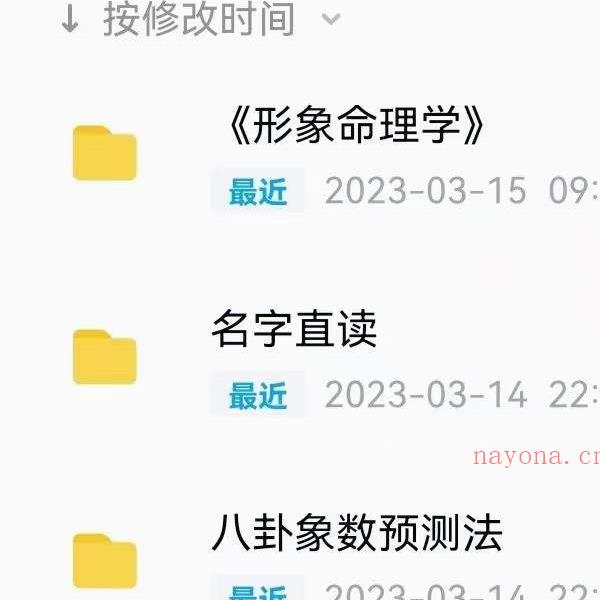
Original Course Preview Images
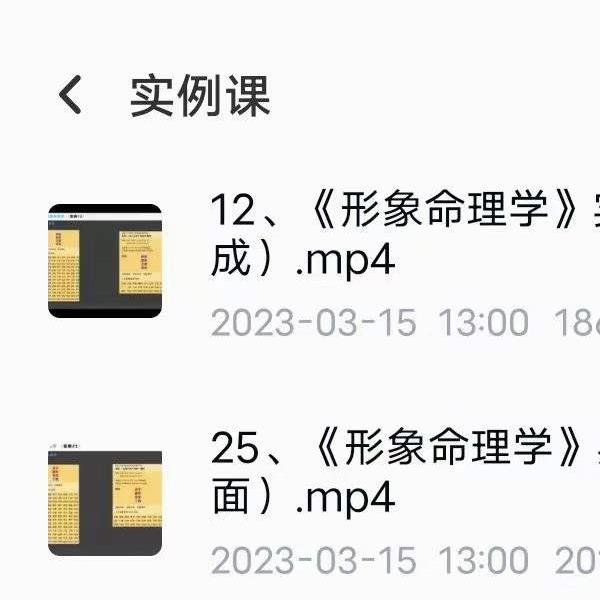
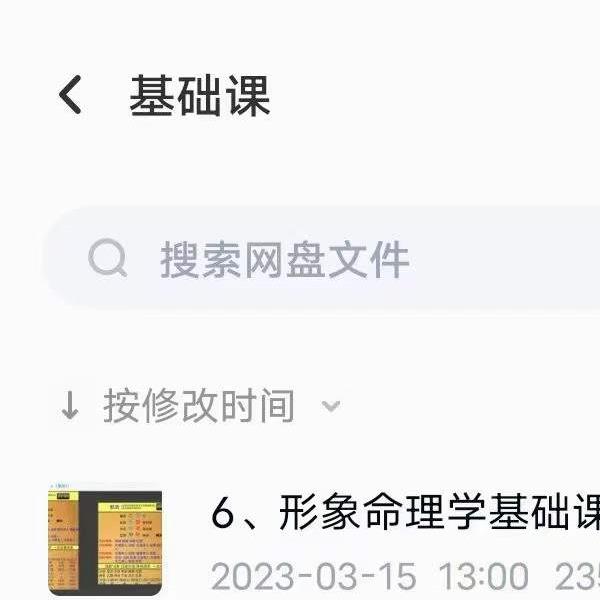
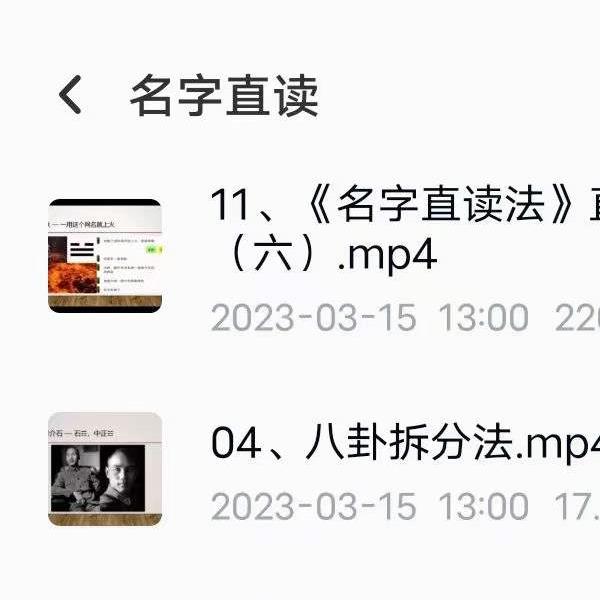
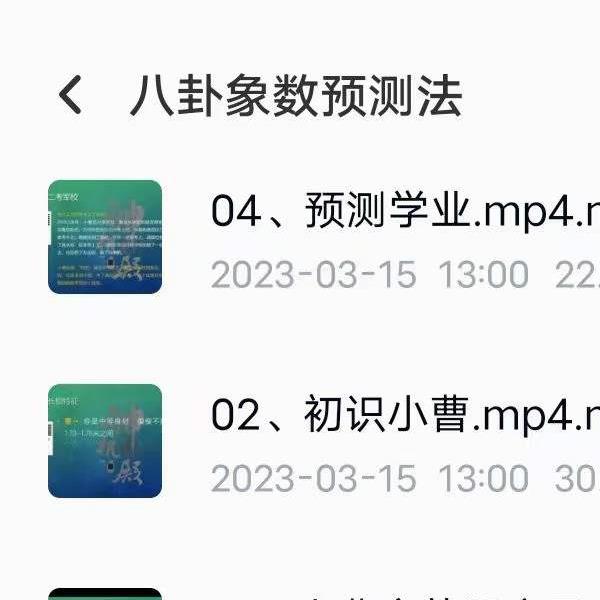
These images come from the original course listing and help show the supplied material.
Who This Resource Is For
This resource is for learners of traditional Chinese metaphysics who want to study the named method and compare the recorded examples with the stated rules. Beginners should start with terminology and basic procedures before moving to advanced cases.
Study Approach
Follow the lessons in order, keep a glossary of Chinese terms, and document the steps used in every example. Distinguish a traditional interpretation from an evidence-based claim or a guaranteed personal outcome.
Digital Delivery
This product is virtual and downloadable. No physical shipment is required. Check the product and order details for the available delivery format.
Frequently Asked Questions
Is the material in English?
The product guide is in English. Original lessons and documents may be in Chinese.
Is this a physical product?
No. It is a digital study resource.
Does the method guarantee a result?
No. Traditional interpretations are presented for cultural and educational study, not as guaranteed predictions or professional advice.
Related Learning
Browse the Bagua Image-Number Studies collection and the full course library.
- I Ching Applied Practice: 80 Video Lessons
- Plum Blossom Numerology and Trigram Practice: 89 Lessons
- I Ching for Beginners: Casting and Reading Hexagrams
- The 64 Hexagrams Explained: Video and Study Guide
For course questions, contact Karma Kismet.
Understanding the three parts of this collection
This listing brings together a 33 video image number course, an additional 11 video component titled Bagua Image Number Prediction, and 11 videos identified with name study. That structure is useful to keep in view. The title draws attention to Bagua, the eight trigrams and their associated images, but the collection also includes broader number work and a separate name related component. Study each part on its own terms before treating it as one continuous set of rules.
Image number study looks at how numbers and symbolic images are paired within a traditional framework. Bagua adds a vocabulary of trigrams that can be associated with patterns, qualities, and relationships. A learner needs to know when a lesson is naming an image, when it is selecting a number, and when it is making an interpretive claim. Those are separate operations. The course description identifies themes and counts; it does not give a full lesson by lesson syllabus or establish that every example follows one identical procedure.
Begin with the image and the number
When an example starts with a number, ask how that number was obtained and whether its position matters. When it starts with an image, ask what feature of the image leads to the chosen trigram or numerical association. Copy the mapping as presented, then test it against another example in the same component. If a rule changes with context, record the context. If no reason for a choice is given, mark that step as unexplained instead of supplying a rule borrowed from another Bagua text.
Bagua vocabulary is widely used across Chinese traditions, but the presence of a familiar trigram name does not guarantee that two courses use the same method. Keep this collection’s procedures in a dedicated set of notes. Comparisons with I Ching study, Plum Blossom Numerology, or another image number approach can be valuable later, provided you identify which parts are genuinely shared and which are only similar in language.
Working through the components deliberately
- Identify which of the three listed components a recording belongs to.
- List the inputs, such as a number, image, or name, that the example actually uses.
- Reproduce the association or calculation before reading its conclusion.
- Write the proposed interpretation in a separate sentence.
- Compare examples within the same component for a recurring rule.
- Only then compare a rule with an example from another component.
These steps help prevent a name study example from being treated as proof of a Bagua prediction rule, or a broader image number example from being attributed to the 11 video Bagua component. The collection format invites cross references, but a cross reference should be documented. A lesson may use the same symbol in a different way, or may assume vocabulary explained elsewhere. You can note both possibilities without deciding prematurely.
Making an example notebook
Give each entry a clear component label and lesson reference. Record the exact term heard or shown, including the Chinese wording if possible, then add a cautious English rendering. Use a simple sequence: starting information, rule applied, result obtained, interpretation offered, and questions remaining. If a speaker moves directly from an image to a conclusion, ask whether an intermediate rule is implied. Search within the supplied lessons for a second demonstration before adopting that rule as part of the method.
For a name example, copy the written characters accurately. Distinguish their ordinary meanings and pronunciations from any symbolic reading attached to them. A name’s appearance in a case does not establish anything about the named person’s character or prospects. For a numerical example, record the original order of the numbers. Reordering them to make a familiar pattern may change the method being studied.
How to approach the Bagua component
The 11 video Bagua Image Number Prediction component is the clearest match to this product’s title. View it with attention to the relation among a trigram, its image, and the proposed prediction. Does the speaker explain a fixed correspondence, or interpret the image in the context of a particular case? Does a numerical step come before or after the image is chosen? Those details determine whether you can reconstruct the example.
A useful practice exercise is to stop a recording after the starting information is given. Write what you think the next procedural step should be, then continue and compare it with the demonstration. This tests your understanding of the rule, not the truth of the conclusion. Repeat with a later case to see whether the rule is stable. If the cases diverge, look for a stated condition before describing either as an exception.
Who may find the material suitable
The collection may appeal to someone exploring Chinese image number interpretation who wants both a focused Bagua component and related examples. It may also suit a student interested in how names are considered within an adjacent symbolic framework. A viewer already familiar with trigram vocabulary may follow references more readily, while a beginner can build a small glossary from the examples. The original recordings may be in Chinese, so previews are useful for judging their language and pace.
Because the listing separates 33, 11, and 11 video groups, it is sensible to check which part best serves your interest. Someone seeking only Bagua examples should pay special attention to the identified Bagua component. Someone interested in a broader study of images and numbers may use the 33 video portion as the main path. The source description’s claims about extraordinary predictive accuracy are promotional claims and should not set expectations for what the material can establish.
Limits and responsible application
Traditional image number readings express a symbolic interpretation. They are not reliable evidence of a person’s future, health, relationships, or finances. If a lesson discusses a sensitive personal case, study how the interpretation is constructed without applying its conclusion to people around you. Name study deserves similar care: written characters can carry cultural associations, but they do not determine the qualities or outcomes of the person who uses them.
For practice, choose low stakes examples and document your steps before knowing an outcome. Keep uncertain cases and apparent mismatches in your notebook. A method is easier to understand when its limits are visible alongside its memorable examples. Important decisions still call for ordinary information, discussion with the people affected, and suitable professional advice when needed.
Questions about Bagua image number study
Are all the videos Bagua prediction lessons?
No. The listing distinguishes a 33 video image number course, an 11 video Bagua component, and an 11 video name study component.
Should I watch the components in a fixed order?
The listing identifies their groupings but does not prescribe a universal study order. Start with the component that matches your background, and record any prerequisites a lesson reveals.
Is a trigram image the same as a numerical rule?
They are related in this subject, but each example should show how the image and number are connected. Do not assume a correspondence that the lesson has not stated.
Can the name study videos tell me whether a name will bring success?
No. They can illustrate a traditional way of interpreting written names, not establish an outcome for the person who bears one.
What if another Bagua resource uses a different correspondence?
Document each resource’s rule separately and compare the contexts in which it is used. Shared terminology alone does not resolve the difference.