A 20-video, approximately eight-hour Da Liu Ren foundation course for structured study of this traditional divination system.
Course Overview
This English guide organizes the supplied traditional Chinese learning material around a clear course sequence. The underlying recorded lessons or documents may be in Chinese; review the stated format and curriculum before purchase.
What You Will Study
- Foundational Da Liu Ren vocabulary
- The sequence for setting up and reading a Liu Ren chart
- Applying the method to everyday situations
Course Scope and Format
A 20-video, approximately eight-hour Da Liu Ren foundation course for structured study of this traditional divination system. The course title and description identify the lesson count or page length when stated in the supplied curriculum. This is a digital educational product; no physical item is shipped.
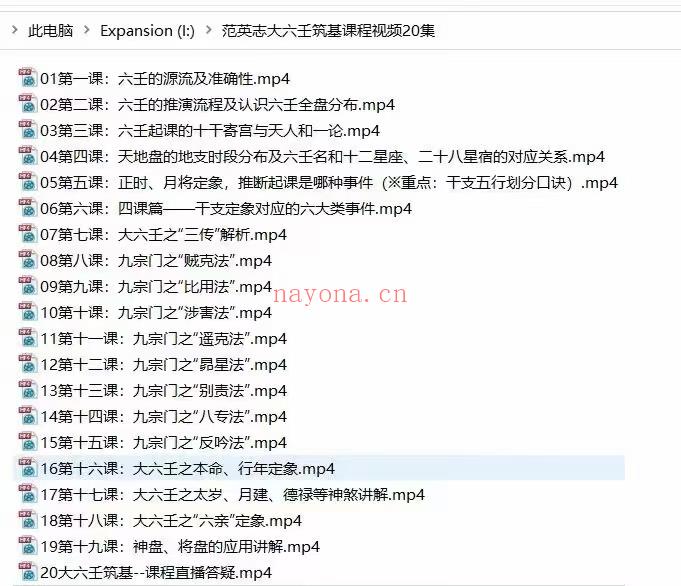
Original Course Preview Images
These images come from the original course listing and help show the supplied material.


Who This Resource Is For
This resource is for learners of traditional Chinese metaphysics who want to study the named method and compare the recorded examples with the stated rules. Beginners should start with terminology and basic procedures before moving to advanced cases.
Study Approach
Follow the lessons in order, keep a glossary of Chinese terms, and document the steps used in every example. Distinguish a traditional interpretation from an evidence-based claim or a guaranteed personal outcome.
Digital Delivery
This product is virtual and downloadable. No physical shipment is required. Check the product and order details for the available delivery format.
Frequently Asked Questions
Is the material in English?
The product guide is in English. Original lessons and documents may be in Chinese.
Is this a physical product?
No. It is a digital study resource.
Does the method guarantee a result?
No. Traditional interpretations are presented for cultural and educational study, not as guaranteed predictions or professional advice.
Related Learning
Browse the Liu Ren Divination Courses collection and the full course library.
- I Ching Applied Practice: 80 Video Lessons
- Plum Blossom Numerology and Trigram Practice: 89 Lessons
- I Ching for Beginners: Casting and Reading Hexagrams
- The 64 Hexagrams Explained: Video and Study Guide
For course questions, contact Karma Kismet.
Approaching Da Liu Ren from the Foundations
Da Liu Ren is a traditional Chinese divination system with its own technical vocabulary and sequence of interpretation. Its diagrams and terms can look forbidding when encountered out of context. A foundation course is an opportunity to learn how its parts are named, how an example is set out, and how a practitioner moves from a constructed pattern to a traditional reading. The listing describes 20 videos totaling approximately eight hours, so a thoughtful study plan should leave time for pausing, copying, and reviewing rather than treating the runtime as the whole learning period.
The source frames Da Liu Ren as a way of considering human affairs, but its promotional claims should be read as claims made within that source’s tradition. A responsible learner can study the structure and historical vocabulary without assuming that it reveals hidden events or predicts how other people will behave. The distinction between understanding a procedure and verifying a real-world claim is central to using the lessons well.
Learn the Layout Before the Interpretation
When a lesson introduces a chart or arrangement, copy what is visible before writing down the speaker’s conclusion. Label every part with the exact term used in that lesson. If two terms sound alike, put them side by side in a glossary and write a short distinction based on the example. Do not rely on a rough English equivalent alone; a translated word may hide a technical relationship that becomes important later.
Try to identify the order in which the course handles its material. Which inputs are established first? Which relationships are examined only after the arrangement has been made? Which comments are rules and which are interpretations of a particular case? The exact steps should come from the teaching material. A learner should avoid imposing a procedure remembered from another method simply because both systems belong to Chinese divinatory traditions.
Make the Videos Active Study Sessions
- Watch a short segment once for the general topic, then replay it to capture unfamiliar terms accurately.
- Pause when a diagram appears. Reproduce its labels and spatial relationships before reading the accompanying interpretation.
- Write one question for each step you cannot explain in your own words. Note the lesson and time so you can find it again.
- After the example is complete, summarize the stated reasoning in three parts: what was observed, which convention was used, and what the instructor inferred.
- Return to an earlier example after several lessons. Check whether your newer vocabulary helps you explain it more precisely.
Because the described runtime is relatively concentrated, spaced review matters. Several short sessions allow a learner to test recall between viewings. It is useful to keep two notebooks or sections: one for stable definitions as presented by the course, and another for questions or provisional interpretations. Separating them prevents an uncertain guess from gradually becoming a supposed rule.
Context for Traditional Claims
Descriptions of divination systems often promise insight into relationships, work, or future circumstances. Those themes are part of the context in which Da Liu Ren is marketed and practiced, but they are not evidence that a diagram can determine another person’s motives or establish what will happen. Read a case as an example of symbolic reasoning. Ask whether the interpretation was known only after the outcome was described, and whether different outcomes could have been explained using the same symbols. Such questions make the study more careful without requiring a learner to dismiss the cultural material.
If the lessons discuss a workplace or interpersonal situation, the real people in such situations remain more complex than a chart. Direct communication, documented facts, and appropriate professional support are better bases for consequential choices. The course can provide vocabulary for examining a traditional perspective; it should not be used to label someone as harmful or make accusations about intentions that have not been established.
Choosing a Suitable Starting Point
This course may suit someone curious about Da Liu Ren who prefers recorded explanations to an isolated list of definitions. It may also suit a reader of traditional Chinese metaphysical texts who wants to see terminology used in worked examples. The title identifies it as foundational, yet it is still helpful to have some familiarity with yin and yang, cyclical notation, and the idea that traditional systems assign meanings through rule-bound relationships. If those ideas are new, expect to pause frequently and build a glossary.
Check the available preview to judge whether the spoken language, pace, and visual presentation are accessible to you. An English product description does not by itself mean that the recordings are narrated in English. If you intend to use subtitles or translation aids, verify what is actually available in the listed material rather than assuming a particular support format.
What Counts as Progress
A useful early goal is being able to describe the shape of an example and the purpose of its main terms without consulting your notes. A second goal is being able to distinguish a recorded rule from a case-specific judgment. Later, you might compare two examples and explain why the teaching material treats them differently. These goals are observable in your own study, unlike a claimed ability to predict events.
When an example remains unclear, try reducing the question. Instead of asking whether the entire reading is correct, ask where a particular label came from or why one relationship was discussed before another. Answering small questions can reveal whether the obstacle is terminology, chart construction, or interpretation. If the source does not explain a step, mark that limit honestly; do not invent a missing rule to make the narrative seem complete.
Questions About the Da Liu Ren Foundation Videos
Are 20 videos enough to master Da Liu Ren? The video count describes the listed course, not a guaranteed level of expertise. The material can support foundational study, and additional practice may be needed to follow complex examples.
Should I watch all eight approximate hours in one sequence? There is no need to rush. Pausing to copy diagrams, define terms, and revisit examples is likely to make the recorded instruction more useful.
Can I apply Six Yao rules directly to a Da Liu Ren example? Do not assume the procedures are interchangeable. Study each system’s own notation and stated sequence before making comparisons.
What if the original recording uses Chinese terms? Keep the original term alongside your translation and note how it functions in the lesson. This helps when an English rendering is too broad.
Will studying the course tell me what another person will do? No such result is established by the course description. Treat its readings as examples within a traditional practice, and rely on direct evidence for real-world decisions.