A 59-video collection combining introductory and advanced Qi Zheng Si Yu Chinese astrology lessons.
Course Overview
This English guide organizes the supplied traditional Chinese learning material around a clear course sequence. The underlying recorded lessons or documents may be in Chinese; review the stated format and curriculum before purchase.
What You Will Study
- The traditional seven luminaries and four remaining factors
- Introductory chart principles
- Advanced pattern and configuration lessons
Course Scope and Format
A 59-video collection combining introductory and advanced Qi Zheng Si Yu Chinese astrology lessons. The course title and description identify the lesson count or page length when stated in the supplied curriculum. This is a digital educational product; no physical item is shipped.
Original Course Preview Images
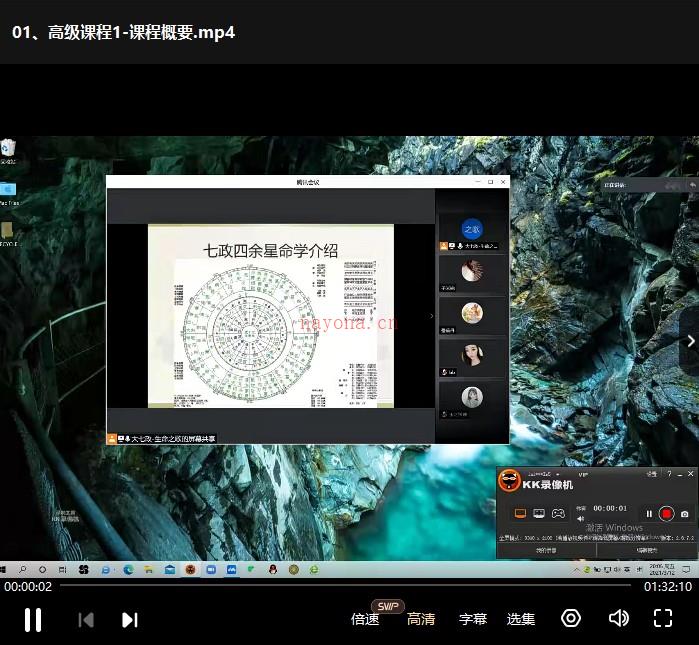
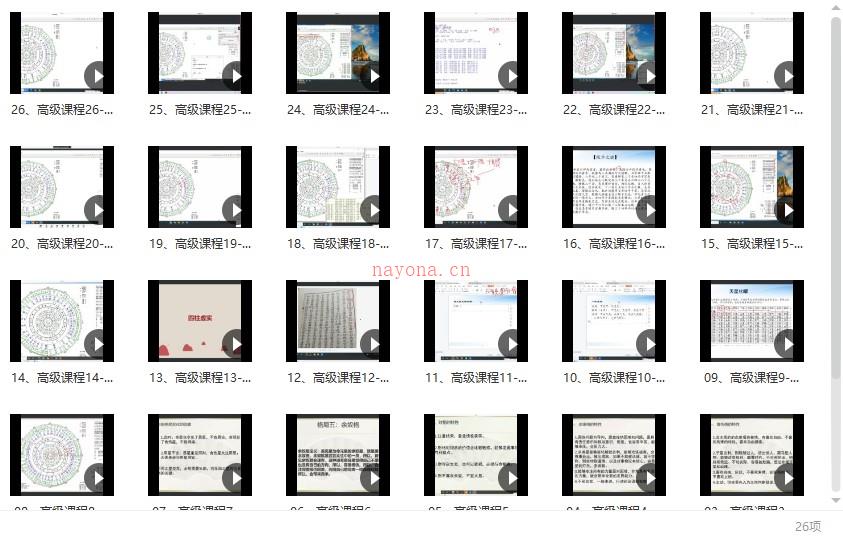
These images come from the original course listing and help show the supplied material.
Who This Resource Is For
This resource is for learners of traditional Chinese metaphysics who want to study the named method and compare the recorded examples with the stated rules. Beginners should start with terminology and basic procedures before moving to advanced cases.
Study Approach
Follow the lessons in order, keep a glossary of Chinese terms, and document the steps used in every example. Distinguish a traditional interpretation from an evidence-based claim or a guaranteed personal outcome.
Digital Delivery
This product is virtual and downloadable. No physical shipment is required. Check the product and order details for the available delivery format.
Frequently Asked Questions
Is the material in English?
The product guide is in English. Original lessons and documents may be in Chinese.
Is this a physical product?
No. It is a digital study resource.
Does the method guarantee a result?
No. Traditional interpretations are presented for cultural and educational study, not as guaranteed predictions or professional advice.
Related Learning
Browse the Qi Zheng Si Yu Courses collection and the full course library.
- I Ching Applied Practice: 80 Video Lessons
- Plum Blossom Numerology and Trigram Practice: 89 Lessons
- I Ching for Beginners: Casting and Reading Hexagrams
- The 64 Hexagrams Explained: Video and Study Guide
For course questions, contact Karma Kismet.
Following Qi Zheng Si Yu from Basic Terms to Advanced Patterns
Qi Zheng Si Yu is a traditional Chinese astrological system. The title refers to a 59-video collection that brings introductory and advanced study together. The seven luminaries and four remaining factors form part of its vocabulary, while chart arrangements and named configurations provide a framework for interpretation. A learner can approach the collection by first learning how the chart is described, then examining how the recorded lessons move from individual factors to a complete reading. The goal of this progression is comprehension of the teaching method, not a claim that astrology can determine a person’s life.
The source material supplies a detailed list for an advanced portion of the collection. It names lessons on several configurations, chart cases, interactions among factors, timing methods, birth-time correction, date selection, and consultation topics. Those headings give useful signposts, but a heading alone does not explain the method taught within a video. Treat the lesson itself as the authority for its procedure. Avoid assuming that a familiar English translation of a term captures every nuance of the Chinese usage.
Start with a Chart Vocabulary
Before reviewing an advanced pattern, identify the elements that the lesson places on the chart and the labels used for their positions. Write down the Chinese term, your working English translation, and a brief description of what the instructor points to when using it. If a term is used differently in another astrological tradition, keep the definitions separate. Shared words can create false familiarity when their technical roles differ.
It is useful to distinguish a visible chart feature from an interpretive judgment. A placement or relationship can be copied and checked; a statement about what it means relies on the rules or analogies of the tradition. In your notes, give each its own line. This helps when you later encounter an advanced case where several features appear to support different readings.
Reading the Advanced Lesson Topics
The source list includes lessons on named configurations and a separate case lesson. As you study a configuration, ask for its stated conditions. Which chart features must be present? Are there exceptions or modifications? When a case appears, check whether it actually meets the conditions as described. A pattern name is most useful when tied to a clear rule, not when applied loosely to any example that seems similar.
Other listed lessons concern interactions, traditional texts, and timing techniques. These topics should be studied as related but distinct parts of the system. A technique for describing a natal pattern is not automatically the same as a method for discussing a later period. Likewise, an example of birth-time correction should be read as a demonstration of a traditional procedure, not proof that an unknown birth time can always be recovered. Note exactly what information the recording starts with and what assumptions it introduces.
A Study Sequence for the Video Collection
- Review the introductory material until you can identify the named factors and the basic chart features used in its examples.
- Create a glossary that preserves Chinese terms alongside provisional English explanations.
- For each advanced configuration, write its stated conditions and copy one example that illustrates them.
- When a case lesson appears, compare the case against the conditions rather than accepting the pattern label without inspection.
- Keep timing methods on a separate reference page so that their inputs and purposes do not become mixed with basic chart description.
- After several lessons, explain a worked example using only the information shown in the recording, then compare your explanation with the instructor’s sequence.
This sequence is a way to organize your own study, not a claim about the precise order or contents of every video. The collection combines introductory and advanced material, and its original lesson headings can guide your review. It is reasonable to revisit early lessons after seeing an advanced case; a term that initially seemed abstract may become clearer when you see how it is used.
Using Astrology as a Subject of Study
Traditional astrology connects celestial language with symbolic accounts of human affairs. That connection can be studied historically, culturally, and analytically without presenting a chart interpretation as a verified fact about a person. The source’s advanced topics include consultation and timing, areas where overconfidence can have practical consequences. If you discuss a chart with someone else, be clear that the statements are interpretations within a tradition. Do not claim certainty about health, relationships, work, or future events.
When a video presents a striking case, ask how the example was selected and what information was available before the interpretation. A retrospective case may be instructive for understanding the method while still offering little evidence of predictive reliability. Keep those two questions separate: does the explanation follow its stated rules, and does independent evidence support the real-world claim? The first can often be studied from the recording; the second requires more than a persuasive narrative.
Who May Find the Collection Appropriate
A beginner interested in Qi Zheng Si Yu may value the introductory portion and the chance to see where the vocabulary leads. A more experienced learner may use the advanced headings to focus on configuration analysis, case reasoning, or comparisons among traditional timing methods. Someone seeking a general introduction to modern Western astrology should recognize that this is a named Chinese system with its own concepts and terminology.
The source listing is in Chinese, and the original videos may be in Chinese. Review the available previews and product details for language and format before choosing the collection as your main learning resource. A glossary, chart sketches, and repeated viewing can help with technical language, but the listing does not establish that translation or personal instruction is included.
Questions About These Qi Zheng Si Yu Lessons
Do the 59 videos all cover advanced techniques? The product description identifies both introductory and advanced material. The source provides headings for an advanced section, so the collection should be approached as a progression rather than assumed to be uniform.
What are the seven luminaries? They are part of the traditional celestial vocabulary named by Qi Zheng Si Yu. Use the course’s own explanations to understand how they function in its charts.
Should I treat a named configuration as a conclusion by itself? No. Identify the stated conditions, check the actual chart features, and follow the reasoning used in the lesson before considering an interpretation.
Can a birth-time correction lesson prove an exact birth time? The listed topic describes a traditional technique. Its presence does not establish that the technique can independently verify an unknown time.
Will a chart reliably predict personal outcomes? The material supports study of a traditional astrological framework. It does not establish guaranteed predictions, and consequential decisions should rest on appropriate evidence and advice.