A 21-video course introducing the traditional Yi Zhang Jing, or One Palm Classic, method.
Course Overview
This English guide organizes the supplied traditional Chinese learning material around a clear course sequence. The underlying recorded lessons or documents may be in Chinese; review the stated format and curriculum before purchase.
What You Will Study
- One Palm Classic terminology
- Method setup and interpretation
- Following the recorded lessons in sequence
Course Scope and Format
A 21-video course introducing the traditional Yi Zhang Jing, or One Palm Classic, method. The course title and description identify the lesson count or page length when stated in the supplied curriculum. This is a digital educational product; no physical item is shipped.
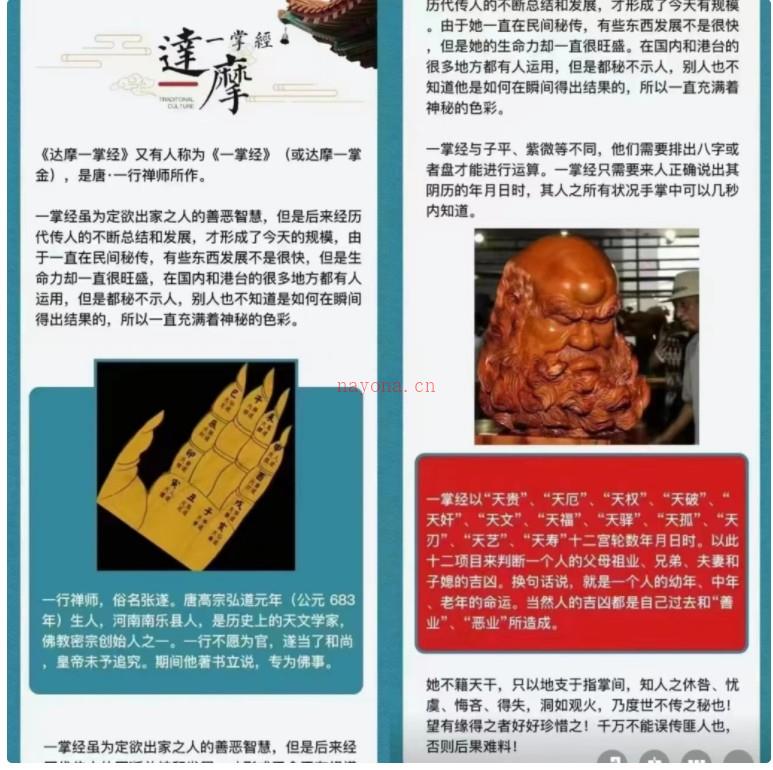
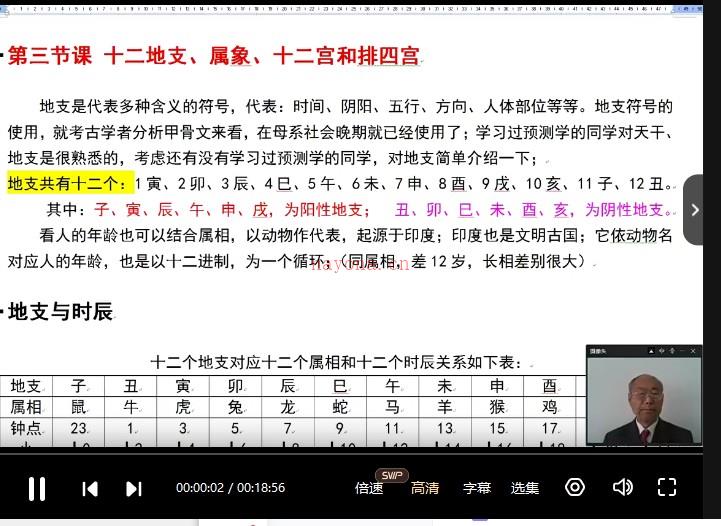
Original Course Preview Images
These images come from the original course listing and help show the supplied material.
Who This Resource Is For
This resource is for learners of traditional Chinese metaphysics who want to study the named method and compare the recorded examples with the stated rules. Beginners should start with terminology and basic procedures before moving to advanced cases.
Study Approach
Follow the lessons in order, keep a glossary of Chinese terms, and document the steps used in every example. Distinguish a traditional interpretation from an evidence-based claim or a guaranteed personal outcome.
Digital Delivery
This product is virtual and downloadable. No physical shipment is required. Check the product and order details for the available delivery format.
Frequently Asked Questions
Is the material in English?
The product guide is in English. Original lessons and documents may be in Chinese.
Is this a physical product?
No. It is a digital study resource.
Does the method guarantee a result?
No. Traditional interpretations are presented for cultural and educational study, not as guaranteed predictions or professional advice.
Related Learning
Browse the Yi Zhang Jing collection and the full course library.
- I Ching Applied Practice: 80 Video Lessons
- Plum Blossom Numerology and Trigram Practice: 89 Lessons
- I Ching for Beginners: Casting and Reading Hexagrams
- The 64 Hexagrams Explained: Video and Study Guide
For course questions, contact Karma Kismet.
Reading the One Palm Classic as a method
Yi Zhang Jing, also called the One Palm Classic, is a traditional system of palm based calculation and interpretation. Its interest lies in the relationship between a procedure and the meaning assigned to its result. A learner needs to understand both parts. Memorizing an interpretation without being able to reconstruct the calculation leaves little room to check an example; performing a calculation without knowing how its terms are used leaves the result equally unclear. The 21 recorded lessons offer a defined sequence for studying that relationship, while the traditional claims attached to the method remain matters of interpretation rather than established predictions.
The source listing identifies twenty one video files by lesson number. It provides little detail about the subject of each individual lesson, so a useful study plan should leave room for what the recordings actually present. Begin by noting the vocabulary, the inputs requested in an example, each intermediate step, and the interpretation that follows. This approach keeps a rule learned from a lesson distinct from an assumption brought to it by the viewer.
Separate procedure from interpretation
On a first viewing, focus on how a calculation is set up. What information does the example begin with? In what order are operations performed? Which terms label the positions or results? Write the sequence in plain language, then replay the example and check whether your notes reproduce the same result. Only after that should you study the explanation attached to the result. If a term has more than one possible English rendering, retain the Chinese term beside your translation until its use becomes clear across several examples.
Traditional systems often compress several decisions into a brief demonstration. A speaker may move quickly from an input to a position, and then from that position to a judgment. Pausing at those transitions can reveal which steps are explicit and which depend on prior knowledge. It also helps prevent a vivid conclusion from obscuring the calculation that led to it. Keep an example notebook with separate columns in your own notes for input, operation, output, and stated reading; those are study categories, not a claim about the format of the videos.
A practical way to work through the lessons
- Watch a lesson once to identify its main terms and the kind of example it uses.
- Watch again and write every visible or spoken step without adding an interpretation of your own.
- Reconstruct the example independently, marking any point where the rule is uncertain.
- Compare your reconstruction with the recording and correct the notes.
- Record the stated interpretation separately, including any conditions or exceptions mentioned.
- Review an earlier example after several lessons to see whether later terminology changes your understanding.
This cycle gives the lesson sequence a purpose beyond passive viewing. It can also expose a gap that needs a basic reference rather than another advanced example. If the material assumes familiarity with Chinese calendrical or metaphysical terms, stop and identify those terms before trying to apply the method. A glossary is most useful when it records how a word functions in a specific lesson, rather than collecting loose translations from unrelated traditions.
Compare examples carefully
Two demonstrations can look similar while differing in an input or in the stage at which a term is assigned. When comparing them, look for the earliest step at which they diverge. Ask whether the difference comes from the original information, a calculation rule, or the speaker’s interpretation. This is more informative than treating every distinct reading as evidence of a new rule. Where a step is not explained, label it unresolved. A question mark in a notebook is a better study aid than an invented rule that later examples may contradict.
The title identifies a particular traditional method, so comparisons with other Chinese metaphysical systems should remain comparisons. Similar words do not establish identical procedures. If you already know another method, use that knowledge to form questions, then answer them from the One Palm Classic examples themselves. This discipline is especially useful when a recording uses familiar language in a specialized way.
Who may find this study useful
The course may suit someone who wants to examine a named traditional calculation system in a fixed video sequence. It may also interest a learner who enjoys close reading of worked examples and is willing to revisit unfamiliar terminology. Previous experience with Chinese metaphysical vocabulary can make the first lessons easier to follow, but it can also create assumptions that need checking. A newcomer can start with the visible operations and build a glossary gradually, provided they are comfortable proceeding slowly.
The English product guide summarizes the subject, while the underlying recordings may be in Chinese. Language ability can therefore affect how much detail a viewer can recover directly. Preview material can help assess whether the presentation, pace, and terminology are workable for you. The listing confirms the number of videos; it does not establish that every topic a learner might expect is treated, or that an English explanation accompanies every example.
Limits and responsible use
The source description includes strong claims about the method’s ability to judge events. Those claims are part of promotional and traditional discourse, not evidence that a calculated reading will be accurate. A sensible way to study the system is to ask what its practitioners mean by a result, how consistently they apply their stated rules, and where an interpretation allows several possibilities. Personal choices about health, safety, relationships, money, or legal matters require appropriate evidence and qualified help, rather than a divinatory reading.
Respect the people who appear in case material, if any is discussed. Avoid turning an illustrative reading into a claim about a real person’s private life. When practicing with your own examples, use information you have permission to use, record uncertainty, and avoid presenting an interpretation as a diagnosis or a settled fact. The method can be approached as a cultural and intellectual subject even when one does not accept its predictive claims.
Questions about Yi Zhang Jing study
Do the twenty one lessons form a complete beginner curriculum?
The listing establishes a twenty one video sequence, but it does not specify every prerequisite or promise that all foundational concepts are taught from the beginning. Check the previews and start by identifying the vocabulary used in the opening examples.
Should I memorize the readings before learning the calculation?
Understanding how a result is produced is a stronger first step. Once you can repeat an example’s operations, you can study the stated reading and notice where interpretation enters.
Can I combine One Palm Classic rules with another system?
You can compare systems for study, but keep their procedures separate in your notes. A shared term or image does not prove that two traditions calculate or interpret it in the same way.
What if an example skips a step?
Mark the missing step and look for another demonstration that makes it explicit. Do not fill the gap with a rule merely because it produces the expected answer.
How should I evaluate a dramatic prediction in a lesson?
Trace the stated calculation and the assumptions behind the interpretation. Treat the prediction as a traditional claim, and do not rely on it for an important real world decision.