Liu Zhe's Quanzhen course combines historical and conceptual teaching with standing practice and Danfang Baduanjin demonstrations. The eight-day syllabus is clear, although different records list eight or nine video files; the exact file count should be confirmed before purchase.
Course Overview
Liu Zhe Quanzhen Internal Alchemy: Eight Day Course is a digital study resource in the Daoist Meditation & Internal Alchemy collection. This English product guide explains the listed material; the original recordings and documents are in Chinese. English subtitles or translated full lessons are not included unless separately stated.
Course Contents and Learning Focus
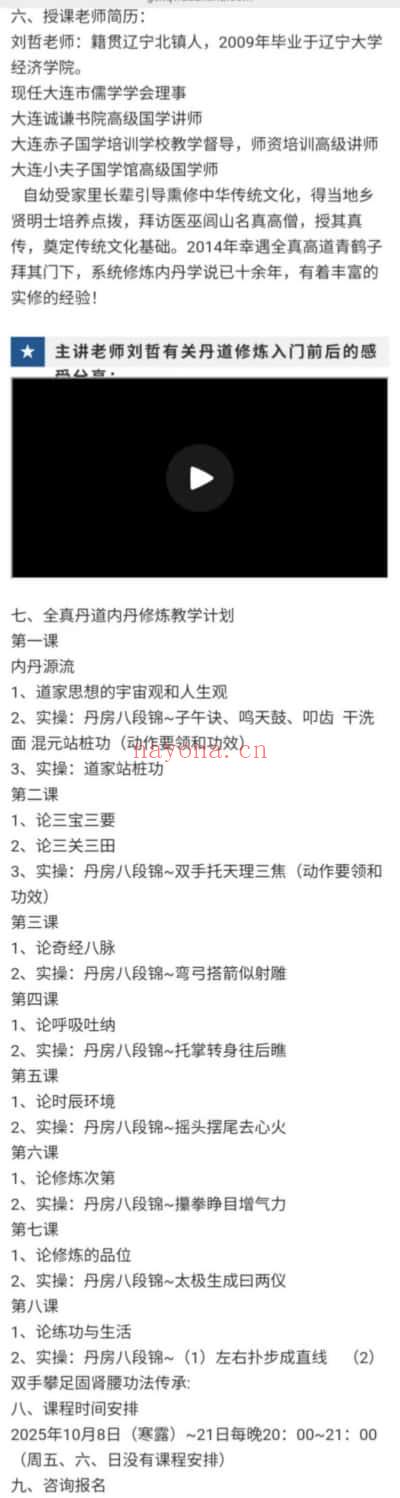
- Day 1: internal-alchemy origins, standing and introductory movements
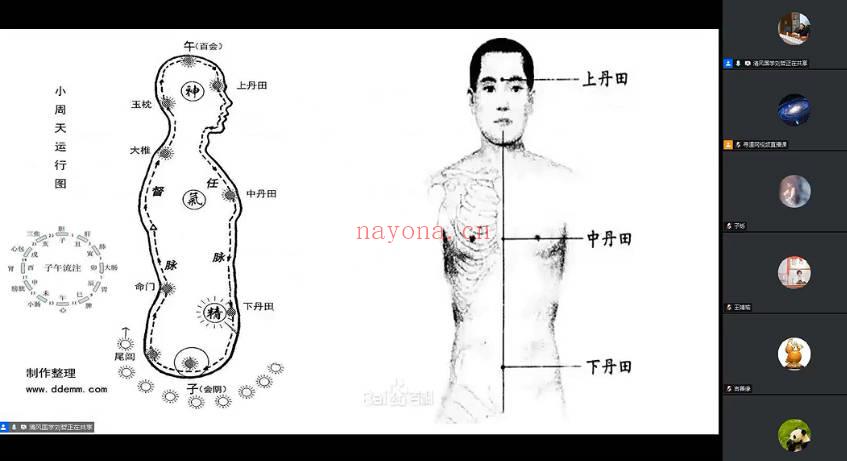
- Day 2: Three Treasures, Three Passes and Three Fields
- Day 3: Eight Extraordinary Vessels
- Day 4: breathing terminology
- Day 5: timing and practice environment
- Days 6-7: cultivation sequence and traditional stages
- Day 8: practice and everyday life
What You Will Learn
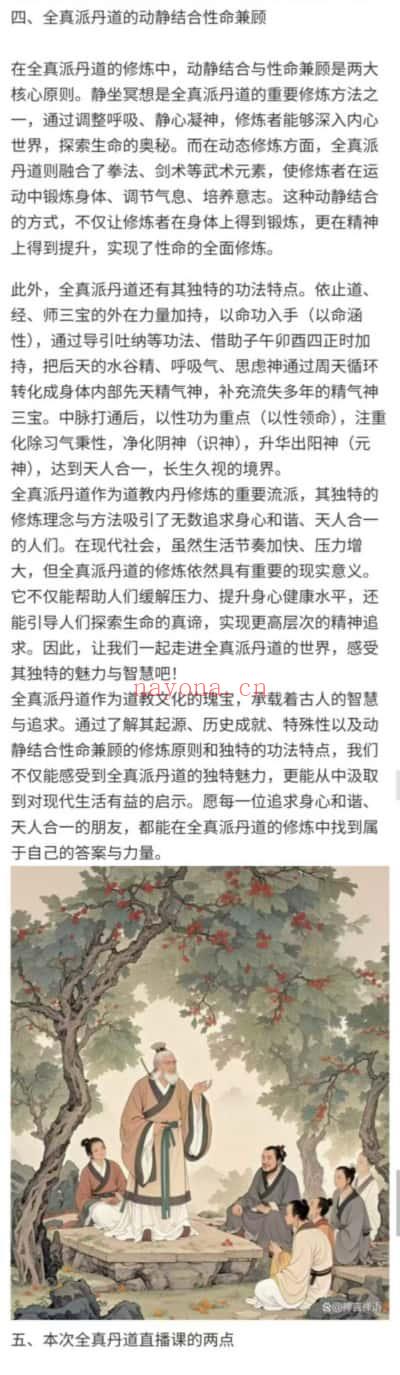
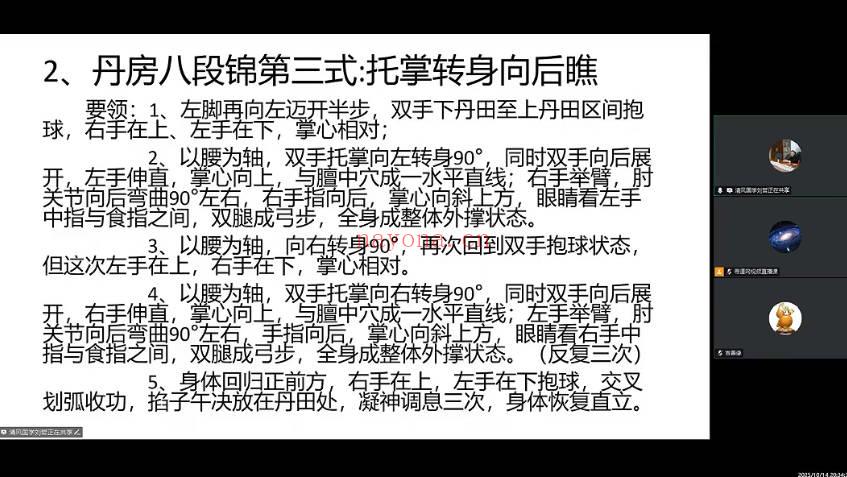
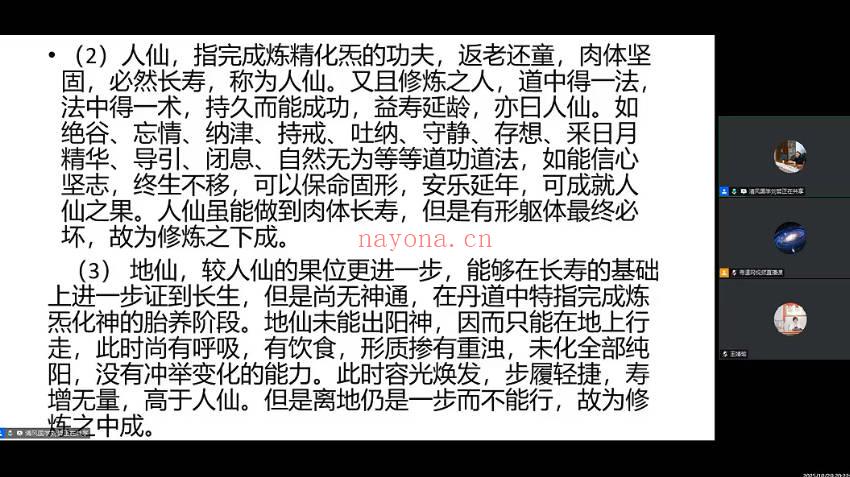
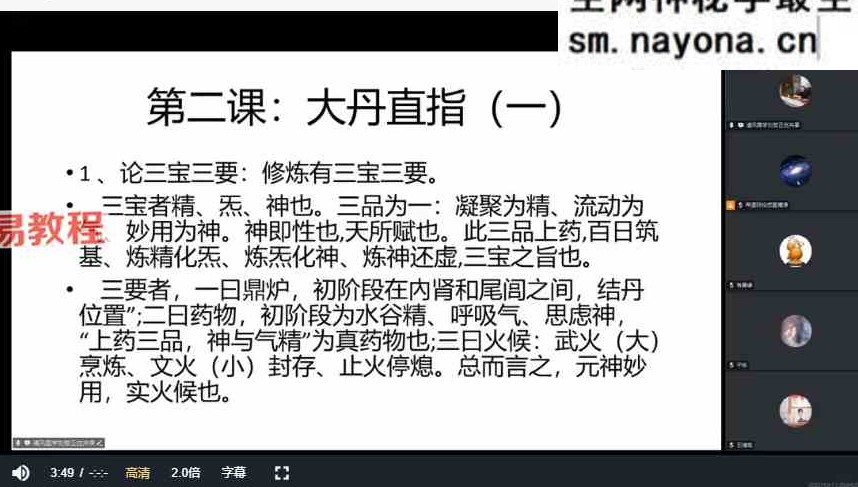
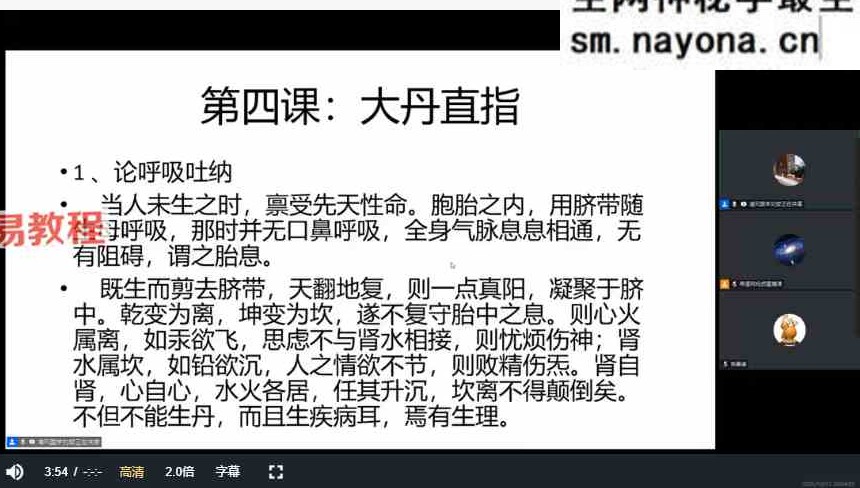
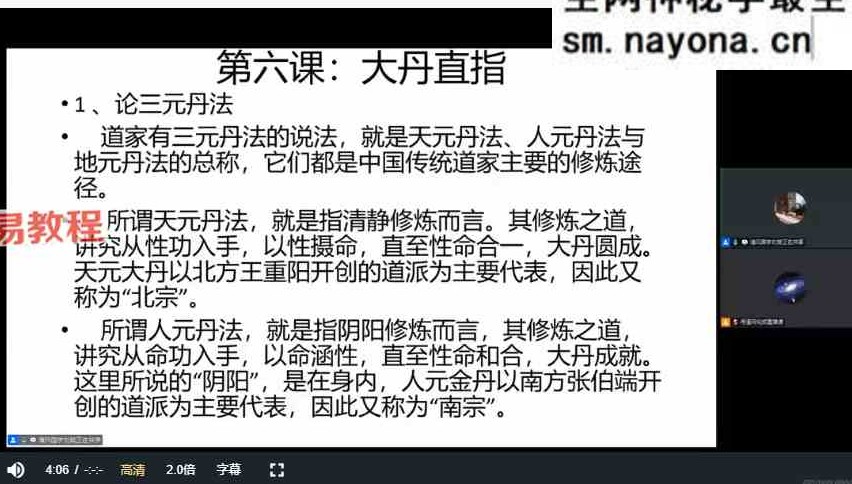
Use the listed topics to identify the scope of this resource, follow its recorded sequence and compare the original diagrams with your study notes. Where individual lesson names are not supplied, the preview images are provided instead of an invented syllabus.
Original Course Previews






Who This Course Is For
For learners who can follow Chinese-language material and want to study Daoist Meditation & Internal Alchemy. Check the format and previews before buying. Intermediate or continuation courses assume familiarity with the relevant foundations and do not imply that prerequisite courses are included.
Learning Format and Digital Delivery
Format: An eight-day syllabus; listings differ between eight and nine video files. Price: USD 9.00. This is a virtual, downloadable product; no physical shipment is required. The download link has not yet been attached to this listing and will be added by the store. Contact us before ordering if you need to confirm delivery timing; immediate automatic file access is not promised.
Frequently Asked Questions
Is the course taught in English?
No English-language recording or subtitle track is confirmed. This description is in English; the underlying course material is Chinese.
What is included?
An eight-day syllabus; listings differ between eight and nine video files. Review the course contents and original previews for the stated scope.
Will a physical item be shipped?
No. This is a digital learning resource.
Is a certificate or personal consultation included?
No certificate, accreditation or individual consultation is promised by this listing.
Editorial Note and Disclaimer
Karma Kismet has organized the course listing and available directory into this English guide. Lesson counts refer to the supplied listing, not an independent review of every recording. Traditional and cultural study only. Ritual or internal-alchemy claims are not guaranteed or verified outcomes. Physical demonstrations do not replace qualified supervision; avoid painful movements, forced breathing or breath retention.
Related Courses
- Liu Ying Xing Yi Quan Five Qi Course: 45 Videos
- Fa Yuan Bagua Zhang Foundations: 21 Lessons
- Chen Erhu Tai Chi Core Principles: 182 Lessons
- Ma Hong Tai Chi Course: 38 Videos
- Yi Xiang Daoist Internal Alchemy: 45 Lessons
Browse Daoist Meditation & Internal Alchemy, review course and delivery questions, or learn about Karma Kismet.
Reading an Eight-Day Quanzhen Course Carefully
Liu Zhe’s Quanzhen collection is organized around an eight-day course. That description identifies the course frame, not a promise that eight days of viewing will produce a particular level of understanding or practice. The available description connects historical and conceptual discussion with standing practice and Danfang Baduanjin demonstrations. Those strands are worth keeping distinct while studying: one asks what the tradition says, another shows how a movement is presented, and neither alone provides personal feedback about a learner’s performance.
There is also a practical detail to resolve before relying on a file count. The course is described as eight days, while different records mention eight or nine video files. A course day and a video file need not correspond one to one, but the listing does not establish the reason for the difference. Check the current directory or ask for confirmation if the exact number of files matters to you. The eight-day title should be understood as the stated course structure rather than a verified count of separate recordings.
Concepts Before Imitation
Quanzhen internal-alchemy language sits within a religious and cultural tradition. Terms such as cultivation, stillness and movement may be explained differently by different speakers. As you watch an introductory discussion, note each term in its immediate context and identify whether the presenter is describing a historical idea, interpreting a text, or introducing a practice. This distinction helps prevent a symbolic expression from being mistaken for a literal instruction or a guaranteed physical effect.
Do not rush from a concept to a technique because the same word appears in both places. A talk may provide the rationale for an exercise without supplying every adjustment a learner would need. Conversely, a demonstration may show a posture without explaining all of its historical background. Give each part of the course the kind of attention it requires: close listening for arguments and terminology, visual observation for movement, and supervised feedback for any physical practice.
Observing Standing Practice
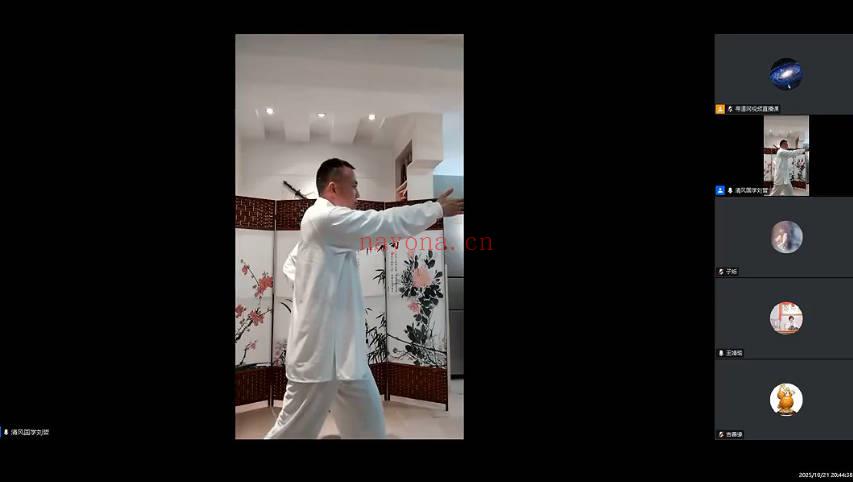
Standing work can look simple on a screen because little movement may be visible. Small differences in foot placement, knee comfort, balance and effort can still matter to the person practicing. When viewing a demonstration, describe only what the camera clearly shows: the general stance, arm position, transitions and duration visible in the segment. Avoid inventing a precise alignment rule from an angle that does not show it. If the speaker gives a verbal instruction you cannot understand confidently, mark it as an open question.
For personal practice, use a comfortable range and stop if you feel pain, dizziness or unusual strain. Do not force stillness to meet a time target inferred from a recording. A teacher observing you directly can address questions that a video cannot, including whether you are bracing, holding your breath or placing unnecessary pressure on a joint. The course can inform a conversation with that teacher without serving as a substitute for one.
Understanding Danfang Baduanjin in Context
The directory identifies Danfang Baduanjin as a movement component of the course. The name points to a set of exercises within the presentation, but it does not tell us that every detail matches other routines carrying a similar name. If you know another Baduanjin sequence, compare the visible order and movement emphasis without assuming the versions are interchangeable. A familiar label can conceal meaningful differences in pacing, stance or explanation.
A useful comparison asks what the presenter actually demonstrates and what remains outside the camera’s view. Does a movement begin from a still position? How does the demonstrator return to that position? Are transitions shown, or only finished shapes? These are concrete questions that can guide repeated viewing. Claims that an exercise necessarily produces health benefits or internal changes should be treated as traditional claims rather than expected results.
Making a Workable Study Record
- List the available recordings by their visible names and note any difference between course days and file numbers.
- For each day, write a brief summary of the historical or conceptual point before attempting to describe a movement.
- Record movement observations separately from instructions that are unclear or partly obscured.
- Use a glossary for recurring Chinese terms, allowing a term’s meaning to remain provisional when context changes.
- Review your notes with someone qualified to guide physical practice if you plan to try a demonstrated exercise.
This process is more reliable than treating the course as a checklist to finish in eight calendar days. You might spend longer on a discussion that introduces several unfamiliar concepts, or return repeatedly to a demonstration to understand the sequence of transitions. The available information does not set a required viewing pace.
Who Might Choose This Resource
The course may suit people studying Quanzhen ideas who want to see conceptual instruction alongside standing and moving demonstrations. It may also help an existing movement student frame questions about how this particular presenter links still and moving practice. Chinese-language ability or suitable language support matters, because an English overview cannot supply the nuance of every spoken direction.
It is less suitable as a stand-alone method for someone expecting personal correction, an established medical benefit, or a verified attainment. Historical descriptions and demonstrations can be valuable study materials while remaining limited in what they can establish about an individual learner. Approach striking terminology with curiosity and care, without making it a target to reproduce.
Questions About the Eight-Day Course
Why do some descriptions mention eight videos and others nine? The available records differ. Eight days describe the course frame, and the exact count of video files should be confirmed from the current directory.
Does this course require eight consecutive days of practice? The title does not establish that requirement. Study and review at a pace appropriate to the material and your own understanding.
Is Danfang Baduanjin identical to another Baduanjin set? A shared name is not enough to prove identical movements. Compare what is actually demonstrated before drawing that conclusion.
Can I learn standing posture entirely from the recordings? You can observe the demonstration and collect questions, but a recording cannot evaluate your balance, comfort or effort. In-person feedback is useful for physical practice.
Are traditional internal-alchemy descriptions evidence of physical or supernatural results? They are part of the course’s cultural and conceptual language. Their presence in a lesson does not verify a claimed outcome.