
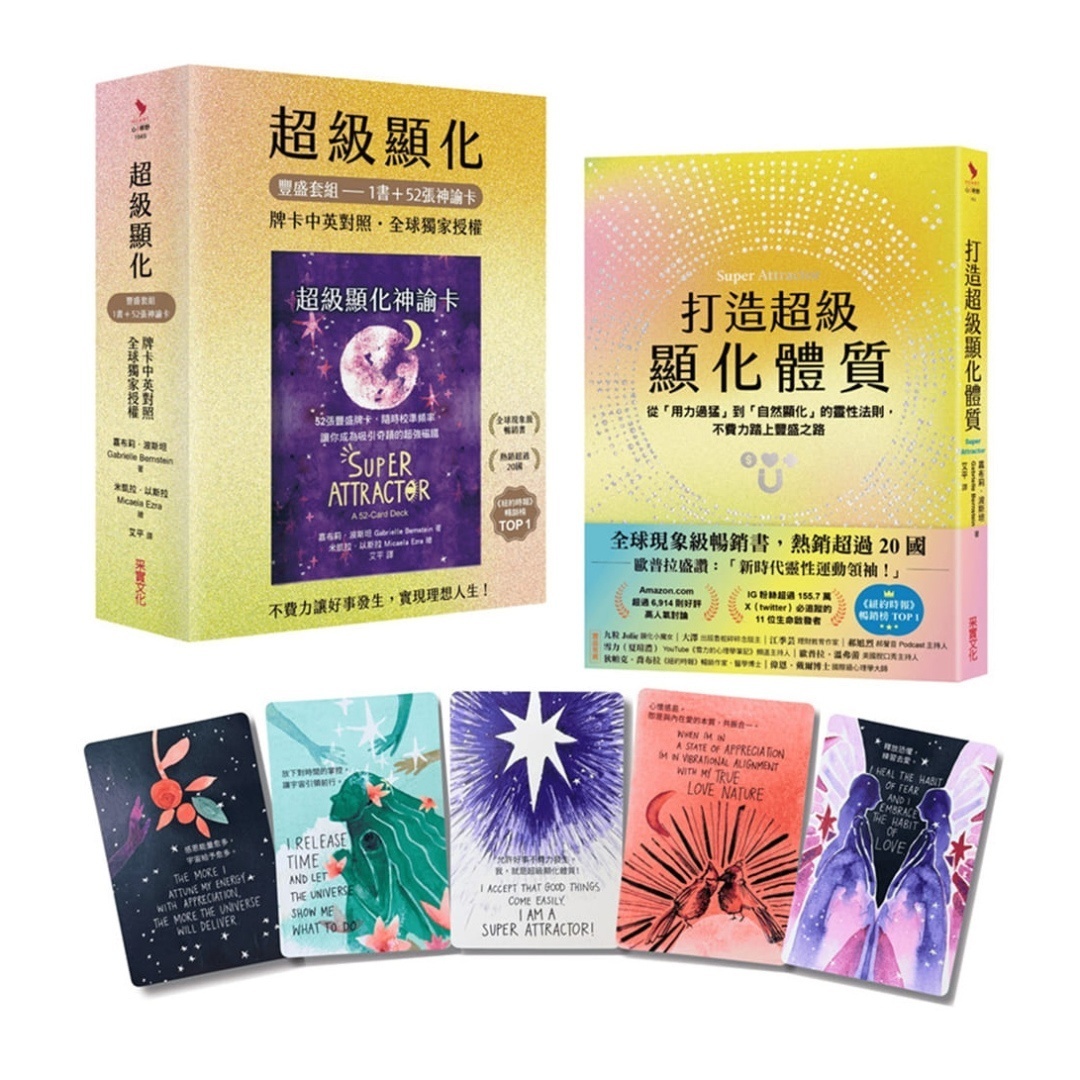
A Chinese-language edition of Gabrielle Bernstein's reflective manifestation resource, presented as one book with a 52-card oracle deck.
Course Overview
This Karma Kismet page organizes the verifiable facts from the original nayona.cn listing. The source material is in Chinese; a complete English translation, subtitles, certification, and unlisted instructor credentials are not claimed.
What You Will Learn
- Intention setting and reflective practice
- Working with a 52-card oracle deck
- Reading prompts and personal journaling
- Separating promotional claims from verifiable contents
- Responsible use without guaranteed outcomes
Course Contents
Chinese-language digital reference listing for one book and 52 oracle cards; no physical shipment is included.
Original Course Images
Who This Course Is For
This resource is for learners who can use Chinese-language materials and want a structured introduction to Manifestation & Intention Studies. Review the original images and stated format before ordering.
Learning Format and Digital Delivery
Chinese-language digital reference listing for one book and 52 oracle cards; no physical shipment is included. This is a virtual, downloadable product with no physical shipment. A download file is not yet attached. Please review the digital delivery policy and contact Karma Kismet to confirm delivery arrangements before ordering; immediate automated access is not promised.
Frequently Asked Questions
Is the complete material in English?
No. The product description is in English, but the source learning material is Chinese-language unless a specific translated component is stated.
Does this resource guarantee a result?
No. It is offered for educational, cultural, and reflective study. It does not guarantee personal, financial, spiritual, or health outcomes.
Is professional advice included?
No personal consultation, medical care, legal advice, or financial advice is included.
Disclaimer
Use this material responsibly and within its educational scope. Symbolic, spiritual, contemplative, and wellness traditions are not substitutes for qualified professional care.
Related Courses and Site Links
Understanding the book and card combination
The source identifies the Super Attractor Abundance Set as one book accompanied by fifty two oracle cards. It names Gabrielle Bernstein, translator Ai Ping, and the publisher Caishi Culture. This is a Chinese language edition associated with a manifestation theme. These named elements are useful identification details, but the available record does not provide a chapter directory or a complete list of card texts. An English product description cannot stand in for an English edition of the book. Individual card titles, illustrations, spreads, and supplementary exercises should be checked in the actual materials rather than invented from the title.
The combination gives a reader two different ways of engaging with a reflective subject: extended prose in the book and shorter prompts associated with a card deck. That distinction is a reading framework, not a claim about a specific chapter or card design. A book can explain a concept across several pages, whereas a card can attract attention through a concise message or image. If both parts are available in the confirmed digital delivery, comparing them may be useful. The listing of a book and deck does not establish that a boxed physical set will be shipped.
Reading abundance language carefully
Abundance can mean different things to different readers. Someone might use it when thinking about time, friendship, creative work, or a sense of enoughness; another person may associate it with money. The product title does not specify an outcome in any of these areas. Promotional language about making desirable events happen effortlessly should be understood as the framing of the named resource, rather than evidence of a dependable mechanism. Before adopting a passage as advice, identify what it actually says and whether it describes a belief, an aspiration, an example, or a practical action.
A useful distinction is between clarifying an intention and predicting what will happen. Writing that you want more time for creative work can help describe a preference. It does not establish that circumstances will arrange themselves around that preference. A reader can appreciate spiritual language while also considering scheduling, responsibilities, available resources, and uncertainty. This approach does not require deciding in advance whether every statement in the book is persuasive. It simply makes space for attentive reading and prevents an appealing title from being treated as a guarantee about the future.
Working with a symbolic prompt
Oracle cards can be approached as prompts for personal interpretation. If a card invites reflection on trust, patience, or possibility, the reader can consider how those words relate to a present question. The card does not supply evidence about another person’s feelings, an impending event, or the correct answer to a consequential decision. Because no complete card list is included in the source record, these themes are examples of how reflective prompts might be handled, not descriptions of particular cards supplied in this set. The wording of each actual card should lead the interpretation.
One optional method is to write a question that remains within your own experience, then note your response to a card without changing the original question. For example, a reader might ask what would make a planned project more manageable. The written response could explore priorities or hesitation, while factual questions about cost, deadlines, or agreements would still require ordinary research. Keep the original prompt, the card wording, and the personal interpretation in separate notes. That makes it easier to see where the material ends and your own associations begin.
Repeatedly drawing cards until a desired answer appears can obscure that distinction. If you notice yourself doing this, consider setting the deck aside and recording the answer you were hoping to receive. The hope itself may be worth reflecting on, regardless of the cards. No particular draw schedule is confirmed for this product, and a fifty two card count does not prove a weekly program. A reader can choose a modest routine that fits their interest, provided it is understood as an independent approach rather than an official instruction from the book.
Connecting reflection with observable choices
A manifestation resource may encourage readers to consider how they relate to possibilities and setbacks. To keep this exploration concrete, pair a general intention with an action under your control. If you value connection, an action might be making time to speak with a friend who is willing to talk. If you value learning, it might be reserving a quiet reading period. These are examples of ordinary planning that can accompany reflection; they are not a summary of unverified chapters or proof that a spiritual practice creates particular external results.
It also helps to identify the limits of personal influence. Other people make their own choices, opportunities may be unavailable, and plans can change for reasons unrelated to intention. A disappointing outcome does not demonstrate that a person failed to think positively enough. Reading the set should not become a way of assigning blame for illness, financial hardship, or unwanted events. When a passage seems to imply an absolute relationship between thought and circumstances, examine the exact wording and your own reaction before accepting it. Reflection can remain meaningful even when uncertainty remains unresolved.
A journal that preserves the distinction between text and response
Consider giving each reading entry four parts: the passage or card you studied, your initial response, a question it raises, and a possible next step. Keep the next step small enough to assess without using the card as a prediction. You might decide to clarify a commitment or revisit an unfinished task. At a later date, record what you actually did, rather than searching retrospectively for signs that the card foretold events. This creates a readable account of your engagement with the material and keeps symbolic associations from masquerading as evidence.
When reading Chinese, a short personal glossary can be valuable. Record a term’s context before choosing an English equivalent. Words translated as attraction, abundance, surrender, or guidance may have a range of meanings, and an isolated phrase can sound stronger in translation than it does within a paragraph. If a sentence is unclear, return to the surrounding text instead of building an elaborate interpretation from one word. This is especially relevant when the English product title is the only English wording visible to you. The original resource remains the basis for determining what it teaches.
Comparing the two parts without assuming a syllabus
After reading a substantial portion of the book, you could revisit the cards and note whether a prompt recalls an idea from the prose. If there is no clear connection, leave it undecided rather than inventing a correspondence. The source establishes the pairing of a book and fifty two cards, not a chapter to card mapping. Similarly, the cards should not be assumed to follow a tarot structure, a numbered spiritual progression, or a prescribed divination spread. Oracle terminology identifies the type of deck in the listing without establishing those additional features.
For a discussion group, begin with the actual text and invite differing interpretations. One participant might find a phrase encouraging; another might find it too broad or difficult to apply. That difference can be discussed without treating either response as spiritually superior. A shared conversation is most useful when it remains voluntary and does not pressure participants to disclose private experiences. No facilitated group service is listed with this product, so any reader organized discussion is separate from the resource itself. The set can be explored privately just as well.
Questions to settle before choosing the resource
Confirm what digital files represent the book and the cards, whether the Chinese edition is the one you want, and whether the available previews show enough detail for your purpose. Card dimensions, paper finish, print quality, and packaging are not established by this virtual listing. Readers looking for an English deck, a shipped gift set, or a guided consultation need specific confirmation of those requirements. The strongest reason to choose this resource is an interest in its named reflective framework and the ability to engage with its language, while maintaining your own judgment about its claims.