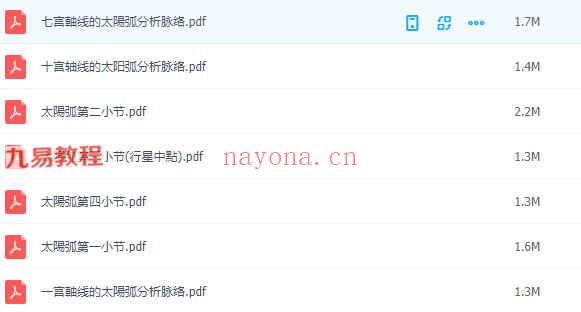
An advanced astrology forecasting course attributed to A K and listed as 19 videos.
Resource Overview
A K Advanced Astrology Forecasting: 19 Videos is a digital learning resource about Predictive Astrology. The English description summarizes the available source listing; the underlying recordings or books are in Chinese. An English translation of the full material is not confirmed.
What You Will Learn
Use the sequence and preview material below to identify the course’s scope, terminology and teaching approach. Check each topic against the original lesson rather than treating a short listing as a complete transcript.
Course Contents
- Predictive astrology
- Advanced technique focus
- Nineteen-video sequence
Original Course Images
Who This Resource Is For
This resource is for readers or learners who can use Chinese-language materials and want a named resource on Predictive Astrology. Compare the stated scope and previews before ordering; a fixed level of prior experience is not assumed unless the source directory says so.
Learning Format and Digital Delivery
19 Chinese-language videos Virtual and downloadable; there is no physical shipment. Price: USD 9.00. A file link is not yet attached to this product. Please contact Karma Kismet before ordering to confirm delivery arrangements; immediate automated access is not promised.
Frequently Asked Questions
Is the full material in English?
No English edition, recording or subtitle track is confirmed. The source material is Chinese-language.
Is a personal consultation included?
No individual consultation is listed with this resource.
Does this resource guarantee an outcome?
No. It is for educational and cultural study, not a guaranteed result or substitute for professional advice.
Editorial Note
Karma Kismet translated and organized the course facts and original previews for English readers. Lesson counts and formats follow the available source listing; unspecified contents, certificates and instructor credentials are not asserted.
Related Courses
Browse Predictive Astrology and read digital delivery information.
Nineteen Files With Sixteen Numbered Main Lessons
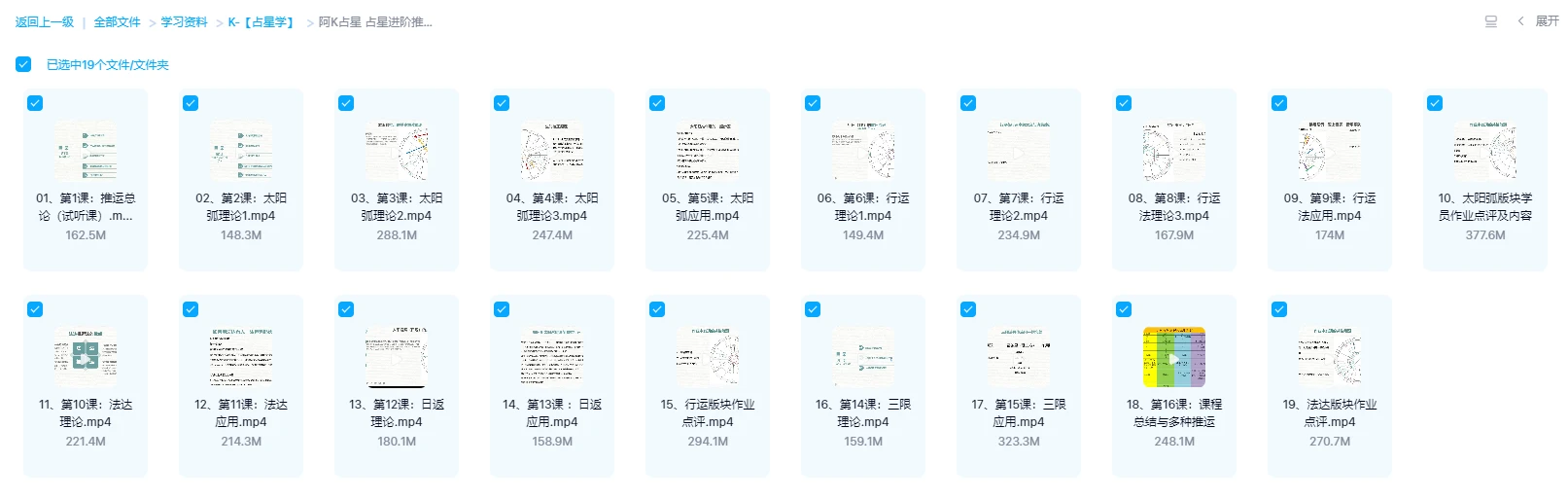
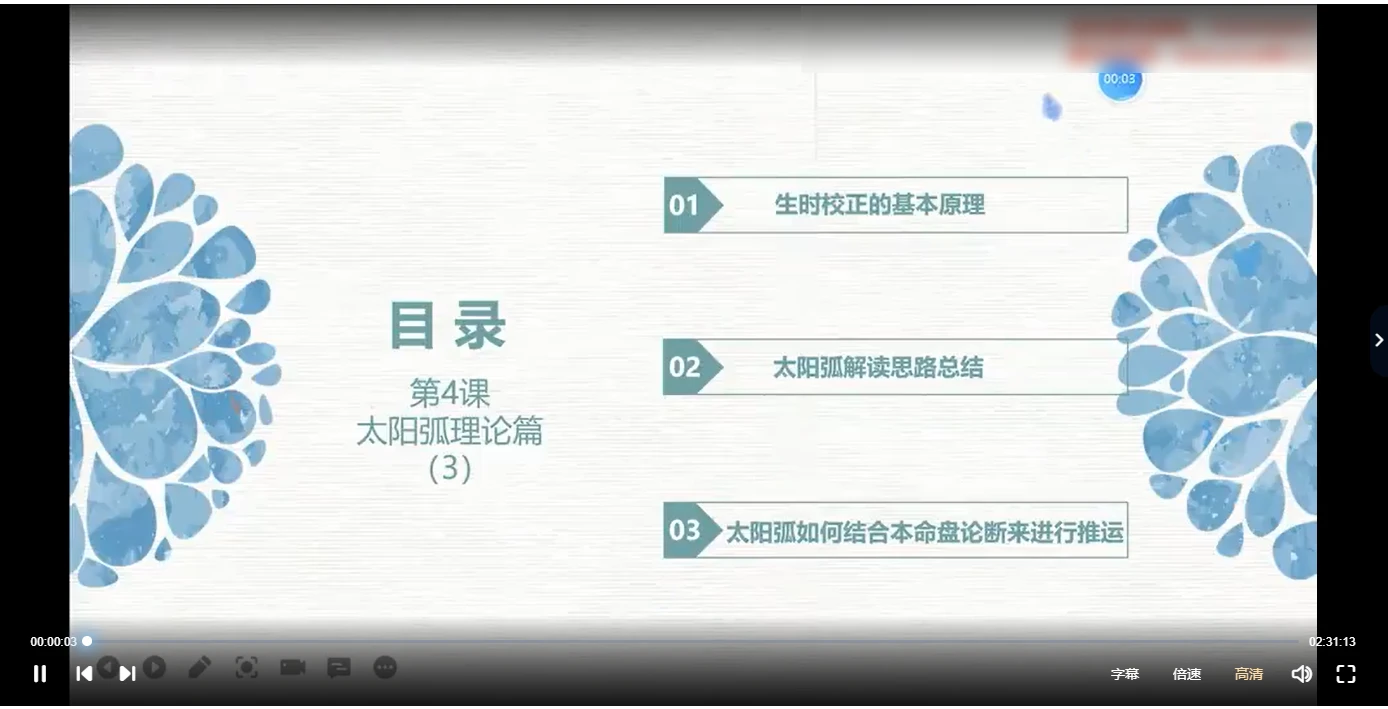
A K’s advanced forecasting collection is listed as nineteen videos, and its directory explains the count. It contains sixteen numbered main lessons plus three files devoted to assignment commentary or supplementary discussion. The first main lesson is a forecasting overview labeled as a preview. Lessons two through five concern solar arc theory and application. Lessons six through nine concern transit theory and application. Later main lessons cover firdaria, solar returns, tertiary progressions, and a final synthesis. These are actual directory topics rather than an invented generic syllabus.
The three additional files name solar arc assignment commentary with supplements, transit assignment commentary, and firdaria assignment commentary. Their presence supports a distinction between teaching files and recorded review material. It does not promise that a purchaser’s own work will be marked or that the original course’s interactive arrangements remain available. The introduction says some astrology background is appropriate. That is a useful suitability note, while the advanced label does not establish a professional qualification or guaranteed forecasting ability.
The Solar Arc Block
The solar arc group has three theory lessons followed by an application lesson, with a separate commentary file appearing later in the inventory. Study the theoretical explanations before summarizing the application, and link the commentary to the same subject in your index. This is a suggested arrangement based on the directory, not an added course schedule. Keep the original lesson and file numbers visible because the inserted review files make the inventory number different from the main lesson number in the later entries.
For each theory point, record the setup demonstrated, the rule applied, and the interpretation offered. Do not treat the method’s name as a complete explanation. If a technical step is unclear, place it on a review list with the relevant recording reference. A precise procedure can be studied without accepting a claim that its interpretation guarantees an event. The source’s language about accurate timing should remain distinct from a verified result. Your notes can preserve the teaching while leaving questions about evidence open.
The Transit Block
The transit group follows a similar pattern: three theory files and an application file, with a separate assignment review. This parallel structure provides a concrete comparison opportunity. Ask how the teacher moves from a setup to an interpretive statement in each block and whether the application uses the same conventions introduced in the theory. Those are viewing questions, not promises that every possible comparison is supplied. The recording itself should establish the details rather than a general description of how transit courses usually work.
When comparing a transit example with a solar arc example, identify whether they concern the same question and period. Otherwise, a difference in language may reflect a different purpose. Keep known contextual information separate from the chart interpretation. If an event was already known, record that fact in the example summary. This avoids hindsight and makes the comparison more useful than a list of apparently successful forecasts with no account of the information available beforehand.
Firdaria and Solar Returns
The directory pairs firdaria theory with firdaria application and later includes a firdaria assignment commentary file. It also pairs solar return theory with solar return application. These labels establish a theory and use structure for the named methods. They do not verify a supplied workbook, a particular software package, or individual guidance. While studying, preserve the original Chinese terms alongside your English equivalents, especially where a familiar translation may conceal a specialized usage.
A personal glossary can include an example of how each method is used in the course. Distinguish the calculation or setup from the proposed significance. If an interpretation describes an annual theme, do not strengthen it into a claim that a specific event must occur. Preserve qualifications and alternatives. When a term remains unclear, record the uncertainty rather than using it confidently in independent practice. A traceable definition is more useful than an elegant phrase that no longer matches the teaching.
Tertiary Progressions and Final Synthesis
The next paired lessons name tertiary progression theory and application. The final main lesson concerns a summary and combined use of several forecasting methods. This makes the collection broader than solar arc alone. Generic source commentary that treats all progression language as one method should not erase the directory’s distinctions. Keep the separate approaches visible in your index, then record how the final synthesis connects them when the actual lesson provides that explanation.
Combining methods should not be interpreted automatically as increasing certainty. Record any stated hierarchy, weighting, or reason for using one approach with another. If several techniques suggest a similar theme, that agreement is still an interpretation rather than proof of an outcome. A clear English summary can show the relationship without promising accuracy. If the synthesis leaves a question unresolved, retain the question. Understanding a course includes recognizing where its explanation is incomplete or where your own comprehension needs another review.
Assignment Commentary as Recorded Study Material
The review files can be useful for examining how an explanation is corrected or expanded. Record the question or task as presented, the response being discussed, and the reason given for a revision. Do not assume that an assignment mentioned in a recording is currently available for submission. If the original instructions are not included clearly, mark that limitation. The existence of commentary supports describing recorded review material, while ongoing marking and instructor access require separate confirmation.
An independent exercise can compare your paraphrase with the commentary and identify the exact point of difference. It might involve a convention, a translation, an omitted factor, or a change in certainty. Keep your earlier version so that you can see what changed. This is more informative than rewriting the note to make it appear correct from the beginning. It also preserves a useful distinction between learning from recorded feedback and receiving personal feedback.
A Review Plan Grounded in the Directory
Organize the collection into overview, solar arc, transits, firdaria, solar returns, tertiary progressions, synthesis, and recorded reviews. This structure follows the actual filenames. At the end of each block, identify the procedure you can describe, the interpretive step you can trace, and the question that remains open. Nineteen videos describe the resource’s format, not a guarantee of expertise. Forecasting accounts can be studied as part of astrology while practical decisions remain grounded in information that can be checked outside the chart.