A 25-lesson astrology camp attributed to Chen Anyi and focused on chart-pattern interpretation. The source does not provide an independently verified full English transcript.
Resource Overview
Chen Anyi Astrology Chart Pattern Camp: 25 Lessons is a digital learning resource about Aspects & Chart Patterns. The English description summarizes the available source listing; the underlying recordings or books are in Chinese. An English translation of the full material is not confirmed.
What You Will Learn
Use the sequence and preview material below to identify the course’s scope, terminology and teaching approach. Check each topic against the original lesson rather than treating a short listing as a complete transcript.
Course Contents
- Chart-pattern framework
- 25-lesson sequence
- Applied interpretation
Original Course Images


Who This Resource Is For
This resource is for readers or learners who can use Chinese-language materials and want a named resource on Aspects & Chart Patterns. Compare the stated scope and previews before ordering; a fixed level of prior experience is not assumed unless the source directory says so.
Learning Format and Digital Delivery
25 Chinese-language video lessons Virtual and downloadable; there is no physical shipment. Price: USD 9.00. A file link is not yet attached to this product. Please contact Karma Kismet before ordering to confirm delivery arrangements; immediate automated access is not promised.
Frequently Asked Questions
Is the full material in English?
No English edition, recording or subtitle track is confirmed. The source material is Chinese-language.
Is a personal consultation included?
No individual consultation is listed with this resource.
Does this resource guarantee an outcome?
No. It is for educational and cultural study, not a guaranteed result or substitute for professional advice.
Editorial Note
Karma Kismet translated and organized the course facts and original previews for English readers. Lesson counts and formats follow the available source listing; unspecified contents, certificates and instructor credentials are not asserted.
Related Courses
Browse Aspects & Chart Patterns and read digital delivery information.
Twenty Five Lessons Plus Three Additional Recordings
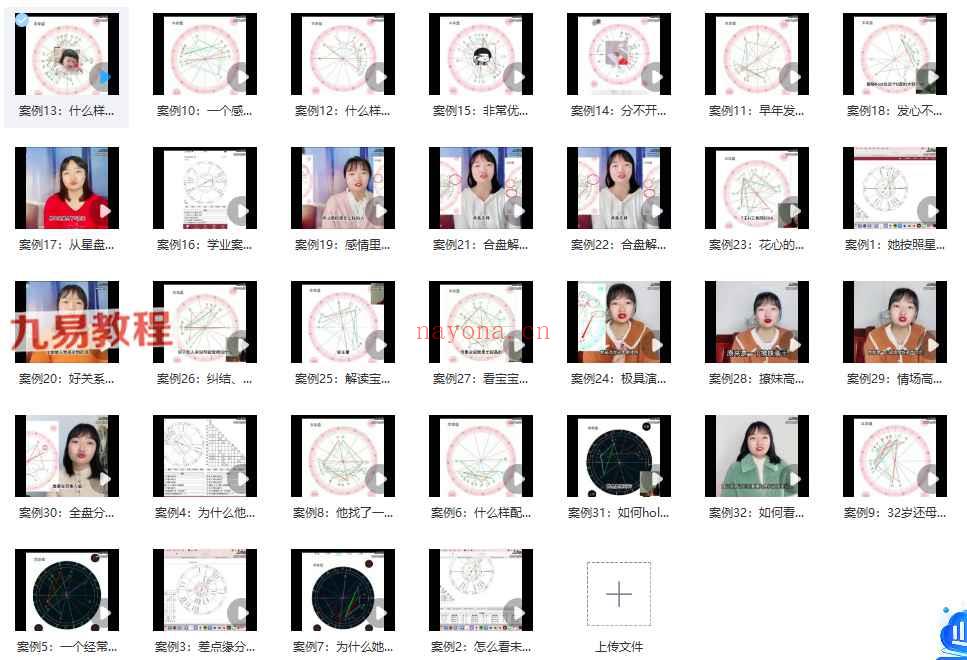
Chen Anyi’s camp is titled as twenty five lessons, while the visible directory contains twenty eight video entries. It includes an opening Live recording numbered zero, lessons one through twenty five, an extra Live recording numbered twenty six, and a closing Live recording numbered twenty seven. This is a useful distinction between the advertised lesson count and the total listed files. The Live labels identify recordings in the directory; they do not promise admission to a current event or access to a group or instructor.
Most lesson filenames give only their numbers. Four consecutive entries are more specific: lesson fifteen names marriage and romantic relationships, lesson sixteen wealth and career, lesson seventeen education and health, and lesson eighteen parents and children. Those are concrete topic labels. The unspecific files should not be assigned invented English lesson titles, and the generic source commentary should not be treated as a complete syllabus. The camp’s chart pattern focus is supported by its title, while detailed methods need to be identified within the teaching.
Creating an Index From Numbered Files
Begin a personal index with the original lesson numbers and add a subject summary only after viewing each file. This avoids mistaking your expectations for the course’s actual sequence. Keep the opening, extra, and closing recordings separate from the main lesson count. Their labels indicate different roles, but they do not establish the exact content of each session. If one supplies an explanation that helps clarify a numbered lesson, link the notes rather than silently incorporating it into that lesson’s title.
For each main file, record one definition, one example, and one question that remains unresolved. This is an independent study routine, not a promised assessment. A numbered directory can be difficult to navigate without such notes, because the filename alone may not reveal where a specific concept was explained. A short index makes repeated review more targeted. It also preserves the difference between a topic you confirmed in the material and a topic mentioned only in the source’s broader promotional prose.
Chart Patterns as Descriptions and Interpretations
A pattern should be documented before its proposed meaning. Write down the chart factors selected, the relationships described, and any criteria used to identify the pattern. Then record the interpretation offered for the example. A pattern label alone can hide important assumptions. If a criterion is unclear, leave a question in your notes instead of supplying a rule from another teacher. The course title establishes a pattern centered subject, but it does not verify every specific pattern mentioned in generic commentary.
An independent exercise can compare two explanations that use similar vocabulary. Identify whether they concern the same question and whether the same criteria are applied. If the contexts differ, keep that difference visible. A pattern may be discussed through several life areas without becoming a universal verdict about someone’s future. Your own associations can enrich reflection, but they should be labeled separately from the teacher’s method so that an English summary remains traceable.
The Relationship and Career Topic Pair
Lessons fifteen and sixteen explicitly identify relationship and career or wealth subjects. Approach them by noting how the question changes the use of the chart vocabulary. A discussion of a personal preference is different from a prediction about another person’s intentions or an external outcome. Preserve the wording and certainty of each explanation. A symbolic pattern cannot verify a partner’s private feelings, guarantee a marriage, establish an employer’s decision, or predict a financial return.
For independent reflection, keep practical facts and symbolic themes on separate lines. In a relationship context, practical facts might include what has been communicated and what choices belong to the person asking. In a career context, they might include available options and actual constraints. These are your own study prompts, not additional listed course topics. They help prevent the specialized subject headings from giving an interpretation stronger authority than the information in the example can support.
Education, Health, Parents, and Children
Lessons seventeen and eighteen name education and health, then parents and children. These labels establish that the subjects are addressed, but they do not prove that a chart can diagnose illness, forecast an examination result, or determine a child’s abilities. When studying those recordings, keep the interpretation’s limits clear. A health themed explanation is not a substitute for clinical information. A statement about a child’s talents should not become a fixed label that limits the child’s possibilities or overrides their own developing interests.
In family related examples, distinguish the participant’s report from the reader’s symbolic account. A chart does not establish an absent relative’s thoughts or intentions. If a course explanation uses a strong judgment, record it as the interpretation presented rather than repeating it as a fact. For independent conversations, obtain consent and leave room for disagreement. These considerations do not assert a separate ethics lesson in the camp; they describe a careful way to study and discuss sensitive subjects that the filenames explicitly name.
Opening, Extra, and Closing Recordings
The three additional files are part of the visible inventory, but their brief labels should not be expanded into promised benefits. An opening recording may be useful for understanding context if the content actually supplies it. An extra recording can be indexed according to the subject you observe. A closing recording may provide review, but that role should be confirmed rather than assumed. Preserve their original identities so that the total of twenty eight listed entries remains understandable beside the title’s twenty five lessons.
Review Cases With the Original Question
If examples appear in the lessons, record the question and known circumstances before the chart interpretation. Put later outcomes or comments in a separate section. This prevents hindsight from making the account seem more exact than it was. Include mismatches and unresolved points in your summary. A case can demonstrate how a method is used without proving that the same method produces reliable answers to every similar question. The directory does not provide a full case transcript, so those details should come from actual viewing.
A final notebook can organize the camp into confirmed definitions, example reasoning, named topic sessions, and open questions. This is your own learning map. It does not promise supplied handouts, graded work, certification, or continuing instructor access. Chen Anyi’s listing offers a numbered pattern focused collection with several clearly named applications. Careful study makes that collection more navigable while preserving the difference between a traditional interpretation and a fact that can be verified outside the chart.