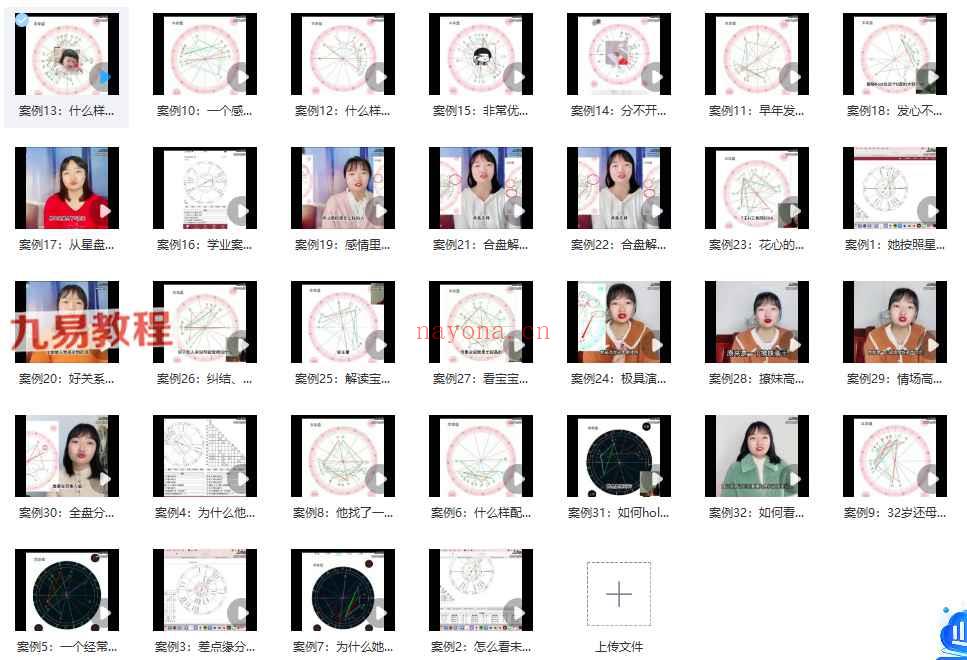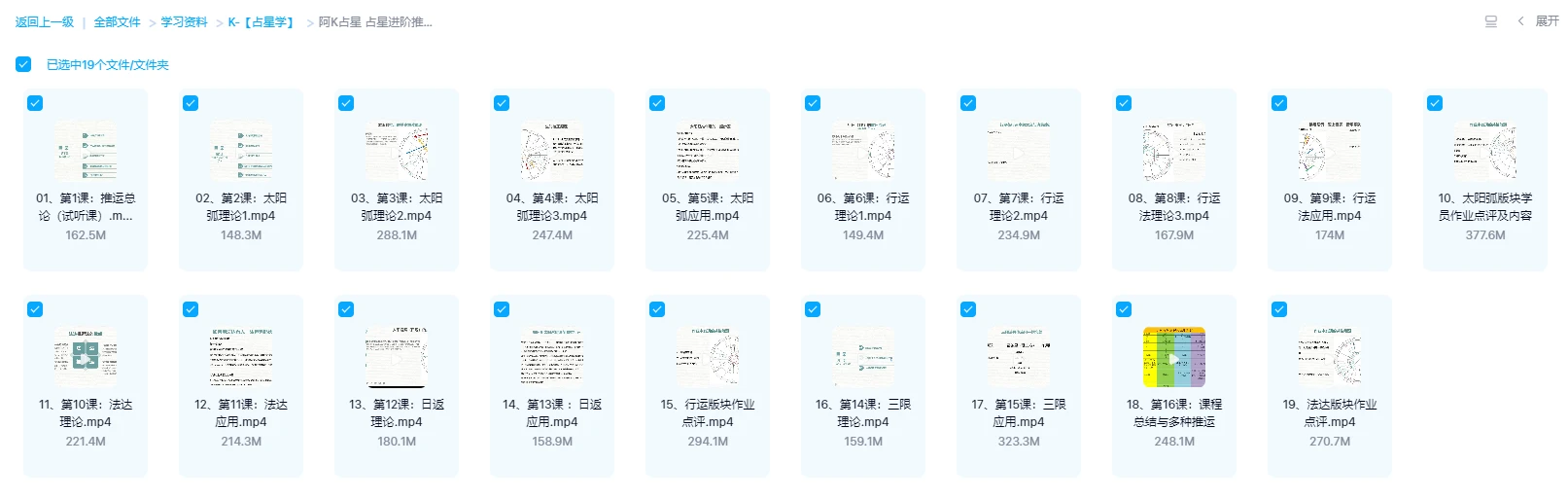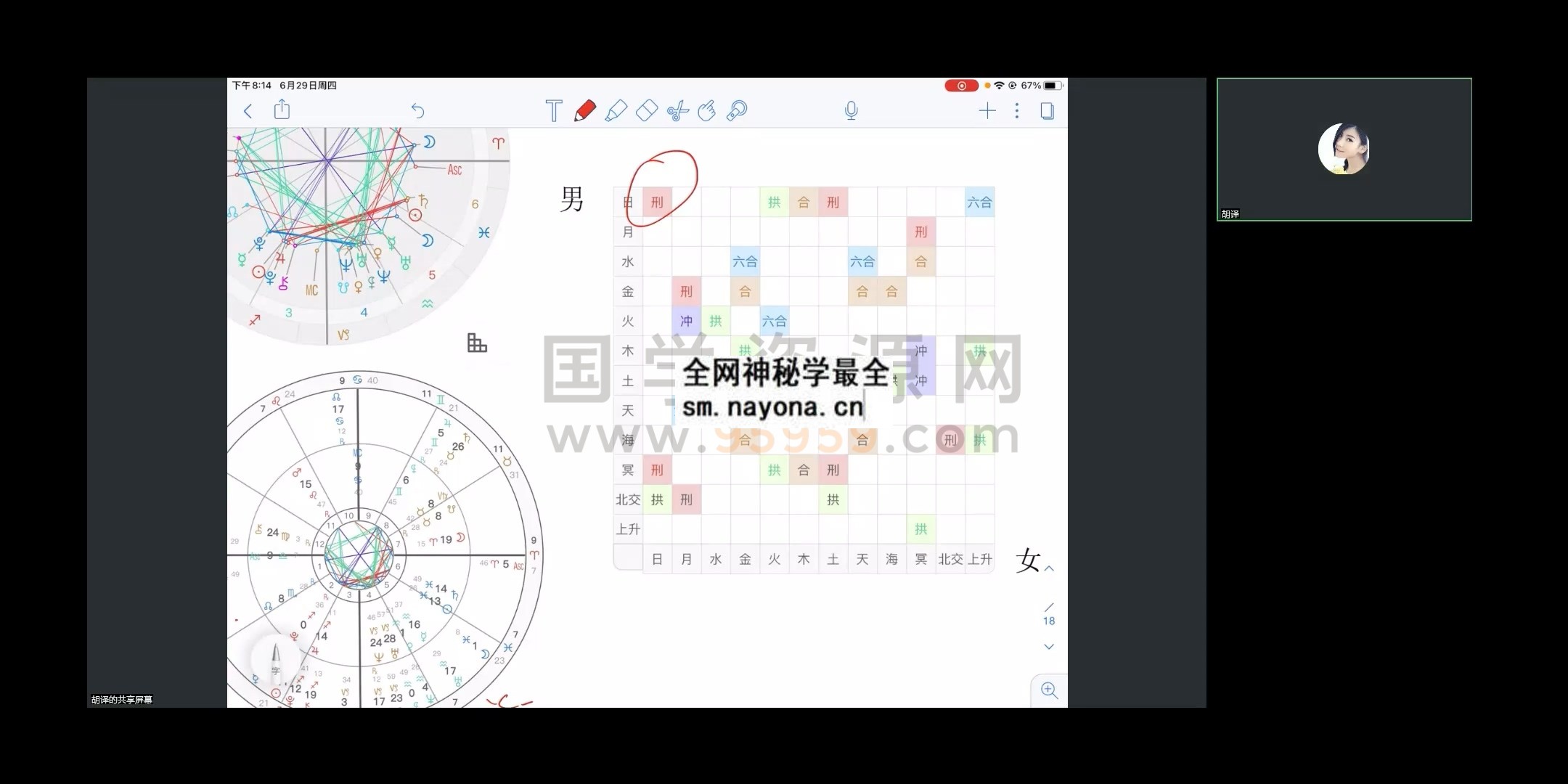
Li Qingxia's 2025 introductory series lists 12 lessons covering astrological foundations, integrated chart reading, annual timing and relationship chart comparison.
Resource Overview
Li Qingxia Western Astrology Foundations: 12 Lessons is a digital learning resource about Western Astrology for Beginners. The English description summarizes the available source listing; the underlying recordings or books are in Chinese. An English translation of the full material is not confirmed.
What You Will Learn
Use the sequence and preview material below to identify the course’s scope, terminology and teaching approach. Compare each card interpretation with the original lesson rather than treating a short listing as a complete transcript.
Course Contents
- Foundations of the astrological chart
- Integrated natal-chart interpretation
- Annual timing as named in the course title
- Relationship chart comparison
Original Course Images


Who This Resource Is For
This resource is for readers or learners who can use Chinese-language materials and want a named resource on Western Astrology for Beginners. Compare the stated scope and previews before ordering; a fixed level of prior experience is not assumed unless the source directory says so.
Learning Format and Digital Delivery
12 Chinese-language video lessons Virtual and downloadable; there is no physical shipment. Price: USD 9.00. A file link is not yet attached to this product. Please contact Karma Kismet before ordering to confirm delivery arrangements; immediate automated access is not promised.
Frequently Asked Questions
Is the full material in English?
No English edition, recording or subtitle track is confirmed. The source material is Chinese-language.
Is a personal consultation included?
No individual consultation is listed with this resource.
Does this resource guarantee an outcome?
No. It is for educational and cultural study, not a guaranteed result or substitute for professional advice.
Editorial Note
Karma Kismet translated and organized the course facts and original previews for English readers. Lesson counts and formats follow the available source listing; unspecified contents, certificates and instructor credentials are not asserted.
Related Courses
Browse Western Astrology for Beginners and read digital delivery information.
The Four Subject Areas Named in the Course Title
Li Qingxia’s listing identifies a 2025 introductory series of twelve lessons and names four areas: astrological foundations, integrated chart interpretation, annual timing, and interpersonal chart comparison. These title level details provide a reliable broad outline of the advertised scope. The supplied text does not include a numbered file directory that assigns a specific topic to each lesson. It would therefore be inaccurate to create twelve English lesson titles or promise that a particular technique appears in a particular recording. The course can be described through its named areas while that detailed sequence remains unconfirmed.
The phrase learn astrology in twelve lessons belongs to the source’s presentation and should not be read as a guarantee of proficiency. A short series can provide an introduction, but understanding terminology and applying a method depend on a learner’s study and the actual material. For an English reader, following Chinese explanations adds another practical consideration. A glossary and a record of examples can help, especially when a term has several English equivalents or when a familiar word has a specialized role in chart interpretation.
Foundations Before a Whole Chart Interpretation
The foundations component can be approached by identifying the vocabulary used in the recordings. Keep a note of each symbol or term as it is introduced and record how it is used in an example. Avoid building a glossary entirely from another course, because different approaches may emphasize different relationships or conventions. When the teacher combines several features, return to your definitions and check whether you understand each component separately. This is an independent study strategy suited to the stated foundational focus, not a promised assignment or supplied course workbook.
A useful notebook separates chart description from interpretation. A description records the features shown in the example. An interpretation explains what the teacher associates with those features. A personal application is a further step and should be labeled as such. This arrangement prevents an interpretive statement about temperament or a life theme from becoming a factual diagnosis of a person. It also makes your English summaries easier to review because you can identify the original chart observation that supported each proposed meaning.
What Integrated Reading Asks You to Notice
The title’s integrated interpretation component suggests an interest in connecting chart features rather than treating each one as an isolated keyword. While watching, follow the sequence of reasoning: which feature receives attention first, which additional information modifies it, and how the final account is qualified. Those are questions to investigate in the teaching, not a claim about a specific proprietary method. A learner can record the steps actually demonstrated and compare them across examples without inventing a universal order that the source listing does not establish.
Integration can be difficult when two interpretations seem to point in different directions. Instead of resolving the tension immediately, note the difference and look for the teacher’s explanation. Perhaps the statements concern different contexts, or perhaps the recording leaves the relationship unclear. Both possibilities deserve an honest note. An integrated summary should preserve meaningful qualifications rather than erasing them to create a smoother story. This makes the learning process more transparent and reduces the temptation to treat a broad personality account as a precise factual description.
Annual Timing as a Named Interpretive Topic
Annual timing is explicitly named in the source title. That establishes a subject area, but it does not identify every timing technique used or provide a verified forecast for a particular person. When studying this component, record the dates, chart references, and method actually shown. Keep the technical setup separate from the interpretation of a period. If a convention depends on a stated assumption, preserve it in your notes. A timing account is easier to evaluate when the reader can see both the procedure and the language used to describe its possible significance.
For independent reflection, a timing discussion can be compared with a journal of events recorded before revisiting the interpretation. Keep the original wording rather than adjusting it after learning what happened. Note mismatches as well as apparent matches. This does not establish predictive validity, but it helps you avoid selectively remembering only the parts that seemed to fit. A symbolic account of a year should not become a guarantee about work, health, relationships, or income. Decisions in those areas still require information appropriate to the real circumstances.
Interpersonal Chart Comparison and Consent
The interpersonal comparison component concerns the relationship between charts as presented in the course. It should be studied as an interpretive approach, not as proof that two people are compatible or incompatible. If you use another person’s details in independent practice, obtain their consent and avoid presenting the reading as an assessment they must accept. A person’s own account of a relationship has a different status from a symbolic interpretation. Keeping both perspectives distinct makes the discussion clearer and leaves room for disagreement.
When reviewing a comparison example, note whose experience is being discussed and what contextual information is supplied. A chart comparison cannot verify an absent person’s feelings, intentions, or future behavior. An interpretation might provide a prompt to discuss communication or differing preferences, but the discussion remains grounded in what the people involved actually report. If the teacher uses a strong compatibility phrase, preserve it as the teacher’s interpretive statement rather than repeating it as an established fact about any pair of people with similar chart features.
Working With Input Details Carefully
In your own chart study, record the input information used for an example and any uncertainty about it. If a recording supplies a chart without explaining the underlying details, label the chart as the example shown rather than trying to reconstruct missing information. Do not silently change settings or substitute an uncertain time and then compare the result as though it were identical. This is a practical record keeping consideration, not a claim that the listing includes chart software, birth data verification, or a separate technical setup lesson.
For English notes, retain the terminology of the original explanation before adding your preferred translation. A word associated with timing, comparison, or chart structure may have a specific meaning in context. Repeated examples can help you refine the translation. If a term remains unclear, keep it in a questions list rather than using it confidently in a personal reading. Clear limits in your notes make them more useful than a polished but uncertain summary, especially when the public course description gives only four broad areas.
Reviewing a Twelve Lesson Introduction
A manageable study approach is to summarize each recording in a few sentences, then connect those summaries to the four named areas. Some recordings may address more than one area; let the actual material determine the mapping. At the end, identify which explanations you can follow, which terms you can translate reliably, and which questions remain unresolved. The result is a personal learning map, not a certificate of mastery. The listed series offers a starting framework for studying Western astrology while its symbolic interpretations remain distinct from verified facts about a person’s life.