A 13-video course on interpersonal astrological chart comparison attributed to Qingxia. It studies relationship symbolism, not certain compatibility outcomes.
Resource Overview
Qingxia Interpersonal Synastry: 13 Videos is a digital learning resource about Synastry & Relationship Astrology. The English description summarizes the available source listing; the underlying recordings or books are in Chinese. An English translation of the full material is not confirmed.
What You Will Learn
Use the sequence and preview material below to identify the course’s scope, terminology and teaching approach. Check each topic against the original lesson rather than treating a short listing as a complete transcript.
Course Contents
- Chart comparison
- Interpersonal interpretation
- Thirteen-video course
Original Course Images


Who This Resource Is For
This resource is for readers or learners who can use Chinese-language materials and want a named resource on Synastry & Relationship Astrology. Compare the stated scope and previews before ordering; a fixed level of prior experience is not assumed unless the source directory says so.
Learning Format and Digital Delivery
13 Chinese-language videos Virtual and downloadable; there is no physical shipment. Price: USD 9.00. A file link is not yet attached to this product. Please contact Karma Kismet before ordering to confirm delivery arrangements; immediate automated access is not promised.
Frequently Asked Questions
Is the full material in English?
No English edition, recording or subtitle track is confirmed. The source material is Chinese-language.
Is a personal consultation included?
No individual consultation is listed with this resource.
Does this resource guarantee an outcome?
No. It is for educational and cultural study, not a guaranteed result or substitute for professional advice.
Editorial Note
Karma Kismet translated and organized the course facts and original previews for English readers. Lesson counts and formats follow the available source listing; unspecified contents, certificates and instructor credentials are not asserted.
Related Courses
Browse Synastry & Relationship Astrology and read digital delivery information.
A Thirteen Topic Outline for Relationship Chart Study
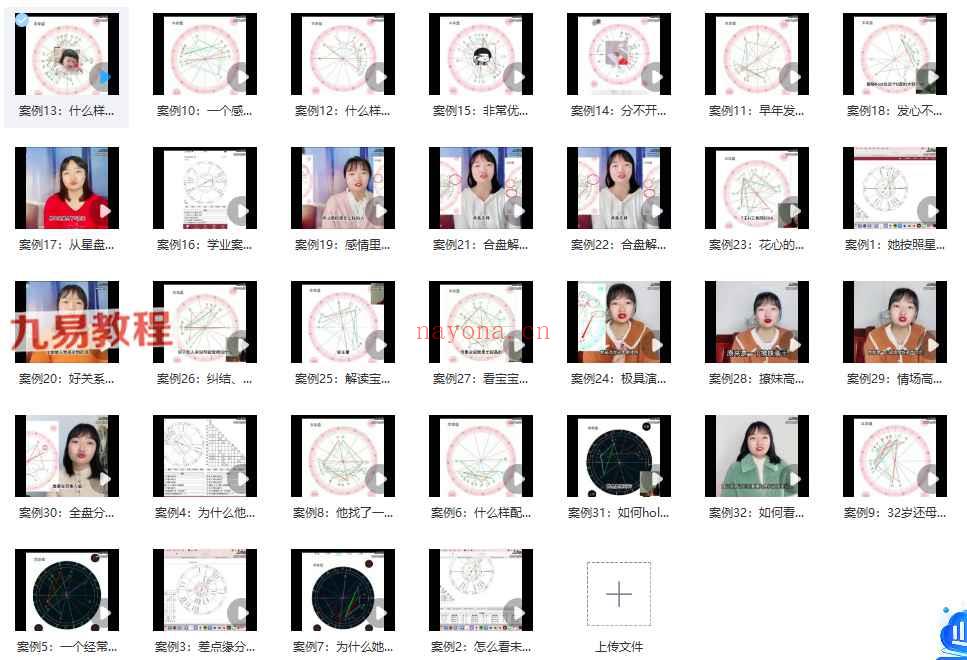
Qingxia’s interpersonal course provides a thirteen topic directory. It begins with comparison chart houses and aspects, then names composite midpoint charts, time and space charts, and a chart type called Marx or Ma Pan in the source. Later entries concern relationship timing, tertiary progressions for several relationship chart types, family and parent child comparison, career relationships, deeper house and aspect study, a synthesis, a partner qualities topic, and relationship direction. These are concrete listing subjects, not promises of certain compatibility or future events.
The source introduction explicitly frames the course as psychological astrology cultural knowledge for entertainment and reference, while some topic titles use predictive language. Both details should remain visible. The timing and relationship direction labels identify what is discussed, but they do not establish that the course verifies a marriage, divorce, attraction, or private intention. A careful English description preserves the topic names while treating their applications as symbolic interpretations rather than guaranteed results.
Comparison Chart Houses and Aspects
The first two topics separately name houses and aspects in comparison charts. Topics nine and ten return to those subjects with depth related wording. This structure offers a useful way to review how an earlier explanation is expanded. Record the original definitions and compare them with the later examples. Do not assume that depth means a particular list of additional techniques. The directory identifies a return to the subjects, while the actual teaching establishes what is added and how it changes the interpretation.
A personal glossary can preserve the Chinese term, a working English translation, and the context of an example. If a comparison involves two people, keep each person’s input details and reported experience separate from the chart account. A symbolic relationship between factors cannot confirm that one person feels or behaves in a particular way. It can be studied as a proposed lens for discussion, with room for participants to disagree or prefer a different explanation.
Several Relationship Chart Types
The third and fourth topics name composite midpoint, time and space, and Marx or Ma Pan charts. These should not be merged into one generic compatibility chart. Record how the course distinguishes their setup, intended use, and interpretation. Where an English equivalent is uncertain, preserve the original label rather than forcing a familiar term onto it. A translation can be refined after the teacher’s explanation is clear. The title alone does not supply enough detail to define every chart type completely.
For independent comparison, use the same relationship question only when the actual inputs and setup are available. Then note what each approach is said to contribute. If the questions differ, retain that difference rather than treating the answers as directly competing. This is a suggested study exercise, not a supplied assignment. It helps keep technical distinctions visible and avoids turning a collection of chart types into an apparently precise verdict about the relationship.
Timing Topics and Their Limits
The fifth topic names timing related to attraction, marriage, and divorce. The sixth names tertiary progressions for composite, time and space, and Ma Pan charts. These are source supported subjects. They do not establish that an event can be predicted reliably or that a chart determines what the people involved will choose. When viewing, record the procedure, the proposed period, and any qualifications separately. A cautious statement should remain cautious in your English paraphrase.
For personal review, keep the initial wording before learning what happened. Include outcomes that did not fit as well as apparent matches. Avoid changing the question or time window after the fact to make the account look successful. This does not validate the forecasting method; it improves the honesty of your notes. The source’s cultural and reference framing is compatible with studying these topics without treating them as factual schedules for another person’s life.
Family, Parent Child, and Career Relationships
Topics seven and eight broaden the scope beyond romantic partnerships to family, parent child, and career relationships. The directory supports that broader interpersonal focus, but it does not verify specific workplace or family case histories. Study the question and context actually supplied. A chart account cannot establish an absent relative’s motives or a colleague’s intentions. Keep the participant’s own report on a separate line and do not replace it with a symbolic story simply because the story seems coherent.
Parent child material calls for care with fixed labels. An interpretation about a child’s preferences or talents should not limit their possibilities or override their own development. In independent conversations, obtain consent and allow people to reject the account. These are application considerations, not an asserted ethics unit in the course. They help maintain the distinction between studying relationship symbolism and making judgments that affect real relationships without adequate evidence.
Synthesis, Partner Qualities, and Relationship Direction
The final three topics name a combined summary, reading partner qualities from a natal chart, and analyzing the direction of a relationship. These subjects should be recorded with their interpretive limits. A natal account does not prove the qualities of a future partner, and a relationship direction account cannot guarantee reconciliation, separation, or commitment. Note what the course actually connects and how it expresses uncertainty. Avoid adding stronger conclusions to make the summary sound more decisive.
An independent review can distinguish the known situation, the symbolic interpretation, and the practical question still open. For example, a theme about communication may prompt a conversation, but the conversation’s content and outcome are not established by the chart. Keep those levels separate in your notebook. This makes the material easier to discuss and prevents the final synthesis from becoming a universal answer to relationship questions with very different circumstances.
A Study Map With Consent and Clear Attribution
Create an index following the thirteen actual topic labels, then link the introductory and deeper comparison chart files. Preserve the distinct chart types and timing topics instead of flattening them into a single method. Your map is a learning aid, not a credential or a promise of instructor access. Qingxia’s listed course can be studied as cultural and psychological astrology material while the people involved retain authority over their own accounts and decisions. Traceable notes make that boundary clear.
Before sharing an English summary, check whether every statement is a confirmed topic, a reported explanation, or your own inference. Keep the attribution visible and preserve uncertainty. Thirteen videos describe the stated format, while suitability depends on language, background, and the actual material. A careful learner can explore several relationship chart approaches without presenting symbolic interpretations as proof of compatibility or private feelings.