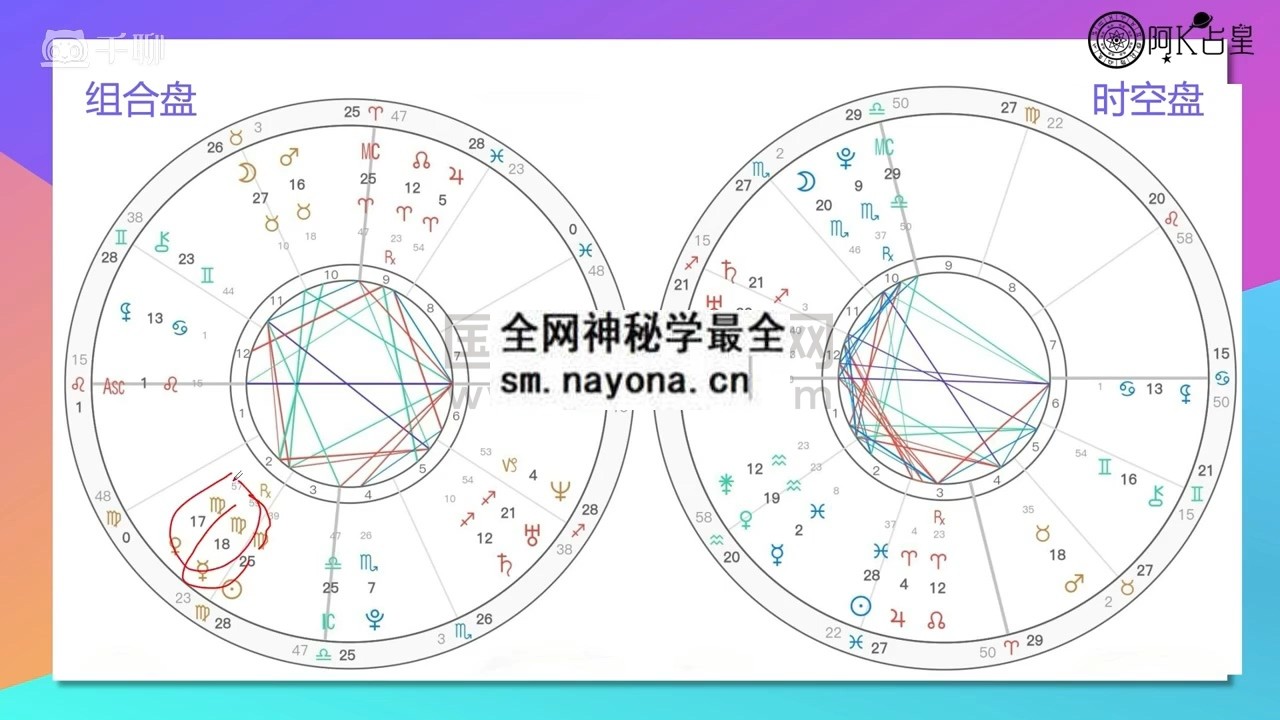
An eight-lesson professional astrology resource attributed to Wang Xiaoya, with notes listed alongside the videos.
Resource Overview
Wang Xiaoya Professional Astrology Course: Eight Lessons is a digital learning resource about Professional Astrology Practice. The English description summarizes the available source listing; the underlying recordings or books are in Chinese. An English translation of the full material is not confirmed.
What You Will Learn
Use the sequence and preview material below to identify the course’s scope, terminology and teaching approach. Check each topic against the original lesson rather than treating a short listing as a complete transcript.
Course Contents
- Professional astrology study
- Eight-lesson sequence
- Supporting course notes
Original Course Images
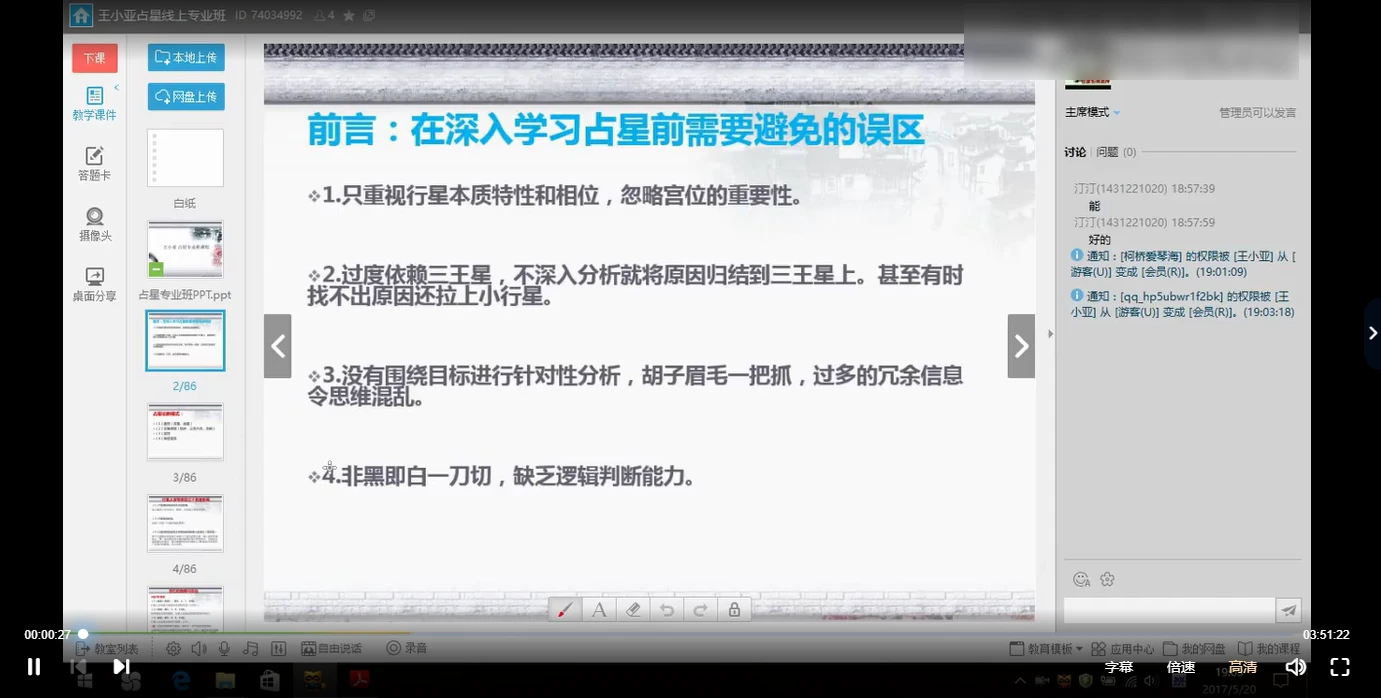
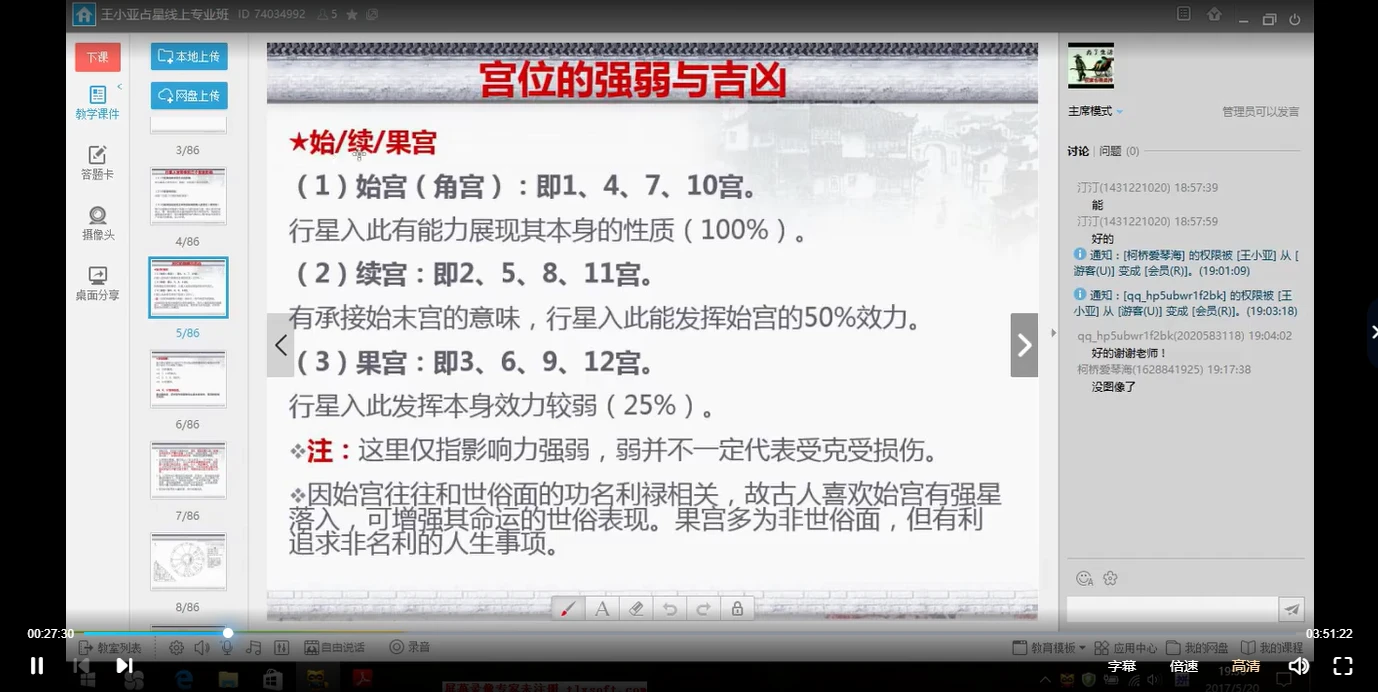
Who This Resource Is For
This resource is for readers or learners who can use Chinese-language materials and want a named resource on Professional Astrology Practice. Compare the stated scope and previews before ordering; a fixed level of prior experience is not assumed unless the source directory says so.
Learning Format and Digital Delivery
Eight Chinese-language videos and course notes Virtual and downloadable; there is no physical shipment. Price: USD 9.00. A file link is not yet attached to this product. Please contact Karma Kismet before ordering to confirm delivery arrangements; immediate automated access is not promised.
Frequently Asked Questions
Is the full material in English?
No English edition, recording or subtitle track is confirmed. The source material is Chinese-language.
Is a personal consultation included?
No individual consultation is listed with this resource.
Does this resource guarantee an outcome?
No. It is for educational and cultural study, not a guaranteed result or substitute for professional advice.
Editorial Note
Karma Kismet translated and organized the course facts and original previews for English readers. Lesson counts and formats follow the available source listing; unspecified contents, certificates and instructor credentials are not asserted.
Related Courses
Browse Professional Astrology Practice and read digital delivery information.
Eight Videos With Four Named Documents
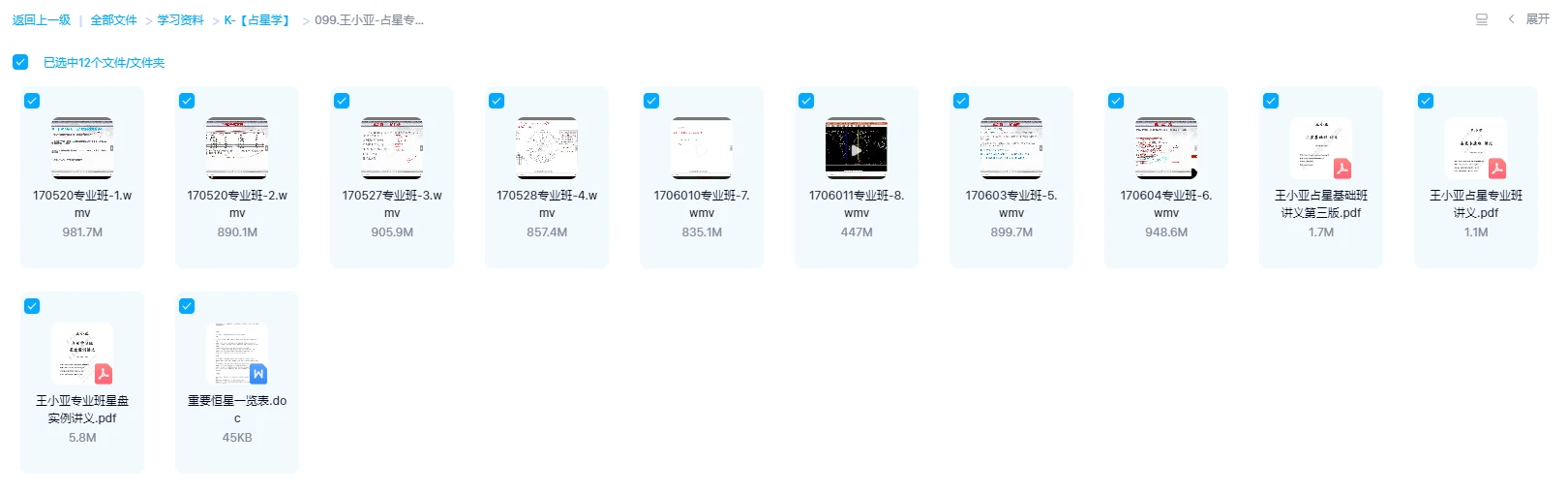
Wang Xiaoya’s professional astrology listing gives a useful inventory beyond its eight lesson title. The visible files include eight WMV recordings, a professional class chart example handout in PDF, a professional class handout in PDF, a third edition foundational class handout in PDF, and a DOC file listing important fixed stars. These are four named supporting documents. Their presence supports describing a mixed video and document resource, while page counts, detailed contents, and exact relationships between documents and recordings are not established by the filenames alone.
The eight recording names include date like prefixes and professional class numbers. Several prefixes appear unusual, so this description does not silently correct them or infer a precise recording calendar. Use the class numbers to organize a personal index, retaining the original filenames for reference. The directory does not supply eight topic specific lesson titles. An English summary should not create those titles from generic commentary or assume that the documents are transcripts of particular recordings.
The Source’s Interest in House Connections
The introductory text contrasts simple sign or placement descriptions with less frequently explained ideas about house rulers and connections among houses. This gives the resource a more specific interpretive emphasis than the broad word professional alone. It does not prove that every recording focuses exclusively on those ideas. A learner can investigate how the course develops them by tracing examples in the actual material. Keep the teacher’s explanation separate from familiar conventions borrowed from another astrology resource.
A useful notebook can describe the chart observation, the rule used to connect factors, and the meaning proposed in the example. This helps reveal whether you understand the connection or only remember a keyword. If a step is missing or unclear, mark it for review rather than inventing a link. A coherent account can still depend on interpretive choices. Recording those choices makes the method easier to examine and prevents the professional label from giving every conclusion an appearance of established fact.
Using the Professional Class Handout
The professional class handout is a named PDF in the directory. When reading it, identify its actual headings and terminology before linking them to video sessions. If the material explicitly refers to a recording or example, preserve that reference. If the relationship is only plausible, label the link as your own proposed connection. This avoids making the inventory appear more coordinated than the evidence supports. A document can be useful for review without being a complete transcript or an official assignment book.
For English study, retain the original Chinese term beside a working translation and an example of its use. A familiar English word may hide a specialized meaning. If a later example clarifies the term, add that context instead of replacing the earlier definition without explanation. Your glossary should show how understanding developed. This is an independent learning aid, not a promised bilingual handout. The listing identifies Chinese language material and does not establish an English edition of the supporting documents.
Chart Examples as a Separate Reference
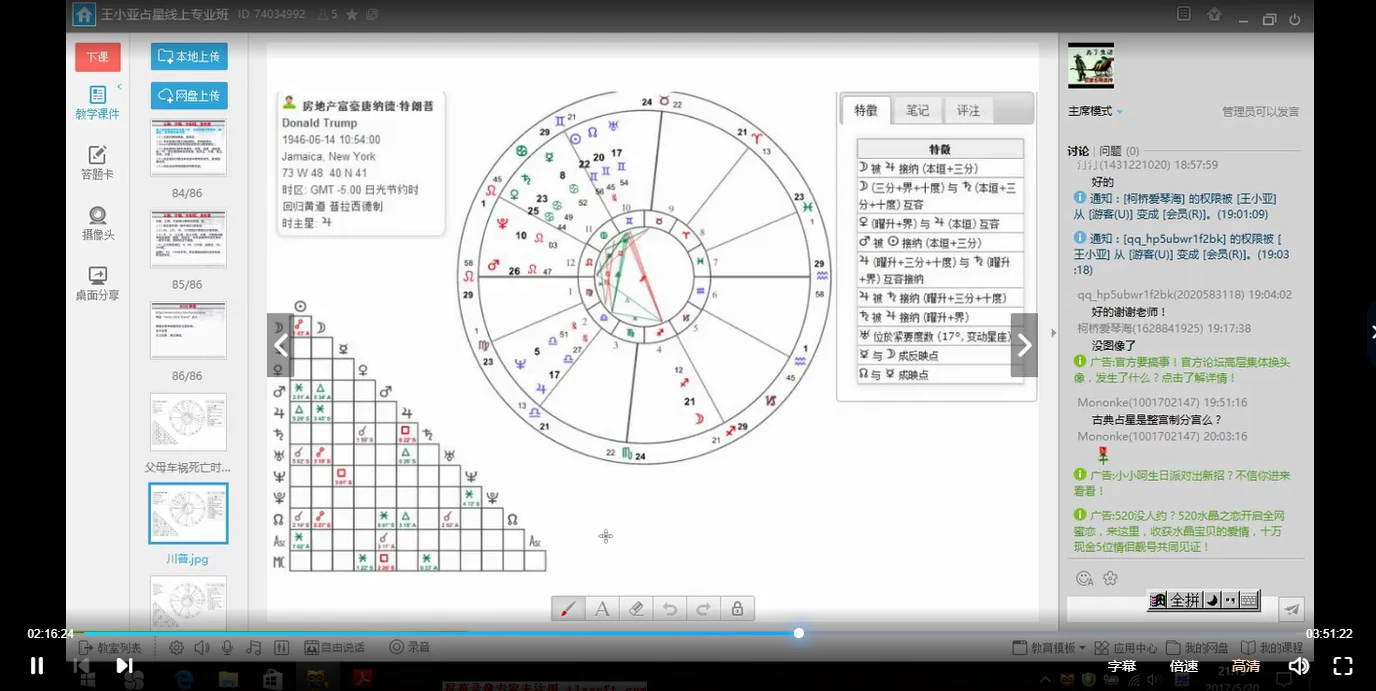
The chart example handout has its own filename, which is a reason to keep it distinct from the general professional handout. Record the question or subject of an example, the information supplied, and the interpretation offered. A case about a known outcome should remain identified as retrospective if that is how it is presented. Otherwise, a summary may make an explanation appear predictive when it was developed with the outcome already available. The filename establishes examples, not a complete history of every person discussed.
If you compare a chart example with a video explanation, preserve both references. Note what the document adds and what the spoken explanation clarifies. Do not assume that a missing detail in one source is supplied by the other unless you can locate it. A useful study record keeps gaps visible. It also distinguishes a participant’s reported experience from the teacher’s symbolic interpretation, which cannot verify private intentions or replace direct information about a situation.
The Foundational Handout’s Role
The third edition foundational handout is another specifically listed PDF. Its edition label identifies the document but does not establish a publication date or a revision history. A learner can use it to review terms encountered in the professional material, linking definitions only when the actual text supports them. It should not be taken as proof that the eight videos include a complete beginner course. The listing’s professional frame and mixed documents need to be assessed through their actual contents.
A transition page can list terms you understand, terms used differently from another source, and terms that remain unclear. Return to the foundational document where appropriate, then note whether it resolves the question. This is a suggested study routine, not an entry requirement or graded assessment. It helps avoid the false confidence that comes from recognizing a word while not understanding its function in the course’s reasoning. Repeated examples can refine the glossary without requiring every idea to be settled immediately.
The Fixed Star Document
The DOC filename identifies a list of important fixed stars. It does not establish a complete fixed star curriculum, a particular catalogue edition, or a verified interpretation for every entry. Record the names and conventions actually supplied, and distinguish an identifying detail from a symbolic meaning. If the document is used alongside a chart example, preserve the stated connection. Do not add fixed star conclusions to every example merely because the inventory contains the file.
Where a name or translation is uncertain, keep the original wording until the material clarifies it. A list can function as a reference without proving a causal claim about a person’s life. The same boundary applies to the course’s other specialized vocabulary. A technical association is part of the interpretive framework being studied; it is not automatically a documented fact about character, health, money, or future events.
A Study Map for the Mixed Formats
Create separate indexes for the eight recordings and four documents, then link them through confirmed topics and examples. This makes the collection navigable without inventing a detailed syllabus or ongoing instructor access. The professional title describes the source’s positioning, not a qualification awarded to the learner. Careful notes can preserve the house connection emphasis and the actual supporting materials while leaving credentials, personal feedback, and predictive outcomes unestablished. Its usefulness for an English reader depends on language and the ability to trace the explanations in the material.