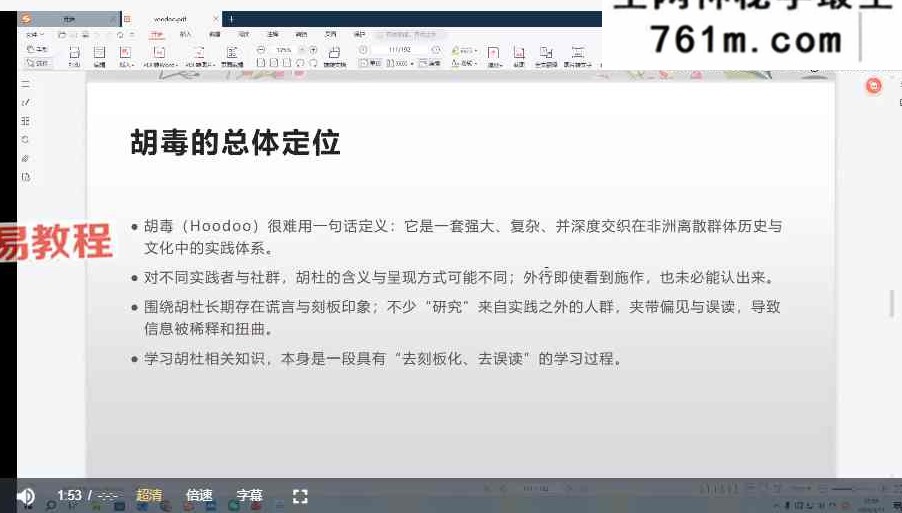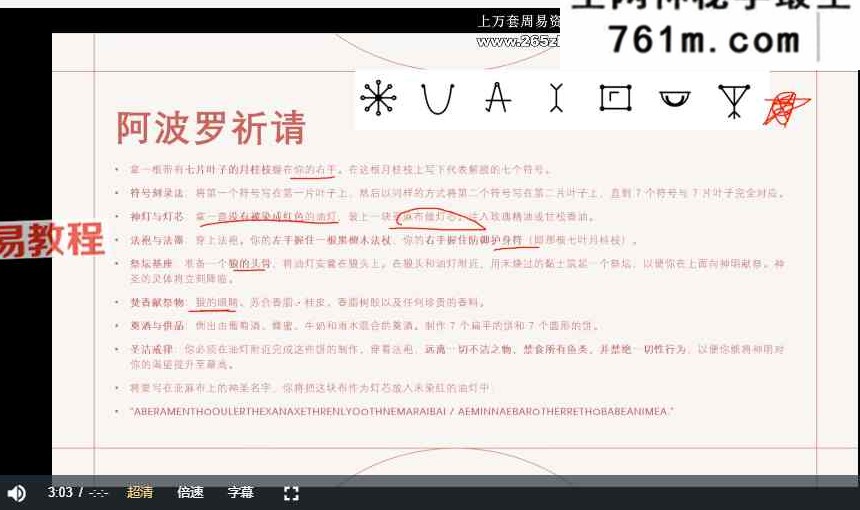
A 2021 course attributed to Gui Gui on Solomonic planetary magic, listed as twelve videos with notes.
Resource Overview
Gui Gui Solomonic Planetary Magic: Twelve Videos is a digital learning resource about Planetary Magic & Correspondences. The English description summarizes the available source listing; the underlying recordings or books are in Chinese. An English translation of the full material is not confirmed.
What You Will Learn
Use the sequence and preview material below to identify the course’s scope, terminology and teaching approach. Check each topic against the original lesson rather than treating a short listing as a complete transcript.
Course Contents
- Planetary correspondences
- Solomonic framework
- Twelve-video course
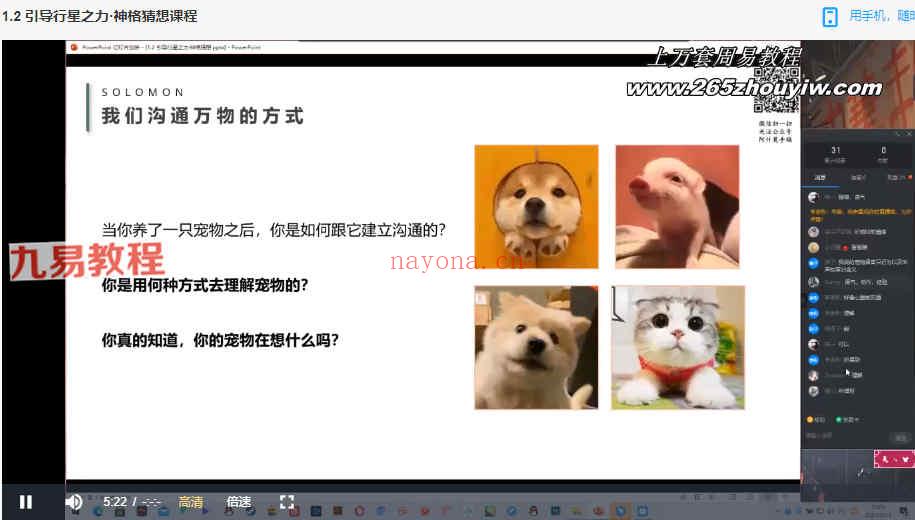
Original Course Images
Who This Resource Is For
This resource is for readers or learners who can use Chinese-language materials and want a named resource on Planetary Magic & Correspondences. Compare the stated scope and previews before ordering; a fixed level of prior experience is not assumed unless the source directory says so.
Learning Format and Digital Delivery
12 Chinese-language videos and course notes Virtual and downloadable; there is no physical shipment. Price: USD 9.00. A file link is not yet attached to this product. Please contact Karma Kismet before ordering to confirm delivery arrangements; immediate automated access is not promised.
Frequently Asked Questions
Is the full material in English?
No English edition, recording or subtitle track is confirmed. The source material is Chinese-language.
Is a personal consultation included?
No individual consultation is listed with this resource.
Does this resource guarantee an outcome?
No. It is for educational and cultural study, not a guaranteed result or substitute for professional advice.
Editorial Note
Karma Kismet translated and organized the course facts and original previews for English readers. Lesson counts and formats follow the available source listing; unspecified contents, certificates and instructor credentials are not asserted.
Related Courses
Browse Planetary Magic & Correspondences and read digital delivery information.
A source-based study approach
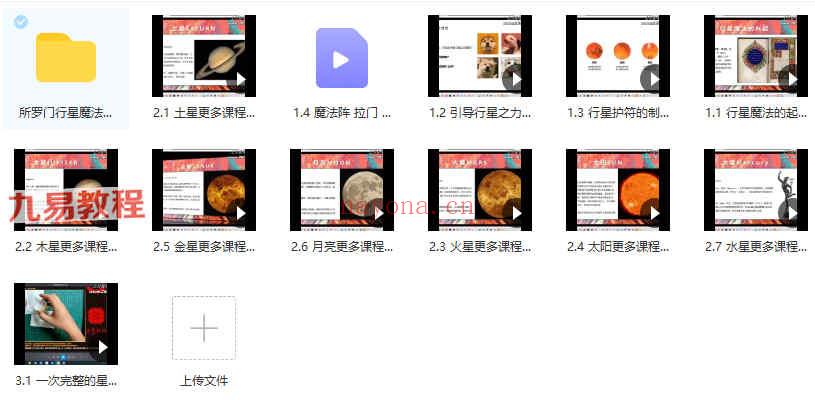
The Gui Gui collection is identified as a 2021 resource with twelve videos and supporting notes. Its directory names historical origins, planetary talismans, circles, seals, magic squares and seven planetary headings. These labels support a concrete textual study plan.
Directory and paired notes
Match a video to a similarly named note only after checking both contents. A shared heading is a useful lead but not proof of a transcript. Retain filename and format so a later reader can locate the material you used.
The directory is unusually helpful because it provides several parallel video and note headings. Use that structure to make a retrieval index: an exact filename, the format, the stated topic and a verified source location. When a heading appears in both formats, inspect whether the content genuinely overlaps. A note could summarize a recording, elaborate a topic or simply share its label. Record the relationship you can establish. The collection’s 2021 label identifies the course in the source listing; it is not a reason to invent production details or assumptions about later revisions. Twelve videos and eleven listed note files can be described as separate inventory facts while your index explores how the contents relate to one another.
Question for review: Does the note elaborate the same passage as the recording?
Seven planetary headings
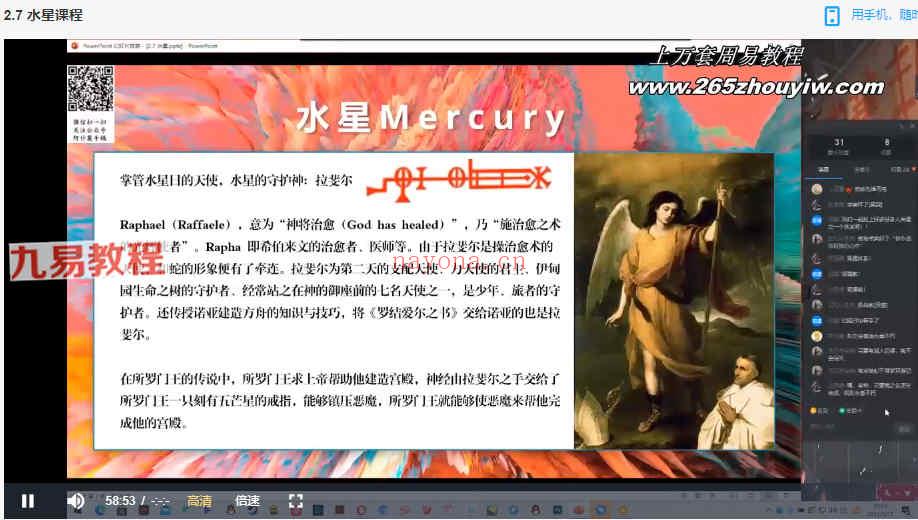
The directory lists Saturn, Jupiter, Mars, the Sun, Venus, the Moon and Mercury. Study these as categories in the presented symbolic system. Keep this traditional grouping separate from an astronomy lesson about modern planetary classification.
The seven headings can be compared without importing a ready-made correspondence chart. Choose two of the sections and identify the vocabulary each actually uses. Then compare their stated symbolic qualities, objects or purposes only where the passages supply them. Keep the Sun and Moon within the traditional grouping described by the resource, while distinguishing that grouping from the modern astronomical meaning of planet. The point is to understand the symbolic organization, not to pretend that a historical category is an astronomy classification. A comparison may reveal different roles or parallel structures. If a role is absent from a passage, mark it as absent. A partial comparison grounded in the directory and recordings is preferable to a complete table based on assumptions from elsewhere.
Question for review: What symbolic role does this heading organize in the resource?
Origins and narrative
An origins-and-history heading establishes the subject of a file. Extract the actual claims with their supporting references. A presenter’s account of origins can be summarized accurately without being elevated into a verified account of all historical planetary practice.
The origins-and-history file should be read with a claim ledger. Record the claim, the date or place mentioned and any reference identified by the presenter. If the passage gives an account without a reference, preserve it as that account. Do not extend it into a verified lineage for the whole tradition. Historical explanation may also serve a rhetorical purpose, introducing why the presenter thinks the subject deserves study. Notice that function separately from factual verification. This allows you to discuss how history organizes the course while keeping uncertain details available for checking. A useful summary can say which period or text the passage discusses and what evidence it supplies, rather than declaring that the course establishes the origin of planetary magic.
Question for review: Which historical claim has a source beyond the presenter’s assertion?
Talisman process
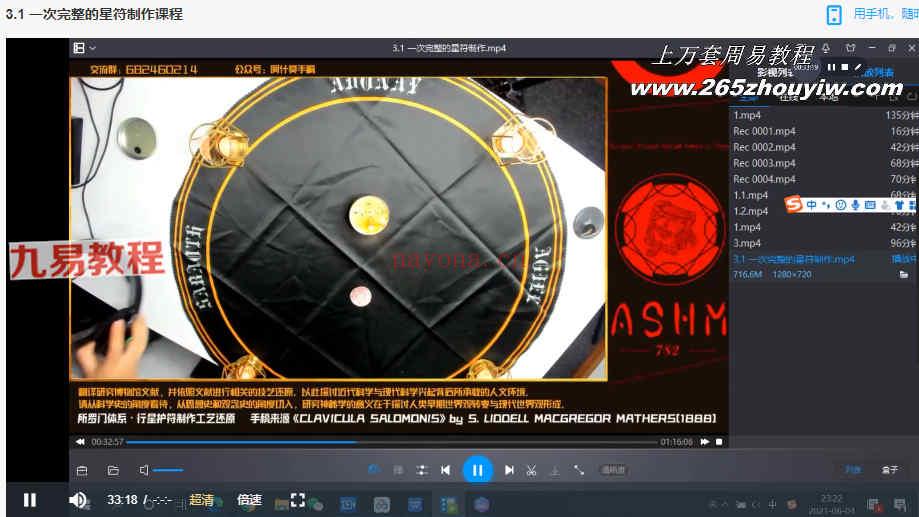
A named talisman-making file invites analysis of sequence, material description and symbolism. Separate a step-by-step account from claims about effectiveness. A paper model can show the relationship between components without becoming a promise about their powers.
The talisman-making heading is a lead to a procedure, but a procedure should be extracted only from the actual passage. List the steps visibly or explicitly described and keep their symbolic explanations beside them. If an element changes between versions, identify the reason given for the change. A paper process diagram can clarify how components are combined without creating a claim about the resulting object’s efficacy. Also separate preparation information from promised outcomes. A detailed sequence may show what the presenter instructs, but it cannot by its detail alone demonstrate that the object affects an external event. Your analysis should allow another reader to see both the ordered account and the point where an asserted causal explanation enters.
Question for review: Which step changes the design and which changes the interpretation?
Magic squares and seals
Keep numerical arrangements, line drawings and names as distinct features. Transcribe only what is legible and check sums only where a numerical rule is explicitly supplied. A tidy reconstruction is your study copy, not automatically an authentic historical original.
Circles, seals and magic squares are named together in the directory but need not be analyzed as identical objects. A circle can organize space or boundaries in a diagram; a seal may combine line work or names; a numerical square involves an arrangement whose rule must be specified. Describe the particular example first. Where numbers are legible and a sum rule is given, arithmetic can check that rule, but a successful check only verifies the arrangement. It does not verify any supernatural meaning assigned to it. Keep the numerical observation and the symbolic explanation in separate sentences. If an image is unclear, do not repair it silently to satisfy the expected rule. Mark the uncertainty and preserve the original source for comparison.
Question for review: What rule can I verify directly from this diagram?
A comparison notebook
Choose two planetary headings and compare vocabulary, objects and stated purposes. Include at least one difference instead of assuming every section follows an identical rule. A useful notebook preserves uncertainty about missing or unclear information.
A comparison notebook for this course can contain one entry for each planetary section, followed by a focused comparison of two entries. Use the same headings only when the material supports the same kinds of information. Do not force a section into a template that requires facts it does not provide. A concluding comparison should identify one shared feature, one difference and one question. Include the exact files used so the result can be checked. This notebook is not a claim to have mastered the system; it is a record of what you have inspected and understood. It can grow as further passages are reviewed while keeping each new conclusion tied to evidence rather than to the appearance of completeness in a seven-part table.
Question for review: Which distinction would disappear if I used one universal summary?