A video course on herbal symbolism attributed to Cat Witch. The listing identifies the topic but does not establish medical efficacy or a verified complete syllabus.
Resource Overview
Cat Witch Herbal Magic Video Course is a digital learning resource about Herbal & Botanical Symbolism. The English description summarizes the available source listing; the underlying recordings or books are in Chinese. An English translation of the full material is not confirmed.
What You Will Learn
Use the sequence and preview material below to identify the course’s scope, terminology and teaching approach. Check each topic against the original lesson rather than treating a short listing as a complete transcript.
Course Contents
- Herbal symbolism
- Traditional associations
- Safety and interpretation limits
Original Course Images


Who This Resource Is For
This resource is for readers or learners who can use Chinese-language materials and want a named resource on Herbal & Botanical Symbolism. Compare the stated scope and previews before ordering; a fixed level of prior experience is not assumed unless the source directory says so.
Learning Format and Digital Delivery
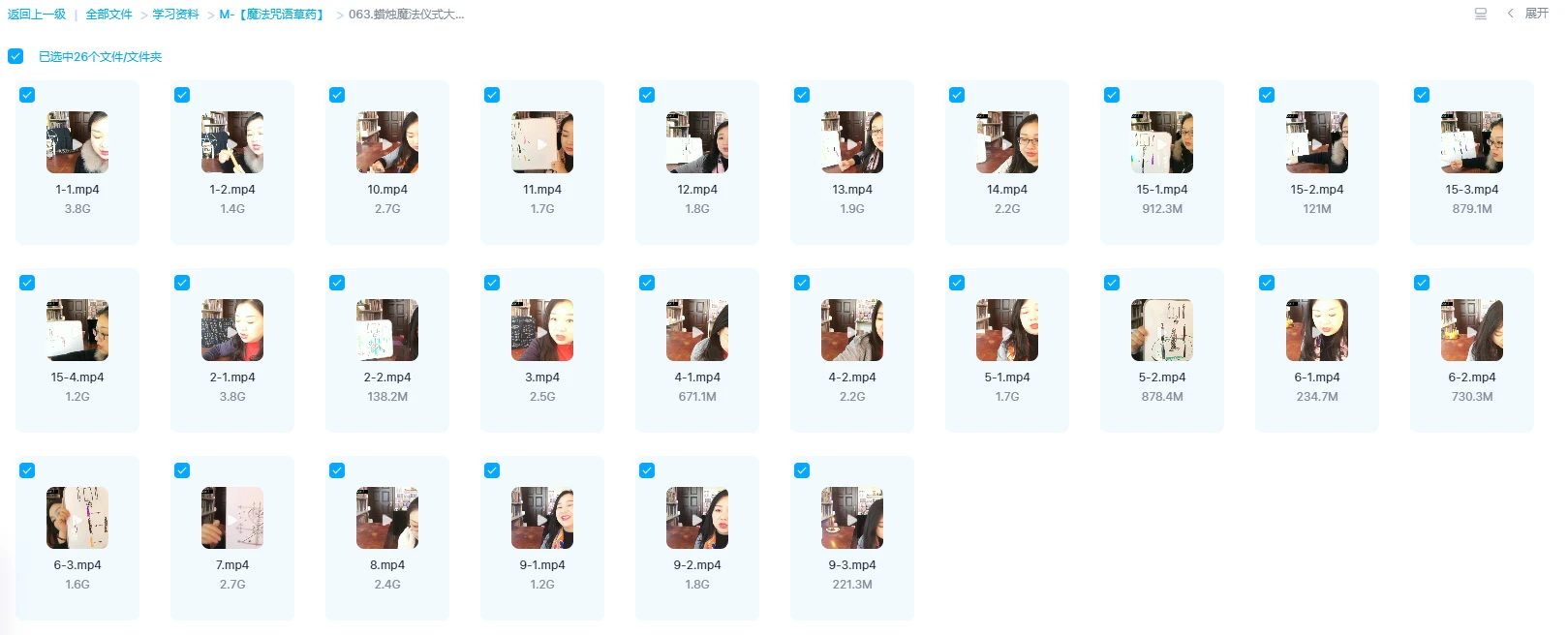
Chinese-language video course; lesson count not confirmed Virtual and downloadable; there is no physical shipment. Price: USD 9.00. A file link is not yet attached to this product. Please contact Karma Kismet before ordering to confirm delivery arrangements; immediate automated access is not promised.
Frequently Asked Questions
Is the full material in English?
No English edition, recording or subtitle track is confirmed. The source material is Chinese-language.
Is a personal consultation included?
No individual consultation is listed with this resource.
Does this resource guarantee an outcome?
No. It is for educational and cultural study, not a guaranteed result or substitute for professional advice.
Editorial Note
Karma Kismet translated and organized the course facts and original previews for English readers. Lesson counts and formats follow the available source listing; unspecified contents, certificates and instructor credentials are not asserted.
Related Courses
- Apollo Ritual Studies: 16 Videos
- Candle Magic Ritual Course: 26 Lessons
- Wushuang Solomonic Ceremonial Magic: Four Videos
- Advanced Solomonic Magic Course
- Witch Market Hoodoo Studies: 14 Videos
- Witch and Oak Celtic Knot Magic: Ten Videos
- Magical Herbs and Potions: Two Video Courses and E-Books
Browse Herbal & Botanical Symbolism and read digital delivery information.
Understanding the named themes
Cat Witch’s source outline names general potion knowledge, classification, recipe analysis, preparation themes involving candles and bottles, and uses or restrictions. These are useful reading categories. They do not establish that a recipe is safe or has therapeutic effects.
General potion terminology
Begin by asking what the presenter means by potion. The word may refer to an object in a symbolic practice rather than something to drink. Preserve that distinction so an English gloss does not accidentally create an instruction for ingestion.
The word potion carries familiar expectations in English, so begin by checking how the resource uses it. Does a passage describe a symbolic preparation, a container, a material mixture or something intended for a particular mode of use? A translation should follow the passage rather than the reader’s assumptions. If the use is unclear, say so. This is particularly important because the outline places potion discussion alongside candles and witch bottles, suggesting several object types rather than a single class of consumable preparations. A general glossary entry can record that range without inventing a definition for the whole course. The educational task is to understand the presenter’s categories, while the question of practical safety remains separate and unanswered by a title alone.
Question for review: How is potion defined in this passage?
Classification
Look for the criteria used to divide preparations into categories. Are the groups based on materials, intended symbolism or form? An explicit classification is easier to compare than a loose list of labels that mix different kinds of distinctions.
A classification chart should use one criterion at a time. You might discover that one passage groups objects by intended purpose while another groups them by form. Write those as two charts instead of forcing them into one list. A bottle and a candle are object forms; a theme such as protection is a symbolic purpose. Combining them as if they were equivalent categories can obscure the explanation. Look for how the presenter moves between these distinctions and whether examples are supplied. If a category is named but not explained in the material you inspect, preserve it as an unexplained label. A useful chart makes the structure of the account visible without filling every gap through assumptions borrowed from another tradition.
Question for review: What single criterion defines this category?
Recipe analysis
The outline mentions breaking down recipes. For reading purposes, identify each element’s stated role and the evidence for that role. If a role is merely assumed, mark it as your interpretation rather than the presenter’s teaching.
Breaking down a recipe means asking what each element is said to contribute, not simply listing its ingredients. Copy the role attributed to an element and identify the passage supporting that attribution. If the text gives no role, leave the field empty or mark it as unknown. You can then inspect whether the explanation treats the elements independently or as a combination. This may reveal a design principle in the source without demonstrating that the combination has an external effect. Do not infer proportions, substitutions or safe use from a symbolic role. A written recipe analysis is sufficient for examining the logic. It can show the relation between material and meaning while avoiding the assumption that an educational listing endorses preparing the mixture.
Question for review: Which ingredient role is actually explained?
Candles and bottles
Candles and witch bottles appear in the outline as preparation themes. Compare their forms as containers or displays of symbolic intention. A drawing can preserve the arrangement without reproducing flame, fragile glass or unidentified substances.
Candles and bottles offer a useful comparison in the way they organize an intention. A container may hold items together, while an arrangement around a candle may make a theme visible in space. Study the actual example before drawing that distinction, since the outline does not establish how every object is used. Identify the boundary, center or sequence the source describes. A diagram can preserve those features without reproducing glass handling, flame or added substances. Then ask whether the explanation depends on the physical form or on the words attached to it. This separates object design from an assertion about efficacy. It also allows the reader to understand a preparation theme without confusing analysis with a requirement to manufacture the object.
Question for review: What does the container contribute to the symbolism?
Restrictions and unknowns
A restriction can be symbolic, practical or related to the source’s belief system. Name the type before explaining it. A recorded prohibition does not establish that everything unmentioned is safe, and missing information should stay visible.
Restrictions should be read with attention to their stated reason. A source might give a symbolic prohibition, a timing convention or a warning connected to an object or material. Those are different kinds of statements. Record the wording and the reason given, if any. Do not assume that a ritual restriction supplies complete practical safety information or that an unmentioned practice is acceptable. Conversely, do not invent a prohibition merely because a topic sounds unfamiliar. The task is accurate interpretation of the actual passage. An annotated restriction can explain what is explicit, what is implied and what remains unknown. This makes the course’s use-and-limits theme more useful than a broad claim that the resource explains every possible contraindication.
Question for review: What kind of reason is given for this restriction?
Study without preparation
Choose one passage and write a short commentary on its materials, sequence and meaning. This is a complete learning activity even if nothing is manufactured. The quality of the commentary depends on precision and source traceability rather than claimed efficacy.
For a concluding commentary, choose one object or recipe theme that you can document. Explain its category, the components actually named and the meaning attributed to their arrangement. Add a paragraph about what the source does not settle. That paragraph might concern translation, ingredient identification, sequence or an asserted result. The commentary should be understandable to someone who has never seen the folder. It should not need an invented promise of success to be worthwhile. If your conclusion is that the explanation is incomplete, state which missing detail prevents a firmer reading. This directs further study toward a concrete passage or question and keeps the named ten-session outline from being expanded into a syllabus or a practical assurance that the listing cannot support.
Question for review: Can the commentary distinguish text, observation and interpretation?