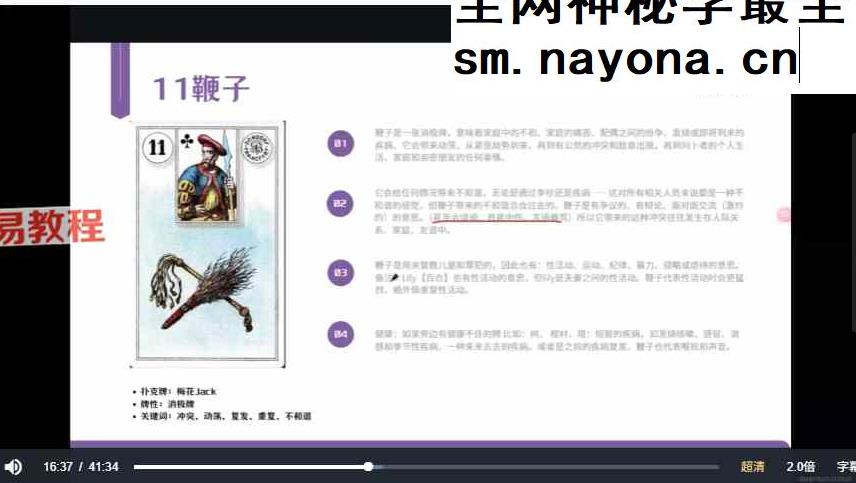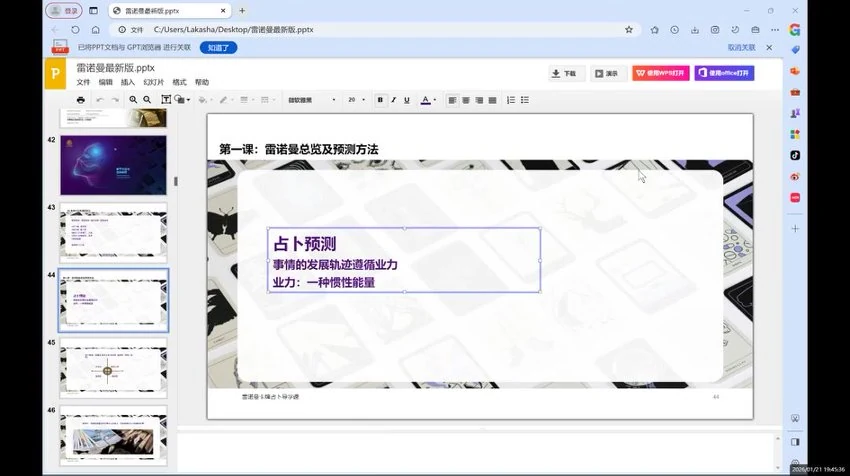
A Tarot origins course about card imagery and symbolic interpretation. The listing does not verify a complete lesson directory.
Resource Overview
Canaan Academy: Tarot Origins, Images and Symbols is a digital learning resource about Tarot History & Symbolism. The English description summarizes the available source listing; the underlying recordings or books are in Chinese. An English translation of the full material is not confirmed.
What You Will Learn
Use the sequence and preview material below to identify the course’s scope, terminology and teaching approach. Check each topic against the original lesson rather than treating a short listing as a complete transcript.
Course Contents
- Tarot imagery
- Symbolic interpretation
- Origins as presented in the course
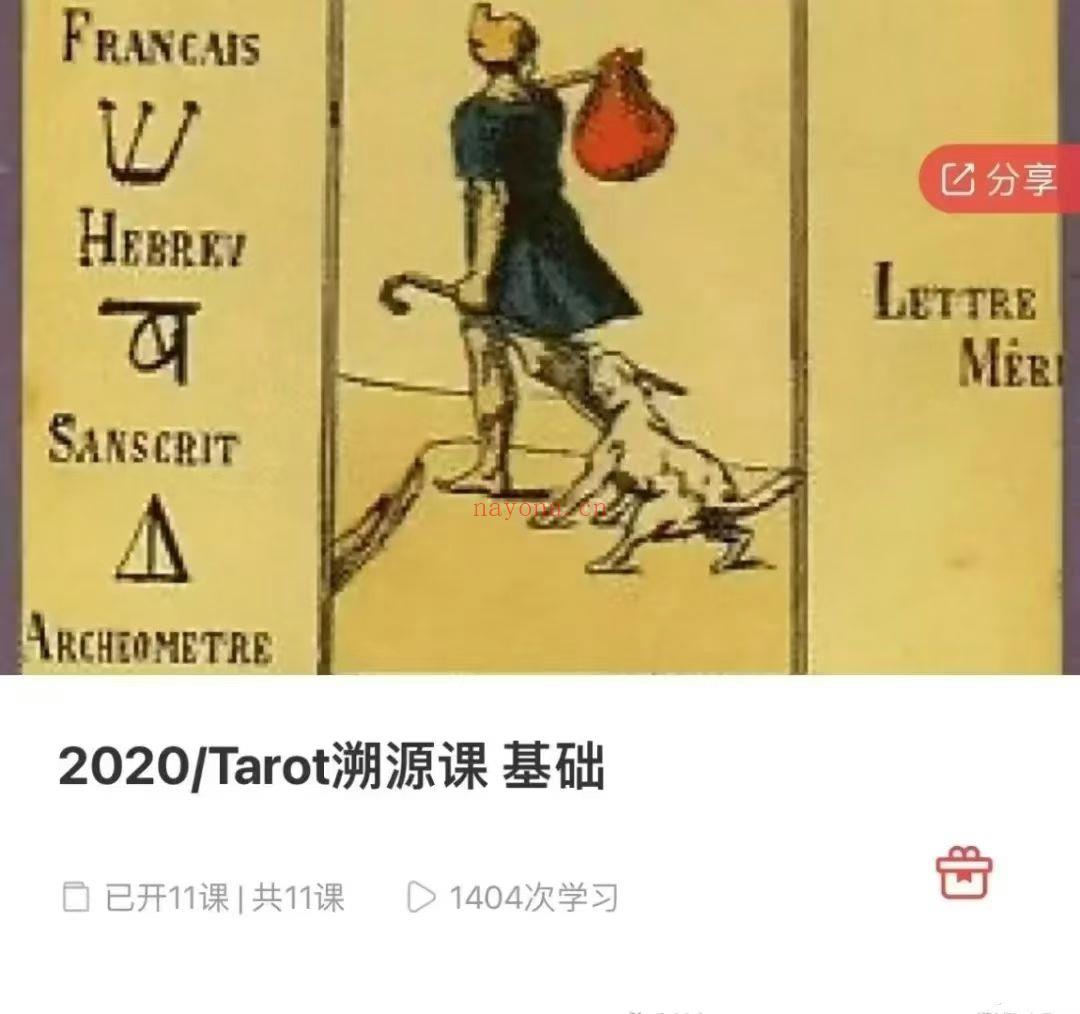
Original Course Images

Who This Resource Is For
This resource is for readers or learners who can use Chinese-language materials and want a named resource on Tarot History & Symbolism. Compare the stated scope and previews before ordering; a fixed level of prior experience is not assumed unless the source directory says so.
Learning Format and Digital Delivery
Chinese-language course; exact lesson count not confirmed Virtual and downloadable; there is no physical shipment. Price: USD 9.00. A file link is not yet attached to this product. Please contact Karma Kismet before ordering to confirm delivery arrangements; immediate automated access is not promised.
Frequently Asked Questions
Is the full material in English?
No English edition, recording or subtitle track is confirmed. The source material is Chinese-language.
Is a personal consultation included?
No individual consultation is listed with this resource.
Does this resource guarantee an outcome?
No. It is for educational and cultural study, not a guaranteed result or substitute for professional advice.
Editorial Note
Karma Kismet translated and organized the course facts and original previews for English readers. Lesson counts and formats follow the available source listing; unspecified contents, certificates and instructor credentials are not asserted.
Related Courses
Browse Tarot History & Symbolism and read digital delivery information.
Images and Symbols as the Starting Point
Canaan Academy’s source title places Tarot origins alongside image and symbol study, techniques for deriving interpretations from images, practical interpretation, ancient Greek numerological language, and judgments about a card’s qualities. These phrases identify the advertised subject areas. They do not supply a complete numbered directory or establish exactly how much time is devoted to each one. The resource is therefore best approached as a course with a stated symbolic focus, while the detailed sequence and examples need to be identified within the available material itself.
An image based approach can be studied by asking how the teacher moves from something visible to something interpreted. A figure’s posture is visible; a claim about authority, hesitation, or transformation is an interpretation. Both may be discussed in a lesson, but they should occupy different places in a notebook. This distinction is particularly helpful for a course whose title combines origins with practical techniques. It allows a learner to examine the method without treating every symbolic association as a historical fact or a universal meaning.
Separating Historical Questions From Symbolic Questions
A question about where an image came from requires different support from a question about what the image means to a reader. If a recording describes an earlier card or an artistic influence, record the identifying details it provides. If it offers a symbolic reading of a motif, record that as the interpretation presented. A plausible resemblance between images can be interesting, but resemblance alone does not establish a direct historical connection. Keeping these questions separate makes the word origins more useful and prevents an interpretive explanation from becoming an unsupported account of the past.
For personal review, create two pages for a striking image: one for historical references mentioned in the course and one for interpretive associations. On the first, include names, dates, or works only when they are actually supplied. On the second, explain how the motif is being read and in what context. Leave a blank space where information is missing instead of filling it with a familiar story. This gives you a clear record of the course’s claims and a practical list of points that would need additional evidence before being repeated as history.
A Close Looking Exercise
One independent exercise suited to the stated image focus is to describe a card without using any interpretive keywords. Identify what is in the foreground, what appears in the background, where figures are looking, and which objects are emphasized. Only after writing that description should you add associations. This slows down the movement from seeing to concluding. It can also reveal that two readers are responding to different details rather than simply disagreeing about the same detail. The exercise is a study suggestion, not an asserted assignment supplied by Canaan Academy.
After viewing the relevant explanation, compare your observation list with the teacher’s emphasis. Notice any detail you overlooked and any detail you emphasized that the teacher did not discuss. Neither difference automatically makes your reading wrong, but the comparison helps you identify the approach being taught. If a meaning depends on color, posture, or arrangement, retain that connection in your notes. A keyword without its visual basis is harder to assess later, especially when another deck changes the artwork or the accompanying text.
Symbols Can Have Several Contexts
A symbol may be discussed as part of a particular tradition, an artistic convention, or a personal association. Record which kind of explanation is offered when the material makes that clear. A tradition based interpretation does not mean that every person or every deck uses the symbol in the same way. A personal response can be meaningful to the person experiencing it without becoming a universal rule. This is useful when studying symbolic language across Chinese explanations and English notes, where one translated word may cover several distinct ideas.
Build a glossary that preserves context rather than simply matching terms. For each key word, include the Chinese expression, a working English equivalent, and a sentence showing how it functions in an example. If the same expression appears in a different context, add another example before changing the definition. Translation becomes more reliable when it follows usage. It is less reliable when an attractive English label is imposed on every occurrence, especially for terms that combine spiritual, philosophical, or artistic associations.
The Ancient Greek Numerology Reference
The source title explicitly mentions ancient Greek numerological language. That is a listed subject reference, not proof that every numerical interpretation in the course has a documented ancient origin. When this topic appears in the material, write down the system being described and any attribution the teacher provides. Distinguish an account of a historical belief from an instruction to use numbers symbolically in a modern reading. They can be related in the course’s presentation, but the relationship needs to be explained rather than assumed.
For independent review, consider how the numerical explanation changes the interpretation of an image. Does it add a theme, establish a sequence, or help compare cards? Record only the function demonstrated. Avoid expanding a brief reference into an entire mathematical or philosophical syllabus that the listing does not verify. A symbolic number should also remain a symbolic number: it does not establish a person’s destiny, a guaranteed outcome, or the factual cause of an event. The course can be studied for its interpretive framework while these limits remain explicit.
From Observation to a Practical Interpretation
The title’s practical technique language makes it useful to follow an explanation through several stages. First identify the question, then the image details selected, then the symbolic associations, and finally the conclusion offered. This sequence helps locate where an assumption enters the reading. If the teacher supplies an alternative, preserve it in the summary. If you invent an alternative for your own comparison, label it as independent work. That keeps the teaching and your analysis distinct without preventing an active, questioning approach to learning.
A clear interpretation should also indicate its degree of certainty. A phrase such as this image may suggest can be more faithful to symbolic reasoning than a categorical statement about what will happen. When paraphrasing into English, check whether you have accidentally strengthened the claim. The practical value of an image study course can lie in more careful explanation and observation, even when no prediction is being made. It is not necessary to turn every symbolic theme into a forecast in order to learn from the material.
Judgments About a Card’s Qualities
The source’s phrase about a card’s qualities is brief and should not be expanded into a fully defined doctrine without viewing the relevant explanation. Keep the original term in your notes and record how the teacher uses it. It might be translated differently depending on the context, so a provisional English label is preferable to an overconfident definition. The same care applies to the course as a whole: its stated topics support a focus on images, symbols, and interpretation, while exact lesson counts, credentials, and detailed exercises remain unconfirmed by the listing.