A 2026 Lenormand course attributed to Ya Ta. The source lists nine videos and describes single-card meanings, combinations and spread interpretation, though its file list uses split lesson labels.
Resource Overview
Ya Ta 2026 Lenormand System Course: Nine Videos is a digital learning resource about Lenormand Studies. The English description summarizes the available source listing; the underlying recordings or books are in Chinese. An English translation of the full material is not confirmed.
What You Will Learn
Use the sequence and preview material below to identify the course’s scope, terminology and teaching approach. Compare each card interpretation with the original lesson rather than treating a short listing as a complete transcript.
Course Contents
- Lenormand card vocabulary
- Single-card and paired-card interpretation
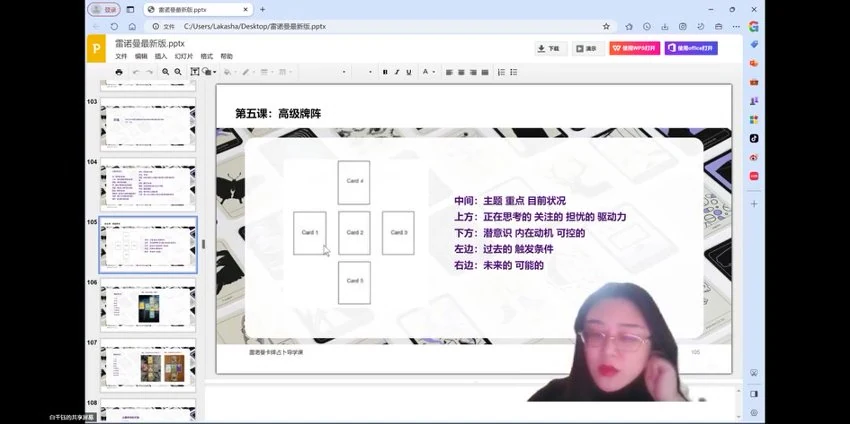
- Spread use in examples
- Understanding split video parts in the source list
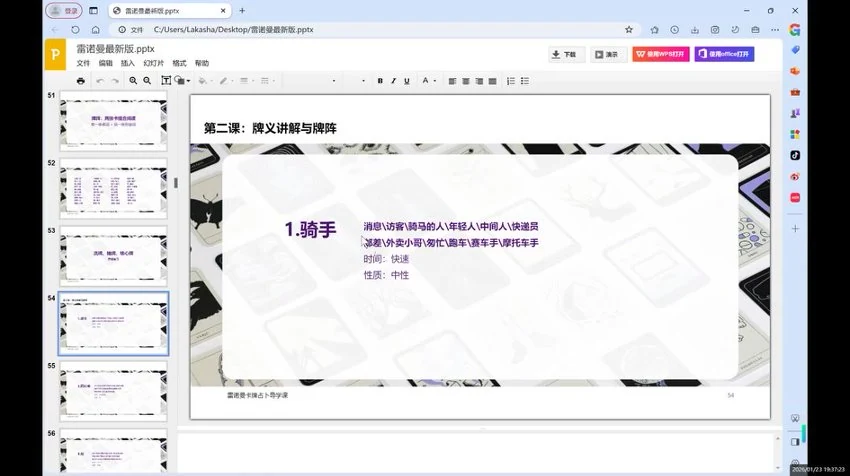
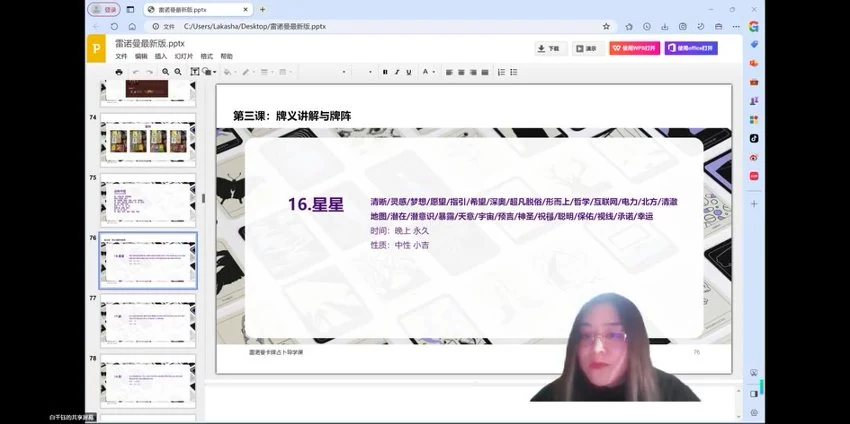
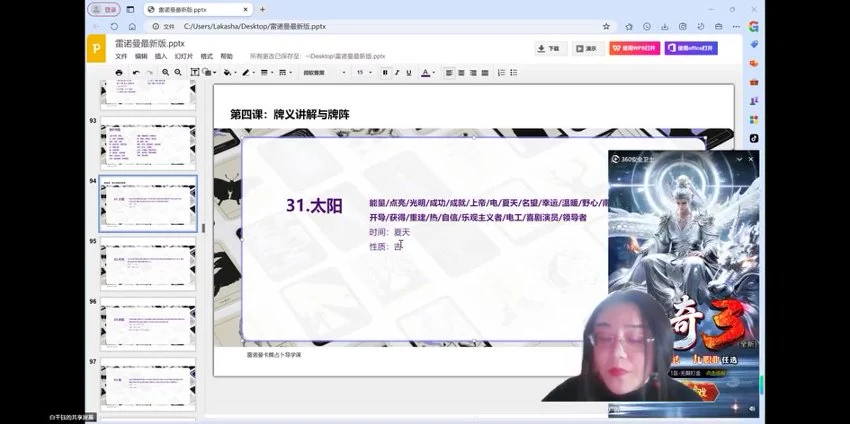
Original Course Images
Who This Resource Is For
This resource is for readers or learners who can use Chinese-language materials and want a named resource on Lenormand Studies. Compare the stated scope and previews before ordering; a fixed level of prior experience is not assumed unless the source directory says so.
Learning Format and Digital Delivery
Nine Chinese-language videos according to the source title Virtual and downloadable; there is no physical shipment. Price: USD 9.00. A file link is not yet attached to this product. Please contact Karma Kismet before ordering to confirm delivery arrangements; immediate automated access is not promised.
Frequently Asked Questions
Is the full material in English?
No English edition, recording or subtitle track is confirmed. The source material is Chinese-language.
Is a personal consultation included?
No individual consultation is listed with this resource.
Does this resource guarantee an outcome?
No. It is for educational and cultural study, not a guaranteed result or substitute for professional advice.
Editorial Note
Karma Kismet translated and organized the course facts and original previews for English readers. Lesson counts and formats follow the available source listing; unspecified contents, certificates and instructor credentials are not asserted.
Related Courses
- Long Nu Tarot Spreads and Reading Examples: 15 Videos
- Green Tarot Spread Methods: 10 Video Lessons
- Star Heart Tarot Practical Reading Class: 21 Videos
- Thoth Tarot Practice Collection: 23 Videos and Three E-Books
- Mindful Tarot Advanced Camp: Relationship and Career Spreads
- Latte Relationship Tarot Special Course
- Chen Qingqing Tarot Consultation Training: 122 Videos
- Gui Gui Tarot Training Camp, Fifth Cohort: 61 Videos
- Ju Zi Complete Lenormand Course: 19 Videos
- Osho Zen Tarot Card Practice: 20 Videos
- Oracle Card Growth Series: 19 Videos
Browse Lenormand Studies and read digital delivery information.
Reading the Nine File Sequence
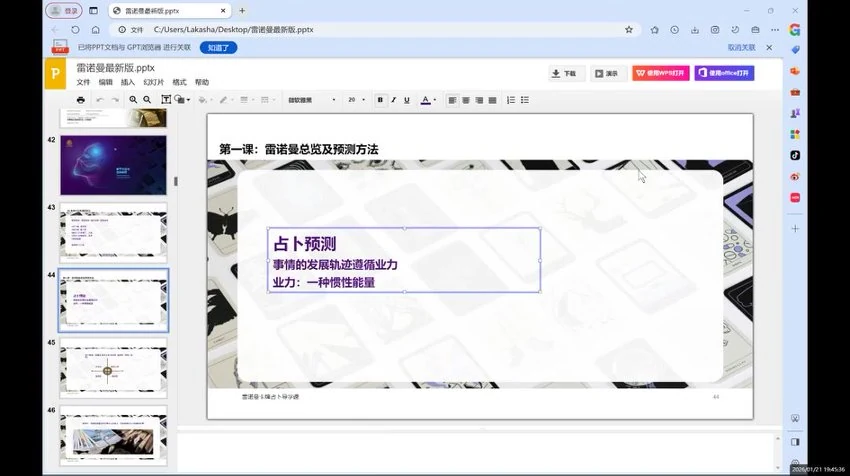
The most useful starting point for this Ya Ta resource is its actual directory. It contains a first lesson, two parts of the second lesson, lessons three through six, a consultation class, and a question and answer recording. These are nine video files, while the numbering describes fewer than nine numbered teaching sessions. That distinction matters when planning study: the second lesson should be treated as a connected pair, and the final two files serve different purposes from the numbered lessons. The 2026 label identifies the listing; it does not establish a particular recording date or a new edition of every concept.
The source introduction describes single card meanings, combinations, and spread interpretation. The filenames themselves do not provide a detailed subject heading for each numbered lesson. An English reader therefore has a broad description of the subject and a verifiable file sequence, rather than a complete lesson by lesson syllabus. The consultation and question and answer labels are more specific. They make those recordings useful places to look for explanations of practical reading decisions, without assuming that they contain personal feedback for a purchaser or access to a live instructor.
A Notebook for Lenormand Vocabulary
One way to study the numbered lessons is to build a vocabulary notebook alongside them. Give each card its own entry and record the teacher’s Chinese term, the English term you prefer, and a brief explanation drawn from the recording. Keep these entries separate from associations borrowed from another deck or an earlier course. A familiar image can encourage a learner to import a meaning automatically, but a course may use a narrower convention. The notebook should show what was actually said, where it was said, and what you still need to clarify on a second viewing.
For each entry, distinguish an image description from an interpretation. A description reports what can be seen on the card; an interpretation explains how the symbol is being used in a particular question. If a teacher gives several possible meanings, retain them as alternatives instead of compressing them into a single prediction. This helps preserve context when reviewing examples later. You can add a separate column for your own associations, clearly labeled as personal observations, so that the course vocabulary and your developing reading style remain traceable.
Combining Cards Without Losing the Question
Combination practice can become difficult when every card has several possible meanings. A useful independent exercise is to choose a small, ordinary question and explain why one meaning is relevant to it. The aim is not to discover a universal phrase for every possible pair. It is to understand how a reader selects a meaning, connects it to a neighboring card, and expresses the connection in understandable language. Use the exact order shown in a lesson when copying an example, and note whether the teacher assigns a special role to a position.
After watching a combination explanation, write two short accounts: a literal summary of the teacher’s reasoning and your own paraphrase. Compare them for changes in certainty. A statement that something could represent a delay should not become a claim that a delay will certainly happen. Similarly, a symbol associated with communication does not prove that a particular person will send a message. These distinctions help a learner describe the interpretive method accurately while avoiding stronger claims than either the cards or the available facts can support.
Using the Consultation Recording as a Case Study
The consultation class has a different study function from a list of card meanings. Approach it by following the development of a reading: how the question is introduced, what information is available, how the cards are connected, and how the response is delivered. Those are viewing prompts for your own notes, rather than a claim about the recording’s exact contents. If an explanation moves quickly, pause to mark the point where a symbol becomes a statement about a situation. That transition is often more educational than the final answer alone.
A case summary should preserve the question and any relevant qualifications. Removing the context can make a demonstration appear much more general than it is. When comparing your interpretation with the recording, ask whether you used information that the teacher had not yet received, or information learned only after the result was discussed. This is a practical way to avoid hindsight in your notes. It also allows you to identify a genuine difference in interpretive approach instead of treating every different answer as a simple mistake.
Preparing for the Question and Answer File
Keep a running list of uncertainties while working through lessons one to six. Make each uncertainty precise enough to revisit: an unfamiliar term, the relationship between two cards, a change in meaning across contexts, or the function of a position in a spread. Before opening the question and answer recording, sort these notes by topic. You can then record which questions are addressed, which receive only a partial explanation, and which remain open. The existence of a recorded answer session does not mean that every personal question will be answered.
It can be useful to return to the split second lesson after hearing the final discussion. Read your original notes first, then watch the relevant section again and revise only what the recording supports. Keep the earlier version so that you can see how your understanding changed. This method gives the nine files a coherent study rhythm without inventing a prescribed homework schedule. It also makes later comparisons with another Lenormand course more concrete: you can compare particular terms and reasoning choices rather than broad impressions of difficulty or completeness.
Interpreting Time and Personal Questions Carefully
The source overview mentions timeline interpretation, but the file labels do not identify a separate timing lesson. If timing ideas appear in the recordings, write down the convention used and any stated limits. An interpretive timeline is not a verified calendar forecast. For personal questions, distinguish what a person has said or done from what a reader imagines a symbol might mean. A card combination cannot establish another person’s private intentions. Questions about communication, available choices, and one’s own response are easier to keep grounded in observable information.
This resource is best understood as material for studying a particular approach to Lenormand in Chinese. Its value for an English reader depends partly on the ability to follow terminology and spoken explanations, not simply on the number of files. A personal glossary, a careful record of examples, and a list of unanswered questions can make that study more manageable. They do not convert symbolic interpretation into evidence about future events. Use the lessons to examine how a reading is constructed and how it is communicated, while keeping real decisions connected to information that can be checked.