The fifth Gui Gui tarot training camp is listed as 61 video files. Early directory items cover tarot history, card systems, Major and Minor Arcana and four-element vocabulary before later practice.
Resource Overview
Gui Gui Tarot Training Camp, Fifth Cohort: 61 Videos is a digital learning resource about Professional Tarot Practice. The English description summarizes the available source listing; the underlying recordings or books are in Chinese. An English translation of the full material is not confirmed.
What You Will Learn
Use the sequence and preview material below to identify the course’s scope, terminology and teaching approach. Compare each card interpretation with the original lesson rather than treating a short listing as a complete transcript.
Course Contents
- Tarot history and systems in the opening lessons
- Major Arcana, Minor Arcana and court cards
- Four-element framework
- Following the 61-file training sequence
Original Course Images
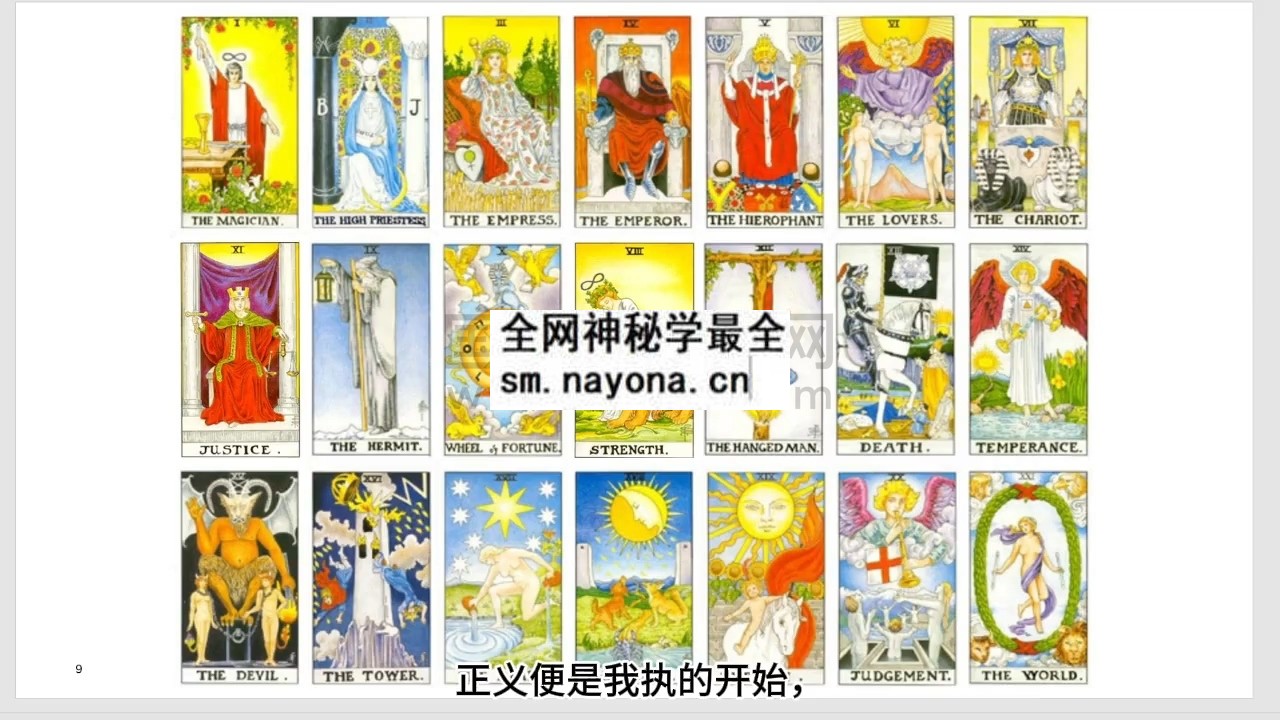
Who This Resource Is For
This resource is for readers or learners who can use Chinese-language materials and want a named resource on Professional Tarot Practice. Compare the stated scope and previews before ordering; a fixed level of prior experience is not assumed unless the source directory says so.
Learning Format and Digital Delivery
61 Chinese-language video files; the source describes about 74 hours Virtual and downloadable; there is no physical shipment. Price: USD 9.00. A file link is not yet attached to this product. Please contact Karma Kismet before ordering to confirm delivery arrangements; immediate automated access is not promised.
Frequently Asked Questions
Is the full material in English?
No English edition, recording or subtitle track is confirmed. The source material is Chinese-language.
Is a personal consultation included?
No individual consultation is listed with this resource.
Does this resource guarantee an outcome?
No. It is for educational and cultural study, not a guaranteed result or substitute for professional advice.
Editorial Note
Karma Kismet translated and organized the course facts and original previews for English readers. Lesson counts and formats follow the available source listing; unspecified contents, certificates and instructor credentials are not asserted.
Related Courses
- Long Nu Tarot Spreads and Reading Examples: 15 Videos
- Green Tarot Spread Methods: 10 Video Lessons
- Star Heart Tarot Practical Reading Class: 21 Videos
- Thoth Tarot Practice Collection: 23 Videos and Three E-Books
- Mindful Tarot Advanced Camp: Relationship and Career Spreads
- Latte Relationship Tarot Special Course
- Chen Qingqing Tarot Consultation Training: 122 Videos
- Ya Ta 2026 Lenormand System Course: Nine Videos
- Ju Zi Complete Lenormand Course: 19 Videos
- Osho Zen Tarot Card Practice: 20 Videos
- Oracle Card Growth Series: 19 Videos
Browse Professional Tarot Practice and read digital delivery information.
How the fifth-cohort directory is structured
Gui Gui Tarot Training Camp, Fifth Cohort is listed as 61 video files. The directory moves from opening and introductory material through card groups, elements, court cards, interpretive methods and later examples. It also includes replay-style review sessions and question discussions. This makes the collection more varied than a sequence of 61 identical lessons. Some filenames refer to music-based perception material and one names a subtitled edited version of related content. These distinctions matter when planning study time or checking whether two files cover overlapping topics.
The introductory labels name Tarot history and culture, systems and schools, the structure of the deck and an initial connection between the major cards. Those labels support a foundation-oriented opening, but they should not be expanded into claims about every detail of the teaching. A learner can begin by identifying the deck and terminology actually used in the recordings. Preserve that information in the notebook so that later comparisons with other resources do not silently mix conventions or attribute another teacher's explanation to this camp.
The four-element sequence
A prominent part of the directory concerns the four elements and their relationship to Tarot. The suit sections are named alongside fire, water, air and earth vocabulary. Study these as symbolic associations within the course's framework. They are not scientific categories for diagnosing a person or determining an event. For each suit, note how the teacher connects the element to particular images and questions. Then compare the examples within that suit before assuming the association explains every card in the same way.
The listed music-perception items associated with some suits add a different kind of study prompt. A personal response to music may help a learner describe mood or imagery, but that response is subjective. Keep it separate from the teacher's stated card explanation. If a sound or rhythm brings a particular feeling to mind, record it as your own association rather than a universal meaning. This preserves the creative aspect of the exercise without turning an individual impression into a rule that every reader must follow.
Major cards and thematic connections
Several major-card filenames use thematic language rather than simply listing card names. That can encourage attention to connections across images, but the connection should be traced from the actual recording. Write down which cards are discussed, the order in which they appear and the explanation linking them. Do not infer the complete contents from a poetic title. If a lesson uses a philosophical idea, distinguish the idea itself from the visual evidence offered for applying it to a particular card.
For independent review, choose two major cards from a studied section and describe both their similarities and their differences. An effective comparison should mention more than a shared keyword. Consider posture, setting, direction, objects and the role those details play in the teacher's interpretation. Then explain how the cards might be read differently in the same spread position. This exercise tests whether a thematic connection has enriched your understanding or merely made several distinct cards sound interchangeable.
Court cards as an extended study area
The directory contains multiple court-card recordings followed by an item about their use in actual interpretation. That separation is useful: understanding a court card's vocabulary is not the same as deciding how it functions in a reading. It may be discussed as a role, manner of responding or symbolic figure, depending on the method and context. Follow the instructor's explanation carefully and avoid assuming that every court card must identify a particular real person with fixed traits.
A helpful notebook format gives each court card three sections: the image, the lesson's associations and the way it is used in a case. If the case refers to a person, record which information was already supplied by the questioner. This helps prevent circular reasoning in which contextual facts are later credited to the card. It also keeps a symbolic description from becoming a judgment about someone who has not participated in the reading. Court-card study benefits from precise distinctions rather than increasingly elaborate personality labels.
Reversals, relationships and spread design
Later filenames name upright and reversed cards, spread selection and design, the central role of the question, a reversal-related method, element conversion and finding connections. These labels suggest that the camp addresses how interpretations are assembled, not only individual card meanings. When reviewing this material, record the sequence of reasoning. Does the method begin with the question, a position, an elemental relationship or a particular card? Understanding that sequence can make an example easier to follow and reveal which assumptions drive the conclusion.
The filename emphasizing the question is especially useful as a study checkpoint. Before designing a spread, write a specific question and identify what kind of response would be useful. A vague question about everything ahead can invite a vague interpretation. A focused question about preparation or personal priorities can be discussed more clearly. Spread positions should add distinct perspectives rather than repeat the same question under different names. These are independent study suggestions and should not be read as a promised assignment or an exact summary of the recording.
Working with the later examples
The final portion of the directory includes examples labeled at different levels. Those labels can help with navigation, but difficulty is best assessed by the methods actually used. A case may require knowledge of earlier elemental or court-card material even if its layout appears simple. Pause before the explanation and identify which earlier concepts you expect to matter. After watching, compare that expectation with the teacher's approach. Record disagreements as questions for review rather than assuming that a different conclusion makes your observation worthless.
Some later filenames refer to other named systems or specialized layouts. Their presence does not establish a complete course in each associated subject. Treat them as the specific applications shown in the camp and check the actual explanation before extending the method. If an unfamiliar term appears only once, keep the original wording and timestamp. This is more reliable than replacing it with a broad definition from memory. A carefully bounded note can be expanded later when better context is available.
A review plan suited to mixed recordings
Group the files by study purpose: introductory context, suit and element work, major cards, court cards, interpretive methods and examples. Keep replay and review recordings in the index, because they may clarify earlier terminology, but do not count their presence as proof of ongoing live support. After completing a group, explain one idea in plain language and illustrate it with a referenced example. If you cannot identify where an explanation came from, return to the recording before adding it to a permanent summary.
The fifth-cohort collection may suit learners who want a broad Chinese-language Tarot archive with a visible directory and repeated review opportunities. The meaningful outcome of study is a clearer account of images, methods and interpretive choices. File quantity alone does not establish competence, certification or reliable prediction. By preserving context and acknowledging uncertainty, a learner can use the camp's varied materials to build a structured personal reference while keeping symbolic interpretation distinct from verified information about real people and events.