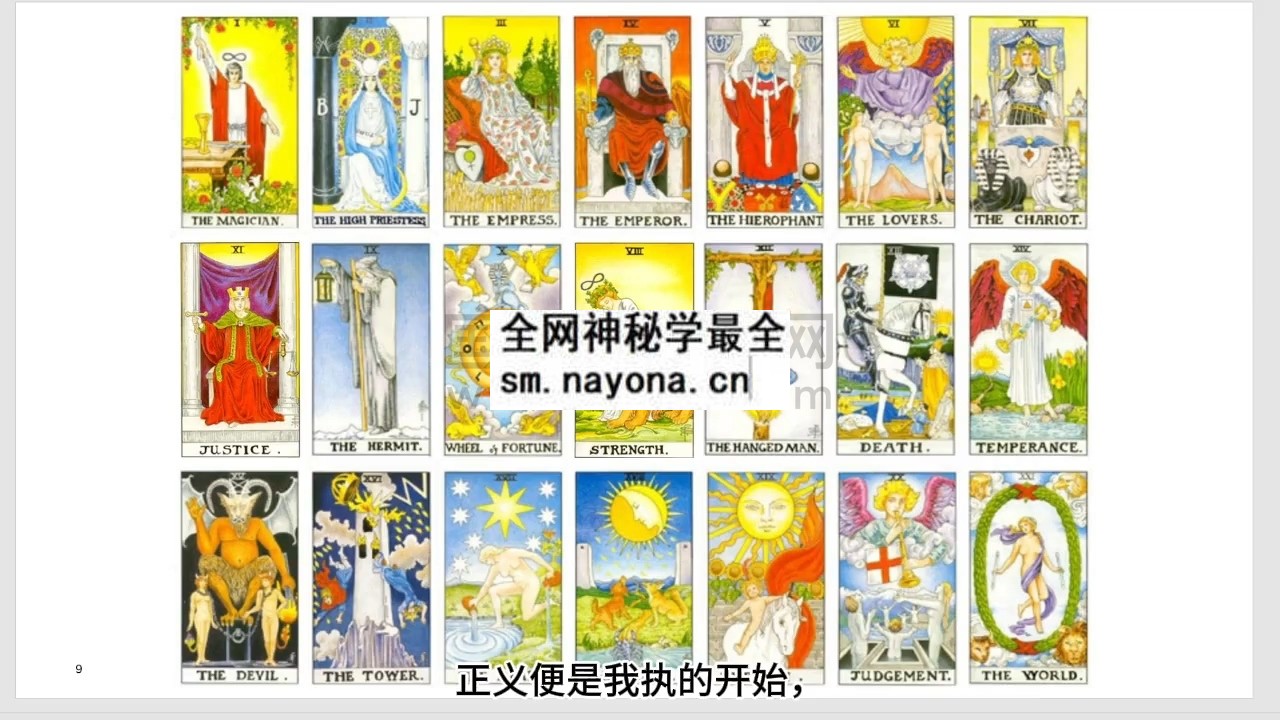
Chen Qingqing's tarot-consultation training resource is listed as 122 videos. Its file directory includes seven-planet spreads, choice spreads and reading examples; the source warns that recording clarity is modest.
Resource Overview
Chen Qingqing Tarot Consultation Training: 122 Videos is a digital learning resource about Professional Tarot Practice. The English description summarizes the available source listing; the underlying recordings or books are in Chinese. An English translation of the full material is not confirmed.
What You Will Learn
Use the sequence and preview material below to identify the course’s scope, terminology and teaching approach. Compare each card interpretation with the original lesson rather than treating a short listing as a complete transcript.
Course Contents
- Seven-planet and choice spreads
- Example readings in the file directory
- Consultation practice and interpretation
- Source-reported recording quality limitation
Original Course Images

Who This Resource Is For
This resource is for readers or learners who can use Chinese-language materials and want a named resource on Professional Tarot Practice. Compare the stated scope and previews before ordering; a fixed level of prior experience is not assumed unless the source directory says so.
Learning Format and Digital Delivery
122 Chinese-language videos according to the source listing Virtual and downloadable; there is no physical shipment. Price: USD 9.00. A file link is not yet attached to this product. Please contact Karma Kismet before ordering to confirm delivery arrangements; immediate automated access is not promised.
Frequently Asked Questions
Is the full material in English?
No English edition, recording or subtitle track is confirmed. The source material is Chinese-language.
Is a personal consultation included?
No individual consultation is listed with this resource.
Does this resource guarantee an outcome?
No. It is for educational and cultural study, not a guaranteed result or substitute for professional advice.
Editorial Note
Karma Kismet translated and organized the course facts and original previews for English readers. Lesson counts and formats follow the available source listing; unspecified contents, certificates and instructor credentials are not asserted.
Related Courses
- Long Nu Tarot Spreads and Reading Examples: 15 Videos
- Green Tarot Spread Methods: 10 Video Lessons
- Star Heart Tarot Practical Reading Class: 21 Videos
- Thoth Tarot Practice Collection: 23 Videos and Three E-Books
- Mindful Tarot Advanced Camp: Relationship and Career Spreads
- Latte Relationship Tarot Special Course
- Gui Gui Tarot Training Camp, Fifth Cohort: 61 Videos
- Ya Ta 2026 Lenormand System Course: Nine Videos
- Ju Zi Complete Lenormand Course: 19 Videos
- Osho Zen Tarot Card Practice: 20 Videos
- Oracle Card Growth Series: 19 Videos
Browse Professional Tarot Practice and read digital delivery information.
Making a large consultation archive usable
Chen Qingqing Tarot Consultation Training is listed as 122 video files, with a directory that includes individual card discussions, named spreads and multiple reading examples. Its scale makes organization important. A long file list does not automatically provide a clear learning sequence, especially when some card discussions have upper and lower parts and some examples use similar filenames. Before studying in depth, preserve the supplied names and make a simple index. Separate card reference material from spread explanations and worked examples so that you can locate the right type of recording when reviewing a question.
The source notes modest recording clarity. That is a practical consideration for material in which card position, diagram labels or spoken wording may matter. Check a sample of the supplied recordings on the device you intend to use. If a detail cannot be read or heard reliably, mark it as uncertain rather than reconstructing it from a guess. Neither the file count nor a professional-training title guarantees modern production quality. A careful study record can identify unclear passages for later review without converting them into invented course content.
Card explanations and consultation examples serve different purposes
The directory includes many named cards alongside recordings devoted to spread interpretation. A card lesson may explain a range of associations, while a case demonstrates why one association was selected in a particular context. These should be studied together. After watching an individual card discussion, find a case in which that card appears if one is available, and compare the language. Notice what changed because of the question, the position or the surrounding cards. Do not assume that a memorized definition supplies a complete consultation answer.
For each card, record a visual observation, the explanation given in the recording and your own paraphrase. Keeping these separate makes it easier to tell whether you understand the reasoning or only remember a phrase. Where a discussion is divided into parts, review both before deciding that the first part represents the whole explanation. A file label is a navigation aid, not proof that every relevant qualification appears in that file. The same caution applies to titles that appear more than once with slightly different punctuation.
Comparing the named spread families
The available directory names seven-planet, choice, situation, problem-solving, horseshoe and other spread examples. This variety offers a basis for comparing how positions organize a question. Start by drawing the layout and writing each position's stated role. Only then record the interpretation. If the role of a position is unclear in the recording, leave a question mark rather than importing the layout from another book. A familiar spread name can be used differently by different teachers, so the actual explanation matters more than the label.
A choice spread is particularly useful for examining framing. Compare the way two alternatives are described and ask whether the reading gives them equivalent attention. If one option receives a detailed narrative and the other only a dismissive phrase, the structure may be influencing the conclusion. Cards do not establish which decision is objectively correct. Practical constraints, available evidence and the questioner's preferences still matter. A learner can evaluate whether the example communicates these limits even while studying the symbolic method on its own terms.
Following a worked example step by step
Pause a case recording after the layout is shown but before the interpretation is explained. Write a tentative reading in a few sentences, including the basis for each statement. Then continue the recording and compare your approach with the teacher's. Look for differences in which card was considered first, how positions were linked and where context entered the explanation. This is a more informative exercise than scoring whether your conclusion matched the instructor's, because two readings can sound similar while relying on very different reasoning.
The source lists several examples for certain spread types. Review them as a group if possible. Identify what remains consistent across cases and what changes with the question. A stable structure may coexist with flexible interpretation, and that flexibility should be acknowledged. If a dramatic conclusion appears in one example, do not promote it into a universal rule. Keep the exact case reference attached to the note. This protects against turning a memorable anecdote into a claim that the same cards must always indicate the same event.
Consultation language and responsibility
The term consultation describes the course's focus, but Tarot instruction is not evidence of a mental-health qualification or another regulated professional credential. When studying communication, distinguish reflective discussion from diagnosis and factual advice. A reader can ask what an image brings to mind without claiming to identify a disorder, determine legal responsibility or forecast a financial result. Examples involving sensitive matters should be evaluated for how they communicate uncertainty, respect privacy and keep the questioner's decisions with the questioner.
A useful editing exercise is to take a categorical sentence from your own practice notes and rewrite it as a bounded interpretation. Explain what in the spread prompted the idea, what other explanations could fit and what information is missing. This does not require vague language; it requires precise language about the kind of claim being made. Describing a possibility clearly is more responsible than presenting speculation as certainty. If a situation requires professional help, additional card interpretation cannot supply the missing expertise.
Managing replay, notes and progress
With 122 listed files, it is easy to confuse watching more material with understanding more material. Set a small review task for each study session. One session might focus on a single spread's position meanings; another might compare two examples of the same structure. Keep an index of timestamps for concepts that recur. That index becomes more useful than a large collection of disconnected quotations, especially when the recordings' clarity makes repeated listening necessary. Leave sufficient time to review difficult passages instead of rushing to the next filename.
At intervals, choose a familiar example and explain the reading without replaying it. Include the question, layout, main associations and limits of the conclusion. Then check your explanation against the recording. Correcting a mistaken position or an omitted qualification is meaningful progress. There is no need to claim predictive accuracy in order to assess whether you have learned the method as presented. The exercise evaluates comprehension and communication, which can be examined directly.
This collection is best understood as a substantial archive of Tarot explanations and consultation examples. Its named spreads and repeated cases provide material for comparison, while its recording limitations require patience and accurate notes. The listing does not establish personalized supervision, a certificate or a guaranteed route to professional practice. A prospective learner should judge whether the language, file organization and available previews fit their needs, then use the archive to build a careful record of methods rather than a set of unquestionable verdicts.