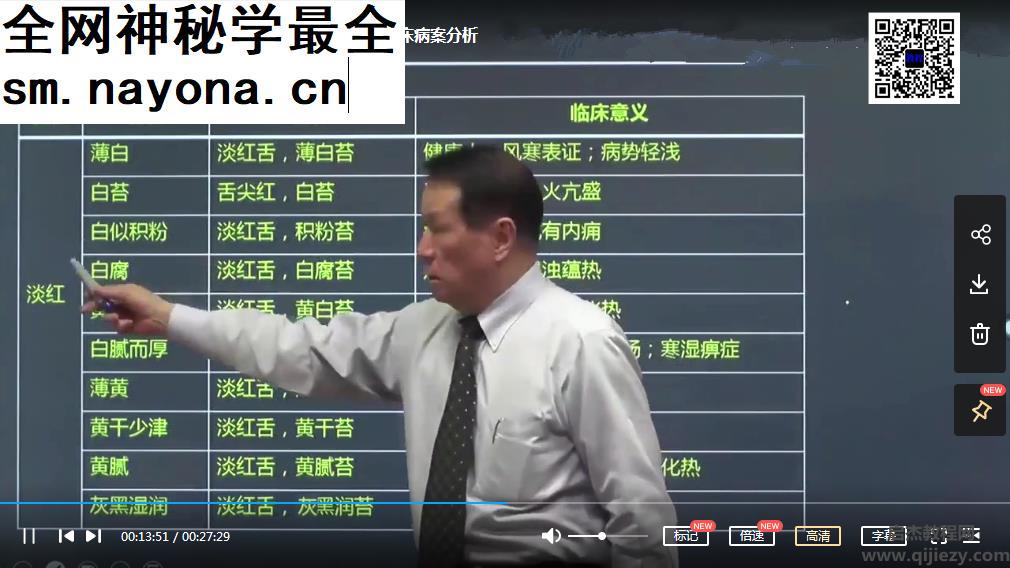
A recorded Tuina study series attributed to Peng Liang. The listing identifies 83 videos and supplies original course previews. Use those previews to assess the taught approach before purchase; a complete English lesson-by-lesson transcript is not included.
Course Overview
Peng Liang Tuina Course: 83 Video Lessons is a digital study resource in the Tuina collection. This English product guide explains the listed material; the original recordings and documents are in Chinese. English subtitles or translated full lessons are not included unless separately stated.
Course Contents and Learning Focus
- Tuina as a traditional manual-practice subject
- The 83-video course sequence identified in the listing
- Original instructional previews for checking the material
- Structured notes on terminology, positioning and demonstrated techniques
What You Will Learn
Use the listed topics to identify the scope of this resource, follow its recorded sequence and compare the original diagrams with your study notes. Where individual lesson names are not supplied, the preview images are provided instead of an invented syllabus.
Original Course Previews

Who This Course Is For
For learners who can follow Chinese-language material and want to study Tuina. Check the format and previews before buying. Intermediate or continuation courses assume familiarity with the relevant foundations and do not imply that prerequisite courses are included.
Learning Format and Digital Delivery
Format: 83 recorded video lessons. Price: USD 9.00. This is a virtual, downloadable product; no physical shipment is required. The download link has not yet been attached to this listing and will be added by the store. Contact us before ordering if you need to confirm delivery timing; immediate automatic file access is not promised.
Frequently Asked Questions
Is the course taught in English?
No English-language recording or subtitle track is confirmed. This description is in English; the underlying course material is Chinese.
What is included?
83 recorded video lessons. Review the course contents and original previews for the stated scope.
Will a physical item be shipped?
No. This is a digital learning resource.
Is a certificate or personal consultation included?
No certificate, accreditation or individual consultation is promised by this listing.
Editorial Note and Disclaimer
Karma Kismet has organized the course listing and available directory into this English guide. Lesson counts refer to the supplied listing, not an independent review of every recording. Educational study only, not a diagnosis, prescription or treatment plan. Do not self-prescribe herbs or formulas or perform manual techniques based on a recording; consult an appropriately qualified healthcare professional.
Related Courses
- Hu Hao Chinese Herbal Medicine Course: 60 Lessons
- Taiwan Chinese Herbal Medicine Collection: 28 Lessons
- Wang Yuechao and Wang Zheng Classical Formula Course Collection
- Zhengan Classical Formula Diagnosis Course: 88 Lessons
- Wang Yajun Xun Style Tuina Course: 121 Videos
Browse Tuina, review course and delivery questions, or learn about Karma Kismet.
Reading the shape of Peng Liang’s Tuina sequence
The 83-video directory attributed to Peng Liang has a broader shape than a simple list of massage demonstrations. Its opening titles address the idea of Tuina, traditional explanations of its action, suitability and cautions, and ways of classifying manual methods. A substantial middle section names families of movements. Other titles introduce exercise and traditional movement practice, followed by condition-themed discussions and regional wellness massage. That progression gives a learner several different kinds of material to distinguish while watching.
Tuina is a traditional manual-practice subject. A video can show a gesture and describe its terminology, but it cannot assess whether a particular technique is appropriate for a particular person. The safest educational use of this collection is to understand the named methods, observe how movements are distinguished, and keep practical questions for supervised instruction from an appropriately trained professional. Avoid trying forceful or joint-moving techniques on yourself or another person from a recording alone.
How the method titles can organize study
The directory names pressing and lifting methods, friction methods, vibration and tapping methods, and joint movement methods. These are useful study headings because similar-looking hand motions can have different names and aims within the tradition. As you watch, note the visible direction of movement, the part of the hand used, and how the instructor describes a method. If a detail is not clear on screen, mark it as unresolved instead of supplying an imagined technique.
- First, read the introductory titles on concepts, classifications, requirements, and cautions. Use these to understand the terms that recur later.
- Group the named methods in your notes by movement family. For example, keep pressing and lifting separate from rubbing, tapping, or joint movement.
- Record what the demonstration visibly shows and what the narration says. If your Chinese comprehension is uncertain, check the term before drawing a conclusion.
- When the sequence turns to a body region or a named complaint, identify whether the video is introducing a subject, discussing self-care, or demonstrating a method. Those are different educational purposes.
This structure helps prevent a common mistake: treating every lesson as an instruction to perform a technique. Some directory entries are conceptual; others carry explicit cautions or discuss conditions. A learner can gain value from recognizing and comparing those categories without applying the movements.
Traditional movement and exercise entries
Alongside Tuina methods, the directory includes titles for squats, planks, push-ups, and a sequence identified as Yijin Jing. Their presence shows that the collection includes movement-related study as well as manual methods. It does not establish an exercise prescription for any viewer. Notice how these entries sit in the course’s order and how the instructor connects them to the surrounding material. Physical capacity, pain, balance, and existing conditions differ between people, so suitability should be considered individually before attempting unfamiliar movements.
Condition-themed lessons need careful reading
Several groups of titles introduce a concern and then name traditional manual approaches or self-care discussions. Examples in the directory include the neck, shoulder, knee, and lower back, as well as headache, sleep, digestion, and menstrual concerns. A title about a condition is a description of the topic covered; it is not evidence that a method treats the condition safely or effectively. Some symptoms can have causes that require assessment beyond a manual-practice framework.
If you are studying these videos for professional background, keep questions about contraindications prominent. If you are studying for personal interest, do not use a recording to decide that symptoms are harmless. New, intense, persistent, or unexplained symptoms call for suitable healthcare advice. No video can examine the person, clarify their medical history, or adjust a movement in response to discomfort.
Choosing this collection for your learning goals
This series may suit someone who understands Chinese-language instruction and wants to see how a large Tuina directory divides theory, hand methods, movement, condition-themed discussion, and body-region sequences. The listed previews offer a chance to inspect the presentation. The product guide does not provide a full English transcript or promise practical supervision, so a learner who needs either of those should consider that limitation before choosing it.
The number 83 identifies the videos listed for this resource. It says nothing by itself about lesson duration, depth of coverage, or the level of skill a viewer might gain. A useful personal study plan is to work through the terminology before the more applied titles and to revisit the safety-related entries whenever an unfamiliar method appears. Understanding when not to act is part of studying a manual subject responsibly.
Questions about Peng Liang’s 83-video listing
Does the course only cover relaxation massage?
No. The listed titles range from Tuina concepts and classifications to named hand methods, traditional movement practice, condition-themed discussions, and massage by body region. Review the directory and previews for the parts most relevant to your interest.
Can a beginner reproduce the joint movement lessons from video?
A recording cannot assess positioning, force, contraindications, or a person’s response. Treat those lessons as subjects for observation and discussion unless you have appropriate in-person supervision and training.
Do the condition titles provide a treatment plan?
They identify topics in the directory. They do not provide an individualized assessment or establish that a demonstrated approach is suitable for a particular symptom.
What should I write down while watching a hand-method lesson?
Start with the Chinese term, a careful English gloss, the visible movement, and any stated cautions. Separate what you saw from what you inferred, especially when the camera angle leaves details uncertain.
Is there an English lesson-by-lesson transcript?
The listing does not include a complete English transcript. Learners should check the original previews and make sure they can follow the Chinese material at the level needed for their purpose.
Finally, remember that the regional wellness massage titles are still part of a traditional teaching sequence, not a universal routine. A person seeking hands-on care should discuss their needs with a qualified practitioner, and a learner seeking practical competence should look for direct instruction that can address technique and safety in real time.