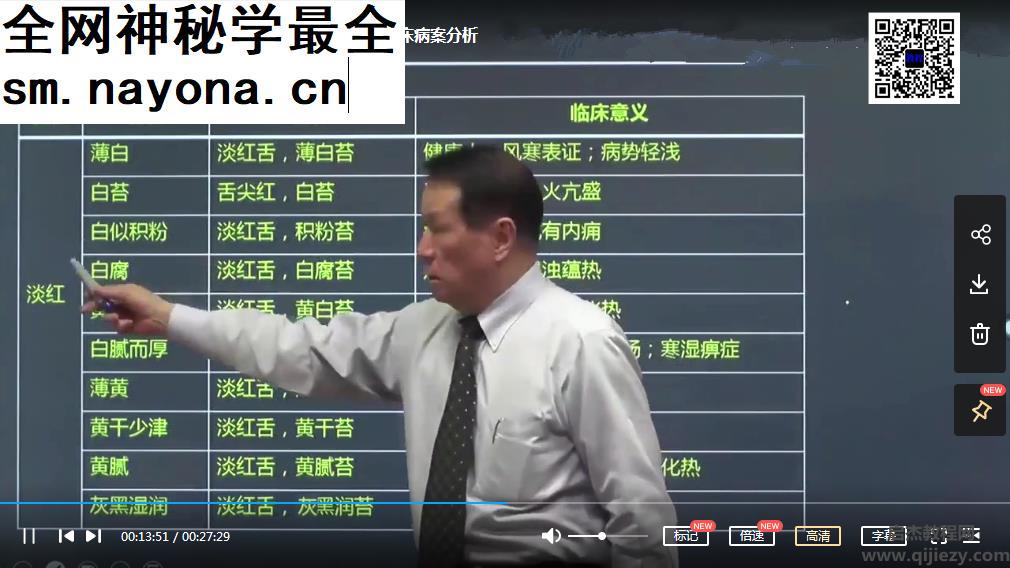
Compare eight series on classical formula pattern differentiation. The listing separates the six traditional disease divisions and a first volume of Jin Gui Yao Lue commentary, making the collection suitable for learners comparing the structure of these texts.
Course Overview
Wang Yuechao and Wang Zheng Classical Formula Course Collection is a digital study resource in the TCM Formulas collection. This English product guide explains the listed material; the original recordings and documents are in Chinese. English subtitles or translated full lessons are not included unless separately stated.
Course Contents and Learning Focus
- Taiyang analysis: 12 videos
- Supplementary Taiyang analysis: 11 videos
- Shaoyang analysis: 10 videos
- Yangming analysis: 21 videos
- Shaoyin analysis: 12 videos
- Jueyin analysis: 11 videos
- Taiyin analysis: 10 videos
- Jin Gui Yao Lue commentary, part one: 22 videos
What You Will Learn
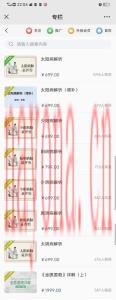
Use the listed topics to identify the scope of this resource, follow its recorded sequence and compare the original diagrams with your study notes. Where individual lesson names are not supplied, the preview images are provided instead of an invented syllabus.
Original Course Previews
Who This Course Is For
For learners who can follow Chinese-language material and want to study TCM Formulas. Check the format and previews before buying. Intermediate or continuation courses assume familiarity with the relevant foundations and do not imply that prerequisite courses are included.
Learning Format and Digital Delivery
Format: Eight video course series. Price: USD 9.00. This is a virtual, downloadable product; no physical shipment is required. The download link has not yet been attached to this listing and will be added by the store. Contact us before ordering if you need to confirm delivery timing; immediate automatic file access is not promised.
Frequently Asked Questions
Is the course taught in English?
No English-language recording or subtitle track is confirmed. This description is in English; the underlying course material is Chinese.
What is included?
Eight video course series. Review the course contents and original previews for the stated scope.
Will a physical item be shipped?
No. This is a digital learning resource.
Is a certificate or personal consultation included?
No certificate, accreditation or individual consultation is promised by this listing.
Editorial Note and Disclaimer
Karma Kismet has organized the course listing and available directory into this English guide. Lesson counts refer to the supplied listing, not an independent review of every recording. Educational study only, not a diagnosis, prescription or treatment plan. Do not self-prescribe herbs or formulas or perform manual techniques based on a recording; consult an appropriately qualified healthcare professional.
Related Courses
- Hu Hao Chinese Herbal Medicine Course: 60 Lessons
- Taiwan Chinese Herbal Medicine Collection: 28 Lessons
- Zhengan Classical Formula Diagnosis Course: 88 Lessons
- Si Qingyang Pulse Diagnosis Course: 20 Lessons
Browse TCM Formulas, review course and delivery questions, or learn about Karma Kismet.
Reading Across the Eight Listed Series
The Wang Yuechao and Wang Zheng collection is organized around classical formula pattern differentiation. Its directory names separate series for Taiyang, Shaoyang, Yangming, Shaoyin, Jueyin, and Taiyin, with an additional Taiyang segment and the first part of a Jin Gui Yao Lue commentary. These names are traditional textual categories. They give a reader a framework for studying how passages are organized and compared; they should not be used as labels for diagnosing a real person.
The extra Taiyang series is a useful clue about the collection’s shape. Instead of treating the first Taiyang segment as a closed topic, a learner can keep an open set of notes and ask what the supplementary segment revisits or clarifies. The directory also gives Yangming a longer series than several other divisions. A difference in listed video counts indicates how the material is divided in this collection; it does not prove that one topic is inherently more important or more difficult.
A comparative notebook for the six divisions
- Create a page for each named division and write down only points explicitly supported by the lesson you are studying.
- Record the passage, term, or question under discussion when it can be identified. Keep commentary separate from the classical wording.
- When two series use similar terms, compare their context before deciding that they mean the same thing.
- Return to the supplementary Taiyang segment after the first pass and note what it adds to the initial account.
- Keep a separate page for Jin Gui Yao Lue so its commentary is not silently blended with the six-division outline.
This method turns the directory into a reading aid without inventing a detailed syllabus. It also protects against a common study error: remembering a formula name while forgetting which textual question prompted its discussion. A useful note states the question, the source context, and the explanation given. If any of those elements is missing, the note remains provisional.
What Pattern Differentiation Means for Study
Within this traditional literature, pattern differentiation involves reasoning about groups of signs and descriptions in relation to a text’s categories. It is a way to understand how a historical medical system frames a problem. The categories can be subtle, and a translation may make distinct Chinese terms look deceptively alike. The course title points toward analysis of that reasoning rather than a catalog of formulas to apply by name.
A reader can compare explanations without deciding which is correct for a living patient. For instance, if an argument depends on whether a passage belongs under an exterior or interior discussion, the study task is to trace that argument and examine the textual evidence. It is not to classify someone’s symptoms based on a recording. Where a lesson refers to clinical experience, distinguish the speaker’s example from evidence that would support a current medical claim.
The Jin Gui Yao Lue segment is listed as part one. That wording is significant: the collection should not be assumed to contain a complete commentary on the whole work. It can still be studied alongside the other series by asking how the commentary cites and interprets its own text. Keep the boundaries of the listed material visible when planning a reading sequence.
Questions that sharpen a close reading
- Is a term being defined, quoted from a classical passage, or used in the commentator’s own explanation?
- Does the analysis depend on an earlier passage that should be reviewed first?
- Is a formula mentioned as part of textual interpretation, or is the lesson making a broader practical claim?
- What alternative reading would account for the same wording, and does the material address it?
- Which parts of the discussion require more background in classical Chinese or traditional medical terminology?
Who May Benefit from the Collection
Readers with an existing interest in classical Chinese medical texts may value the eight-series organization because it allows sustained comparison across named divisions. A newcomer can use the directory to understand the broad map, but the terminology and Chinese-language recordings may make independent reference work necessary. Someone seeking a short introductory overview should account for the number of separate series and the emphasis on close analysis.
The material is educational. It cannot establish clinical competence, authorize prescribing, or replace supervised training. Formula names can conceal meaningful differences in composition, preparation, and suitability. Do not use a textual comparison to select medicines for yourself or another person. Questions about a health condition require an appropriately qualified professional.
Frequently Asked Questions About This Formula Collection
Does the collection cover every part of Jin Gui Yao Lue?
The listing identifies a first part of commentary. It does not support a claim that the complete work is covered.
Why are there two Taiyang series?
The directory lists an initial Taiyang analysis and a supplementary one. The safest study approach is to treat the second as additional material and check the recordings for its precise relationship to the first.
Can the video counts tell me which division to study first?
They tell you how the listed material is apportioned, not what prerequisite knowledge you have. A reader may follow the directory order while using a trusted reference for unfamiliar concepts.
Is a classical formula discussion a prescribing guide?
No. Textual explanation does not assess a person’s medical history, medicines, or current condition. It belongs in a study notebook rather than a treatment plan.
What makes a comparison between two divisions useful?
Compare the exact terms, textual setting, and reasoning used in each lesson. Avoid reducing the divisions to a few memorized symptom labels.