This course approaches classical formulas through diagnostic reasoning. Its directory begins with study methods, then follows yin-yang, exterior-interior, cold-heat and deficiency-excess distinctions before discussing traditional treatment principles.
Course Overview
Zhengan Classical Formula Diagnosis Course: 88 Lessons is a digital study resource in the TCM Formulas collection. This English product guide explains the listed material; the original recordings and documents are in Chinese. English subtitles or translated full lessons are not included unless separately stated.
Course Contents and Learning Focus
- Study methods and diagnostic cautions
- Yin-yang and traditional organ relationships
- Taiyang, Yangming and Shaoyin divisions
- Exterior-interior changes and pattern progression
- Cold-heat and true-false deficiency distinctions
- Qi deficiency, stagnation and sinking; blood deficiency
- Dampness, fluids and phlegm
- Harmonizing, warming, clearing, tonifying and reducing methods
What You Will Learn
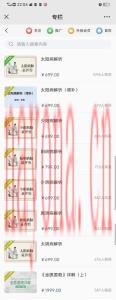
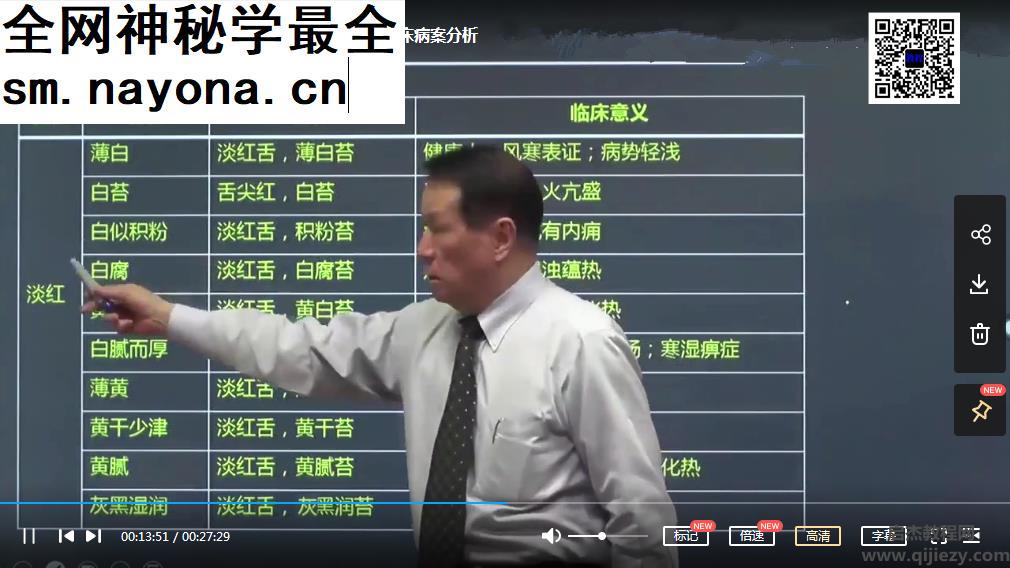
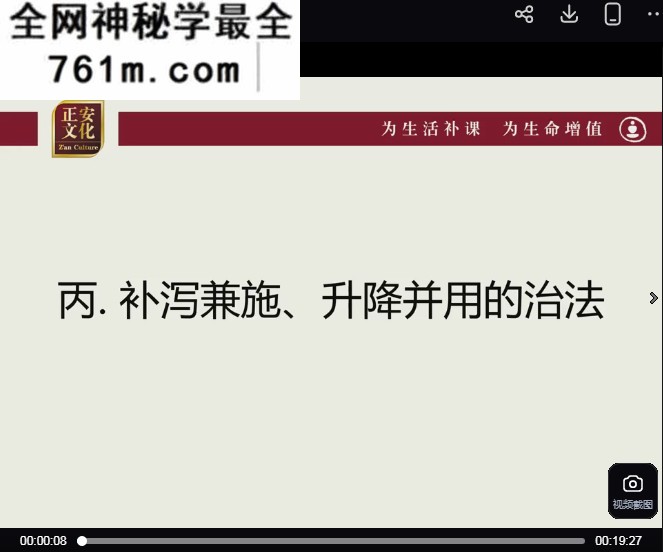
Use the listed topics to identify the scope of this resource, follow its recorded sequence and compare the original diagrams with your study notes. Where individual lesson names are not supplied, the preview images are provided instead of an invented syllabus.
Original Course Previews
Who This Course Is For
For learners who can follow Chinese-language material and want to study TCM Formulas. Check the format and previews before buying. Intermediate or continuation courses assume familiarity with the relevant foundations and do not imply that prerequisite courses are included.
Learning Format and Digital Delivery
Format: 88 recorded video lessons. Price: USD 9.00. This is a virtual, downloadable product; no physical shipment is required. The download link has not yet been attached to this listing and will be added by the store. Contact us before ordering if you need to confirm delivery timing; immediate automatic file access is not promised.
Frequently Asked Questions
Is the course taught in English?
No English-language recording or subtitle track is confirmed. This description is in English; the underlying course material is Chinese.
What is included?
88 recorded video lessons. Review the course contents and original previews for the stated scope.
Will a physical item be shipped?
No. This is a digital learning resource.
Is a certificate or personal consultation included?
No certificate, accreditation or individual consultation is promised by this listing.
Editorial Note and Disclaimer
Karma Kismet has organized the course listing and available directory into this English guide. Lesson counts refer to the supplied listing, not an independent review of every recording. Educational study only, not a diagnosis, prescription or treatment plan. Do not self-prescribe herbs or formulas or perform manual techniques based on a recording; consult an appropriately qualified healthcare professional.
Related Courses
- Hu Hao Chinese Herbal Medicine Course: 60 Lessons
- Taiwan Chinese Herbal Medicine Collection: 28 Lessons
- Wang Yuechao and Wang Zheng Classical Formula Course Collection
- Si Qingyang Pulse Diagnosis Course: 20 Lessons
Browse TCM Formulas, review course and delivery questions, or learn about Karma Kismet.
Building a Map of Diagnostic Reasoning
The Zhengan directory begins with study methods and cautions, then moves through traditional distinctions used in classical formula discussion. Yin and yang, exterior and interior, cold and heat, and deficiency and excess recur in the listed topics. Later headings address qi, blood, dampness, fluids, phlegm, traditional organ relationships, and named treatment principles. The value of this sequence for a learner is the chance to examine how the terms relate, including cases where a simple pair of opposites does not capture the full discussion.
The first study-method entries deserve attention before the more detailed headings. A learner can use them to decide how to organize notes, how to flag uncertainty, and how to avoid turning a memorable label into an unsupported conclusion. The directory’s length does not mean that every possible topic in diagnosis or classical formulas is covered. It indicates a substantial set of recorded topics within the stated framework.
Use a reasoning chart in your notes
- Write the precise distinction named by a lesson, such as exterior and interior or cold and heat.
- Record how the lesson explains the distinction in its own context. Avoid inserting a definition from another school without labeling its source.
- Note any apparent exception, mixed presentation, or reversal named in the directory.
- List what additional information the explanation would require before it could be evaluated in a real setting.
- Return to earlier entries when a later topic combines categories that were initially introduced separately.
This chart is especially useful for headings concerning true and apparent deficiency, mixed cold and heat, and exterior-interior change. Such labels warn against a mechanical reading in which one word automatically determines a conclusion. The study exercise is to follow the argument step by step and identify where an interpretation depends on context.
From Foundational Pairs to More Complex Topics
The directory names the traditional six divisions, including Taiyang, Yangming, Shaoyin, and others. It also lists progression between exterior and interior and several relationships between deficiency, excess, cold, and heat. These are categories within a particular intellectual tradition. A learner should distinguish the historical terms from modern diagnostic categories, even when an English translation sounds familiar.
Another group of headings discusses qi deficiency, stagnation, sinking, and reversal, alongside blood deficiency and blood stasis. The listed topics on dampness, fluids, and phlegm likewise use terms that carry specific meanings within traditional teaching. Translating each word into everyday English can make the ideas seem simpler than they are. A glossary that retains the Chinese term, the lesson context, and a tentative English rendering can reduce that risk.
Later headings turn toward traditional treatment principles such as harmonizing, warming, clearing, tonifying, and reducing. Here the most useful question is how a principle follows from the course’s stated reasoning, rather than what a viewer should do. The directory does not provide grounds for applying a method to oneself. It also does not establish hands-on instruction, supervised assessment, or competence to prescribe.
Checks for difficult passages
- When two categories appear together, identify whether the lesson is describing coexistence, a sequence, or a contrast.
- When a title refers to an apparent condition, ask what evidence the explanation uses to distinguish appearance from interpretation.
- When traditional organ names appear, avoid equating them automatically with anatomical organs in modern medicine.
- When a treatment principle is named, keep it attached to its theoretical context and do not convert it into a home procedure.
Choosing a Manageable Route Through 88 Lessons
A learner with some background in traditional Chinese medical vocabulary may move through the directory in order and compare related clusters. A newer reader may need to pause after the study-method and foundational sections, build a term list, and consult reliable references before proceeding. The Chinese-language presentation makes this particularly important for anyone relying on translation. A confident but inaccurate translation of a technical distinction can distort every later note.
One practical approach is to summarize each cluster in a paragraph, then write two unanswered questions before starting the next cluster. For the cold-heat material, those questions may concern mixed or apparently contradictory descriptions. For qi and blood topics, they may concern how one concept is distinguished from another in the speaker’s examples. For treatment principles, they may concern the logical step from classification to a named principle. This remains an exercise in understanding a recorded explanation, not in making a clinical decision.
Educational material on diagnosis has a clear limit. A real person’s symptoms can have causes that a traditional category, a video example, or a viewer’s notes cannot establish. Anyone facing a health concern should seek an appropriately qualified healthcare professional. The collection can help a reader understand a system of terms while leaving personal medical decisions to people able to assess them responsibly.
Frequently Asked Questions About the Zhengan Directory
Why start with the study-method entries?
They are listed at the beginning and can help frame how later distinctions are read. Taking notes on method first may also make it easier to spot assumptions in a complex explanation.
Does a lesson on a treatment principle teach a safe procedure?
The directory names principles for study. A heading alone does not specify safe techniques, appropriate substances, or individual suitability.
Are traditional organ labels the same as modern anatomical diagnoses?
No automatic equivalence should be assumed. Record how each term is used in its own teaching context and consult reliable references when comparing systems.
What if two lesson headings seem contradictory?
Keep both headings and examine whether they describe different contexts, a mixed pattern, or an apparent-versus-actual distinction. Do not resolve the difference by guessing.
Will completing the recordings qualify someone to diagnose?
A listing of recorded lessons does not establish clinical training or competence. The material is best used for structured study of terminology and reasoning.