Study individual Chinese medicinal substances through Hu Hao's circular-movement perspective. The directory moves through familiar plants and mineral materials, returning to questions and seasonal examples rather than presenting a single formula manual.
Course Overview
Hu Hao Chinese Herbal Medicine Course: 60 Lessons is a digital study resource in the Chinese Herbal Medicine collection. This English product guide explains the listed material; the original recordings and documents are in Chinese. English subtitles or translated full lessons are not included unless separately stated.
Course Contents and Learning Focus
- Mulberry leaf, honeysuckle, chrysanthemum and mint
- Ginger, cinnamon twig, ephedra and traditional exterior-releasing classifications
- Astragalus, licorice, angelica and rehmannia
- Pinellia, fritillaria, poria and alisma
- Rhubarb, immature bitter orange and magnolia bark
- Historical animal-derived substances and substitution discussions
- Question-and-answer sessions and seasonal material
What You Will Learn
Use the listed topics to identify the scope of this resource, follow its recorded sequence and compare the original diagrams with your study notes. Where individual lesson names are not supplied, the preview images are provided instead of an invented syllabus.
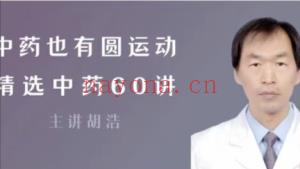
Original Course Previews

Who This Course Is For
For learners who can follow Chinese-language material and want to study Chinese Herbal Medicine. Check the format and previews before buying. Intermediate or continuation courses assume familiarity with the relevant foundations and do not imply that prerequisite courses are included.
Learning Format and Digital Delivery
Format: 60 recorded video lessons. Price: USD 9.00. This is a virtual, downloadable product; no physical shipment is required. The download link has not yet been attached to this listing and will be added by the store. Contact us before ordering if you need to confirm delivery timing; immediate automatic file access is not promised.
Frequently Asked Questions
Is the course taught in English?
No English-language recording or subtitle track is confirmed. This description is in English; the underlying course material is Chinese.
What is included?
60 recorded video lessons. Review the course contents and original previews for the stated scope.
Will a physical item be shipped?
No. This is a digital learning resource.
Is a certificate or personal consultation included?
No certificate, accreditation or individual consultation is promised by this listing.
Editorial Note and Disclaimer
Karma Kismet has organized the course listing and available directory into this English guide. Lesson counts refer to the supplied listing, not an independent review of every recording. Educational study only, not a diagnosis, prescription or treatment plan. Do not self-prescribe herbs or formulas or perform manual techniques based on a recording; consult an appropriately qualified healthcare professional.
Related Courses
- Taiwan Chinese Herbal Medicine Collection: 28 Lessons
- Wang Yuechao and Wang Zheng Classical Formula Course Collection
- Zhengan Classical Formula Diagnosis Course: 88 Lessons
- Si Qingyang Pulse Diagnosis Course: 20 Lessons
Browse Chinese Herbal Medicine, review course and delivery questions, or learn about Karma Kismet.
Reading the Materia Medica Through a Circular-Movement Lens
Hu Hao’s listed lessons focus largely on individual medicinal substances. The circular-movement perspective gives a learner a way to ask how each substance is described within a traditional account of rising, descending, warming, cooling, moistening, and drying. These words belong to a historical explanatory system. They should be studied as terms within that system, rather than treated as proof of a substance’s effect in a particular person.
The directory ranges across familiar plants, mineral materials, and historically discussed animal-derived substances. That breadth makes comparison more useful than memorizing a single phrase beside each name. A learner can record how the same teaching vocabulary appears in different entries, where the descriptions diverge, and which details remain unclear without the full lesson. The listed question sessions offer another opportunity to revisit a difficult distinction after encountering it in several examples.
A substance-by-substance reading method
- Write the Chinese name exactly as it appears in the lesson title, then note any reliable English identification separately. A common name alone may refer to more than one plant or preparation.
- Summarize the traditional descriptors in your own words. Keep the speaker’s explanation distinct from your own interpretation.
- Compare related entries, such as mulberry leaf, chrysanthemum, honeysuckle, and mint, without assuming that a shared classification makes them interchangeable.
- Mark unfamiliar technical words for later checking in a dependable materia medica reference. Translation can hide meaningful distinctions.
- End each entry with a question about the reasoning used, rather than a proposed personal use.
This process is especially helpful when the directory moves quickly from one substance to another. Ginger and cinnamon twig, for example, can prompt a comparison of how warming and movement are discussed. Poria and alisma can prompt a comparison of traditional fluid-related descriptions. Those comparisons are study exercises, not instructions to combine or take the substances.
How the Directory Changes the Learning Task
The early entries include widely recognized leaves, flowers, and roots. Later entries introduce subjects that need more careful context. Rhubarb appears in two consecutive lessons, suggesting that its treatment in the directory extends beyond a brief name and label. Pinellia and ephedra are reminders that an educational mention of a substance does not establish safe preparation, dose, suitability, or legality. A learner should never turn a lecture note into a home-use recipe.
The directory also includes traditional discussion of animal-derived materials and alternatives. That topic calls for attention to conservation, sourcing, current rules, and ethical concerns. The existence of a historical entry is not an endorsement of obtaining or using such a material. For study, the valuable question is how an older classification was framed and how a contemporary reader can discuss it responsibly.
Seasonal examples and question sessions add a different kind of context. They may show how the vocabulary is revisited when the topic changes, but a seasonal lesson title does not establish advice for a current illness. Record what question is being addressed and which assumptions the explanation depends on. If a lesson makes a broad claim, compare it with trustworthy clinical information before accepting it as a statement about health.
Questions to carry between lessons
- Does the lesson describe an individual substance, a traditional category, or an example of reasoning?
- Are two similar terms being used consistently, or does their meaning depend on the substance under discussion?
- Is the description about an unprocessed material or a particular prepared form? If the form is unstated, leave it unstated in your notes.
- Which claims are historical or theoretical, and which would require independent evidence before practical use?
Who May Find This Approach Useful
A reader already studying Chinese herbal terminology may appreciate the repeated return to single substances. The sequence offers many chances to compare labels and build a personal glossary. A beginner can also use the directory to identify unfamiliar names, although the circular-movement framework and Chinese-language presentation may require outside reference material. Someone seeking a compact formula manual should recognize that the listed sequence is organized mainly around substances, questions, and examples.
The course can support close reading of a traditional framework. It cannot, by itself, establish competence to identify raw herbs, assess interactions, advise another person, or practice medicine. Even an apparently familiar plant can be confused with another species or differ by processing method. Keep educational notes separate from decisions about care, and take health concerns to an appropriately qualified professional.
Frequently Asked Questions About Hu Hao’s 60-Lesson Sequence
Does the directory teach one complete herbal formula?
The supplied list is chiefly a progression through named substances, with question sessions and seasonal material. It should not be read as a promise of a complete formula manual.
Why compare substances instead of memorizing a claimed effect?
Comparison reveals how the course’s traditional vocabulary is being used. A one-line effect can lose the context, preparation, and qualifications needed to understand the discussion.
Can the seasonal examples be used as personal health advice?
No. A recorded example is material for study. It does not account for an individual’s circumstances, medicines, or medical history.
How should the animal-derived entries be approached?
Read them as historical and classificatory discussion, including the listed attention to alternatives. Check present-day ethical and legal context independently; do not infer permission or a reason to obtain any material.
What is a sensible first pass through a long directory?
Start with a small cluster of related entries, make a glossary of recurring terms, and revisit the question sessions after you have concrete points of confusion. Accuracy of notes matters more than speed through the list.