Explore tongue observation as a traditional diagnostic subject. This series separates tongue color, shape and coating before presenting changes and examples; it does not establish a diagnosis from a photograph alone.
Course Overview
Xie Fayue Tongue Diagnosis Course: 25 Videos is a digital study resource in the TCM Diagnosis collection. This English product guide explains the listed material; the original recordings and documents are in Chinese. English subtitles or translated full lessons are not included unless separately stated.
Course Contents and Learning Focus
- Introduction, overview and observation cautions
- Tongue physiology and traditional pathology
- Color, stasis spots and tongue form
- Stiffness, trembling and protrusion
- Greasy, curd-like, peeled and localized coatings
- Sublingual veins and dynamic changes
- Pale-red, crimson and blue-purple tongue examples
What You Will Learn
Use the listed topics to identify the scope of this resource, follow its recorded sequence and compare the original diagrams with your study notes. Where individual lesson names are not supplied, the preview images are provided instead of an invented syllabus.
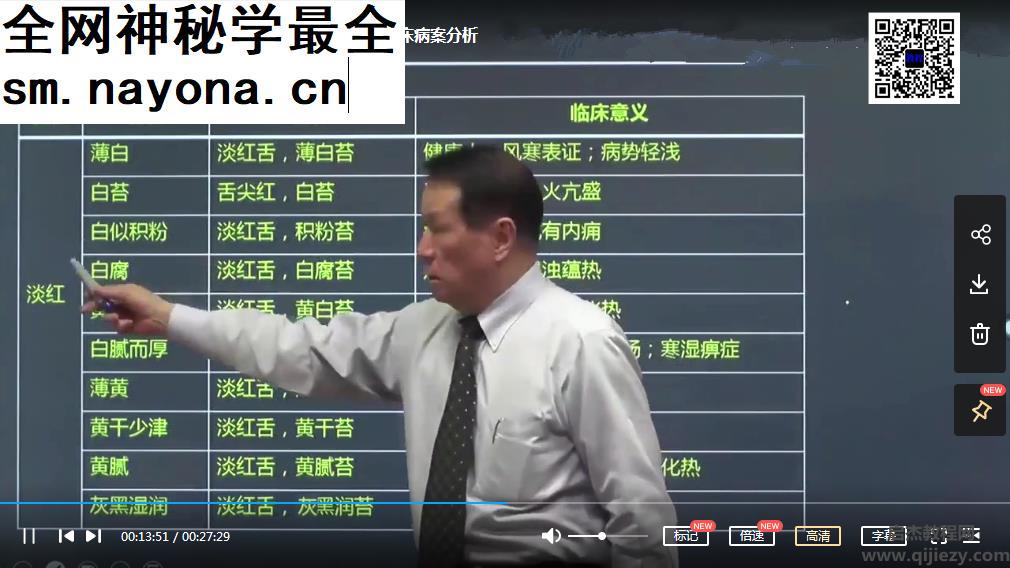
Original Course Previews
Who This Course Is For
For learners who can follow Chinese-language material and want to study TCM Diagnosis. Check the format and previews before buying. Intermediate or continuation courses assume familiarity with the relevant foundations and do not imply that prerequisite courses are included.
Learning Format and Digital Delivery
Format: 25 recorded videos, numbered 00-24. Price: USD 9.00. This is a virtual, downloadable product; no physical shipment is required. The download link has not yet been attached to this listing and will be added by the store. Contact us before ordering if you need to confirm delivery timing; immediate automatic file access is not promised.
Frequently Asked Questions
Is the course taught in English?
No English-language recording or subtitle track is confirmed. This description is in English; the underlying course material is Chinese.
What is included?
25 recorded videos, numbered 00-24. Review the course contents and original previews for the stated scope.
Will a physical item be shipped?
No. This is a digital learning resource.
Is a certificate or personal consultation included?
No certificate, accreditation or individual consultation is promised by this listing.
Editorial Note and Disclaimer
Karma Kismet has organized the course listing and available directory into this English guide. Lesson counts refer to the supplied listing, not an independent review of every recording. Educational study only, not a diagnosis, prescription or treatment plan. Do not self-prescribe herbs or formulas or perform manual techniques based on a recording; consult an appropriately qualified healthcare professional.
Related Courses
- Hu Hao Chinese Herbal Medicine Course: 60 Lessons
- Taiwan Chinese Herbal Medicine Collection: 28 Lessons
- Wang Yuechao and Wang Zheng Classical Formula Course Collection
- Zhengan Classical Formula Diagnosis Course: 88 Lessons
- Si Qingyang Pulse Diagnosis Course: 20 Lessons
Browse TCM Diagnosis, review course and delivery questions, or learn about Karma Kismet.
Learning to describe a tongue before interpreting it
Tongue observation is part of traditional Chinese medicine’s diagnostic vocabulary. Its first challenge is descriptive: what can a viewer actually see, and what might be an effect of lighting, angle, recent food, or an unclear image? The 25-video sequence attributed to Xie Fayue offers a way to study that vocabulary through topics named in its lesson directory. A useful goal is to become more precise about the difference between a tongue’s body, its coating, its movement, and the area beneath it. Precision in description does not turn an observation into a medical conclusion.
The directory begins with an introduction and cautions, then moves through traditional accounts of normal and abnormal appearances. Later titles distinguish body color and form, spots, stiffness, trembling, protrusion, several coating patterns, sublingual vessels, and changes over time. The final group includes pale-red, crimson, and blue-purple examples. Those labels tell a prospective learner what kinds of visual comparisons appear in the sequence. They do not establish that a particular appearance reliably identifies a condition in an individual person.
A practical way to follow the 25 videos
- Start a glossary with separate entries for tongue body, coating, shape, movement, and location. Keep the original Chinese term alongside any English rendering you choose.
- For each example, write a neutral observation before recording the traditional interpretation given in the lesson. This keeps the visible feature distinct from the explanation attached to it.
- When a lesson compares appearances, note exactly what changed: color, distribution, texture, movement, or viewing conditions. Avoid replacing a specific observation with a broad label.
- Revisit your notes after the lessons on dynamic changes. An appearance in one frame may offer less context than a sequence, a conversation, and a full professional assessment.
This approach is especially helpful when studying recorded images. Screen brightness and camera settings can shift color, while a still frame cannot convey every aspect of an in-person examination. A photograph also lacks a person’s history and other information a clinician may need. Treat the examples as illustrations of terminology and reasoning within the tradition, rather than templates for diagnosing yourself or someone else.
Color, coating, and form are different questions
The directory’s structure makes a useful distinction. A lesson about color asks the learner to notice the tongue body’s visible hue. A coating lesson asks about the surface layer, including whether it appears localized or widespread. Lessons on form and movement concern different observations again. Combining these features too early can make notes vague. For instance, writing that an example is unusual says little; recording which feature appears different gives you something specific to compare with the instructor’s explanation.
Some lesson names use traditional terms that may sound alarming when translated literally. The presence of a term in a teaching example does not mean that a viewer has identified an emergency or established a prognosis. In particular, the final video title refers to a serious clinical context. Study that title as part of the course’s stated scope, and leave urgent health judgments to appropriately qualified professionals who can assess the person directly.
Who may find this sequence useful
A learner who can follow Chinese-language instruction and wants a focused introduction to tongue-observation categories may find the ordered directory helpful. Someone already studying TCM diagnosis may use it to compare how related features are described across multiple examples. It may be less suitable for a person seeking an English-language class, a verified clinical qualification, or a personal interpretation of their own tongue. The listing identifies recorded material and previews; it does not promise supervised practice or individual feedback.
The title’s 25 videos correspond to a numbered sequence from 00 through 24. That count is a guide to the listed recordings, not evidence that every learner will reach a particular level of skill. Pace can be chosen according to the time needed to understand terminology. If two terms remain unclear, returning to the introductory material may be more useful than rushing to later case examples.
Keeping the subject in perspective
Traditional diagnostic systems connect observations to wider patterns of interpretation. Learning those connections can be an exercise in understanding a historical and contemporary practice. It should not lead to making treatment decisions from an isolated image. Tongue appearance can vary with ordinary circumstances, and the meaning of a visible feature cannot be settled by a course clip alone. A person with a health concern needs appropriate clinical advice, particularly when symptoms are new, severe, or persistent.
There is also a privacy consideration when using real examples for study. If you take photographs for personal comparison, seek consent before photographing anyone else and avoid sharing identifiable images casually. Use the recordings and any original previews within their intended educational context. Your notes can concentrate on categories and questions without collecting another person’s health information.
Questions specific to this course
Does a lesson on crimson or blue-purple tongues tell me what my own tongue means?
No. Those lesson titles indicate examples for study. They cannot supply the history, examination, or judgment needed for an individual assessment.
Why study coating separately from tongue color?
They describe different visible features. Keeping them separate helps a learner follow what the instructor is comparing and prevents one broad impression from hiding the detail under discussion.
Is the 24-day wording a required schedule?
The source title uses that wording, while the listed directory contains 25 numbered recordings. It need not be treated as a deadline or a promise of proficiency after a set period.
Can I use the videos to interpret a photograph sent by a friend?
A photograph can be affected by lighting and missing context. It is better used to discuss what is visibly present than to give a health judgment. Direct the person to a qualified healthcare professional if they want clinical advice.
What should I check before beginning?
Review the Chinese-language format, the numbered directory, and the available previews. Decide whether you want to study terminology and examples, since the listing does not establish individual instruction or an English translation of the recordings.