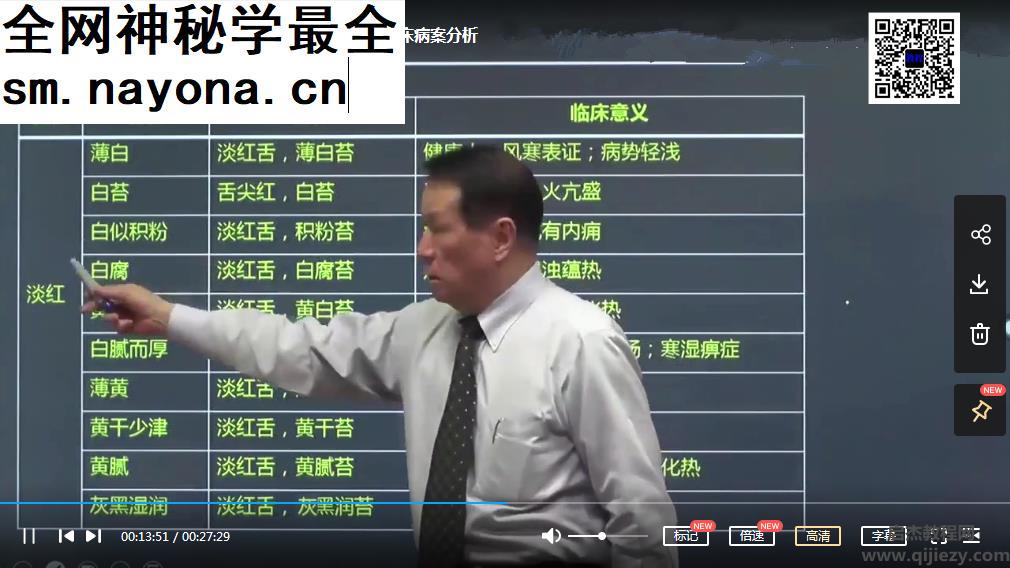
Learn how this course moves from pulse terminology to practice and recorded examples. The materials are grouped into foundational lessons, pulse-quality recognition, interpretation and case discussions.
Course Overview
Si Qingyang Pulse Diagnosis Course: 20 Lessons is a digital study resource in the TCM Diagnosis collection. This English product guide explains the listed material; the original recordings and documents are in Chinese. English subtitles or translated full lessons are not included unless separately stated.
Course Contents and Learning Focus
- Lessons 1-4: introductory foundations
- Lessons 5-7: recognizing pulse qualities
- Lesson 8: pulse practice
- Lessons 9-14: interpreting pulse presentations
- Lessons 15-20: case examples
- Three PDF files and a presentation for review
What You Will Learn
Use the listed topics to identify the scope of this resource, follow its recorded sequence and compare the original diagrams with your study notes. Where individual lesson names are not supplied, the preview images are provided instead of an invented syllabus.
Original Course Previews
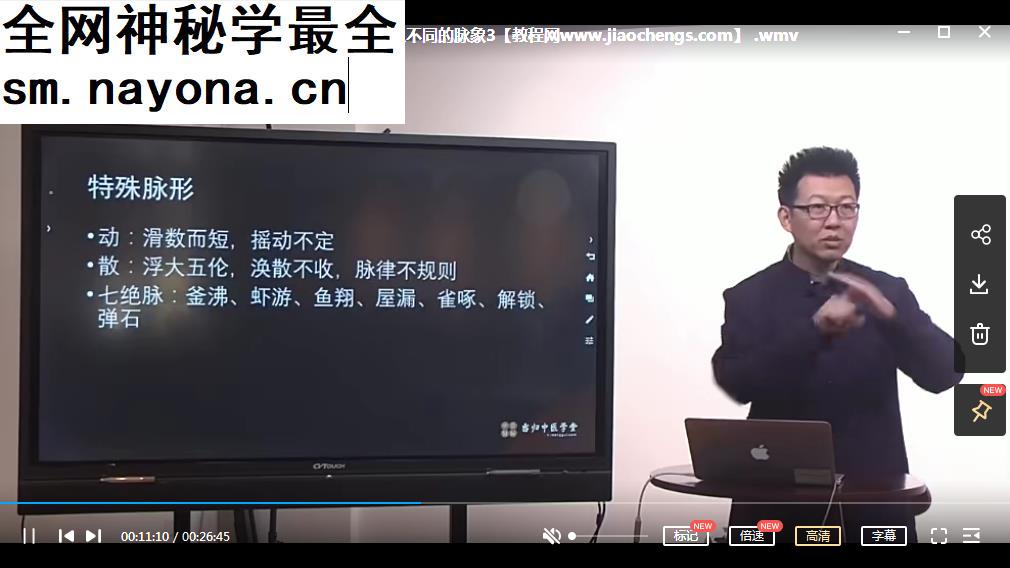
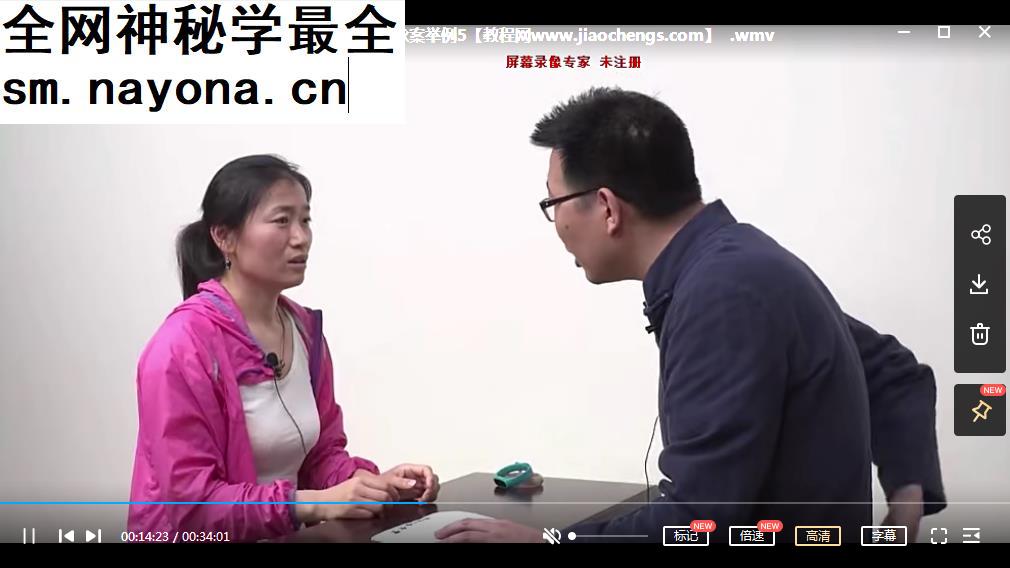
Who This Course Is For
For learners who can follow Chinese-language material and want to study TCM Diagnosis. Check the format and previews before buying. Intermediate or continuation courses assume familiarity with the relevant foundations and do not imply that prerequisite courses are included.
Learning Format and Digital Delivery
Format: 20 videos, three PDF files and a PPTX presentation. Price: USD 9.00. This is a virtual, downloadable product; no physical shipment is required. The download link has not yet been attached to this listing and will be added by the store. Contact us before ordering if you need to confirm delivery timing; immediate automatic file access is not promised.
Frequently Asked Questions
Is the course taught in English?
No English-language recording or subtitle track is confirmed. This description is in English; the underlying course material is Chinese.
What is included?
20 videos, three PDF files and a PPTX presentation. Review the course contents and original previews for the stated scope.
Will a physical item be shipped?
No. This is a digital learning resource.
Is a certificate or personal consultation included?
No certificate, accreditation or individual consultation is promised by this listing.
Editorial Note and Disclaimer
Karma Kismet has organized the course listing and available directory into this English guide. Lesson counts refer to the supplied listing, not an independent review of every recording. Educational study only, not a diagnosis, prescription or treatment plan. Do not self-prescribe herbs or formulas or perform manual techniques based on a recording; consult an appropriately qualified healthcare professional.
Related Courses
- Hu Hao Chinese Herbal Medicine Course: 60 Lessons
- Taiwan Chinese Herbal Medicine Collection: 28 Lessons
- Wang Yuechao and Wang Zheng Classical Formula Course Collection
- Zhengan Classical Formula Diagnosis Course: 88 Lessons
- Xie Fayue Tongue Diagnosis Course: 25 Videos
Browse TCM Diagnosis, review course and delivery questions, or learn about Karma Kismet.
From Pulse Vocabulary to Recorded Examples
Si Qingyang’s listed sequence begins with four introductory lessons, moves to three lessons on recognizing pulse qualities, includes a practice lesson, and then turns to interpretation and case examples. This progression is useful for studying how a traditional diagnostic vocabulary is introduced and applied in teaching. It does not make a recording equivalent to supervised examination of a person.
Pulse descriptions can sound deceptively concrete in translation. Words such as floating, deep, slow, or rapid are labels within a traditional method, and their use depends on technique and context. A learner should first ask how a term is defined in the course before trying to compare it with another source. The same English word may conceal a difference in Chinese terminology, while two different translations may refer to the same original term.
Prepare a vocabulary ledger
- Record the Chinese term when it is available, alongside the English wording used in your own notes.
- Write down the lesson’s description of the quality without adding a disease association.
- Mark whether an example is verbal, visual, or based on a described physical sensation.
- List any condition or limitation the speaker gives for interpreting the observation.
- Compare your notes with the three listed PDF files and presentation only where their contents clearly address the same point.
The accompanying files offer potential reference points for review, but their presence alone does not establish that they provide a complete transcript or a validated assessment tool. Use them to check terminology and structure where possible. If a slide summarizes a term more briefly than a video explanation, retain the fuller context rather than substituting a short label.
What a Video Can and Cannot Convey
The recognition lessons and practice entry suggest a shift from definitions toward observation. A viewer can study how an instructor describes hand placement, comparisons, or uncertainty if those details appear in the recording. A viewer cannot feel the same pulse through a screen. Even a clear demonstration leaves out the tactile feedback that supervised instruction can address.
The interpretation lessons, followed by six listed case-example lessons, create another distinction. A case example shows how an account is presented in a teaching setting. It does not verify the underlying assessment or prove that a similar pulse in another person has the same meaning. For each example, note which observations are explicitly supplied and which conclusions are drawn from them. If the case omits history or other findings, keep that omission visible.
Pulse assessment in traditional Chinese medicine is generally discussed alongside other information. The source material’s emphasis on pulse should not encourage a learner to treat one observation as a complete account of health. A pulse changes with circumstances, and a non-specialist may misread both the physical sensation and the terminology. A recording can support conceptual study without supporting personal diagnosis.
Questions for each case discussion
- What was actually observed, and what was inferred from the observation?
- Did the example supply other context, or is the reasoning presented mainly through pulse terminology?
- Are multiple pulse qualities discussed, and how does the explanation distinguish them?
- Which uncertainty remains after the case is described?
- Would the same conclusion require direct assessment and professional judgment outside the lesson?
A Responsible Study Routine
A beginner can work through the foundational lessons slowly, building the vocabulary ledger before reaching interpretation. Someone already familiar with traditional pulse terms may use the case section to examine the reasoning behind an explanation, while still checking definitions against the early lessons. The Chinese-language presentation means that learners dependent on translation should take particular care with subtle descriptive words.
After each group of lessons, write a short account of what you can explain and what you cannot. You might be able to define a term from the lecture yet remain unable to identify a quality reliably by touch. That is a useful distinction, not a failure. Avoid practicing on others as though the recording grants diagnostic authority, and do not use your impressions to advise anyone about treatment.
The listed 20 videos and supporting files are educational materials. Their outline does not establish supervised practice, feedback on the learner’s technique, or clinical qualification. A concern about an irregular heartbeat, pain, dizziness, or any other symptom calls for appropriate healthcare assessment. Studying a traditional framework should never delay that assessment.
Frequently Asked Questions About Si Qingyang’s Pulse Course
Can the videos teach the feel of a pulse by themselves?
They can present terminology and demonstrations, but a viewer cannot receive tactile feedback from a recording. Recognizing a quality reliably requires more than watching an example.
What is the role of the eighth lesson?
The directory labels it as pulse practice. Its exact exercises should be checked in the lesson itself; the title alone does not establish supervised practice or an assessment.
Do the case examples prove that a pulse identifies a disease?
No. They are recorded teaching examples. A learner can analyze the reasoning presented without treating the examples as proof of a diagnosis for someone else.
How should the PDF files and presentation be used?
Use them as review material where they clarify a term or structure covered in the videos. Do not assume they are complete transcripts or that they replace direct instruction.
Is this a suitable starting point for a beginner?
The sequence begins with foundational lessons, which may help a newcomer learn the vocabulary. The language, tactile nature of the subject, and limits of remote study still need to be considered.