Study professional BaZi training through an English digital resource organized from the original curriculum, course record and reference images.
Course Overview
This English resource organizes the original Chinese curriculum for structured study of BaZi and Four Pillars of Destiny traditions. It presents the source material as a cultural and educational system rather than a scientific prediction or guaranteed outcome.
What You Will Learn
- Core BaZi terminology and chart-reading approaches used in the source material
- How the course connects stems, branches and Five Elements with chart interpretation
- The lesson sequence, examples and study exercises supplied in the original record
- How to distinguish symbolic interpretation from factual or scientific claims
Course Contents
Vertical Professional Course
Resource Information
Original Course Material Images
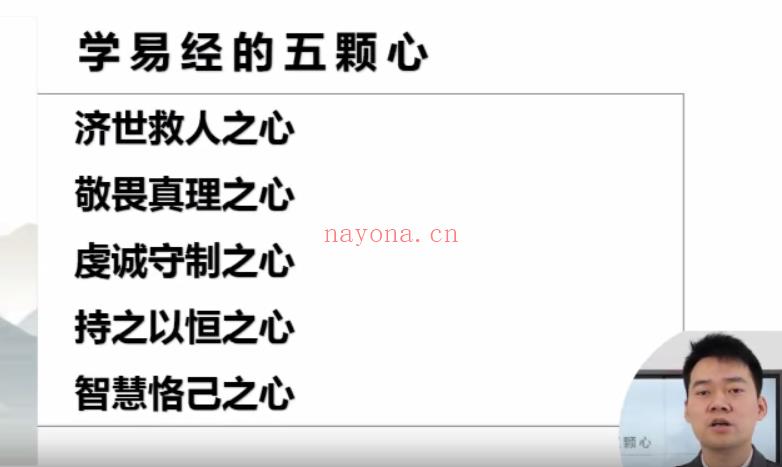
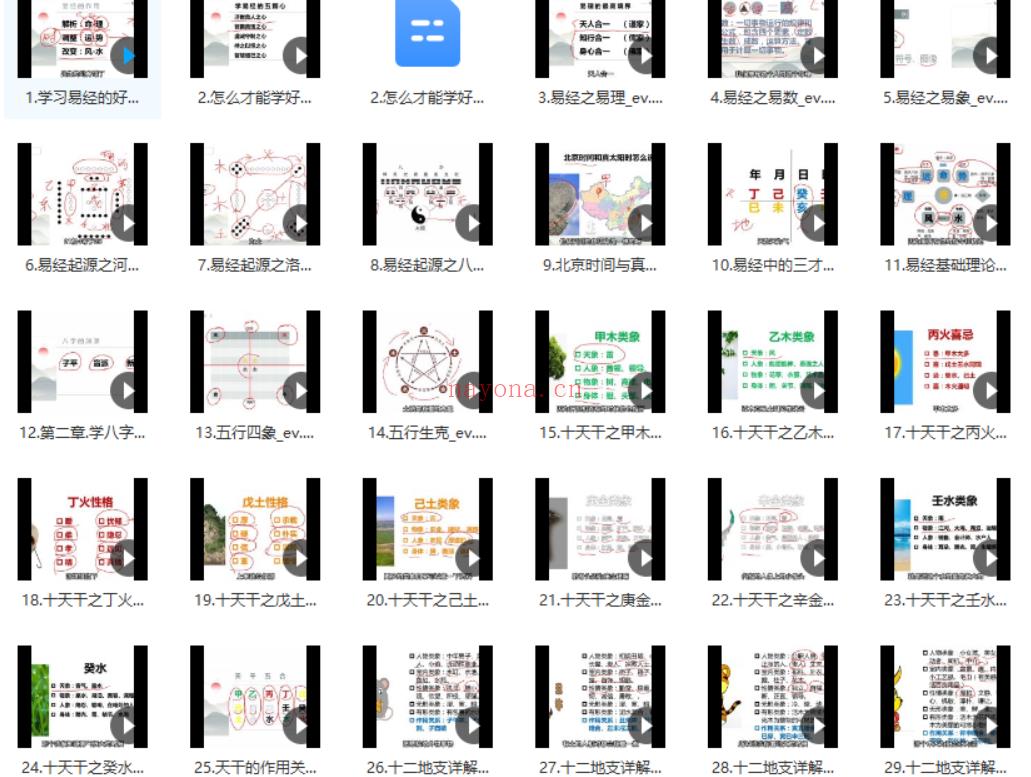
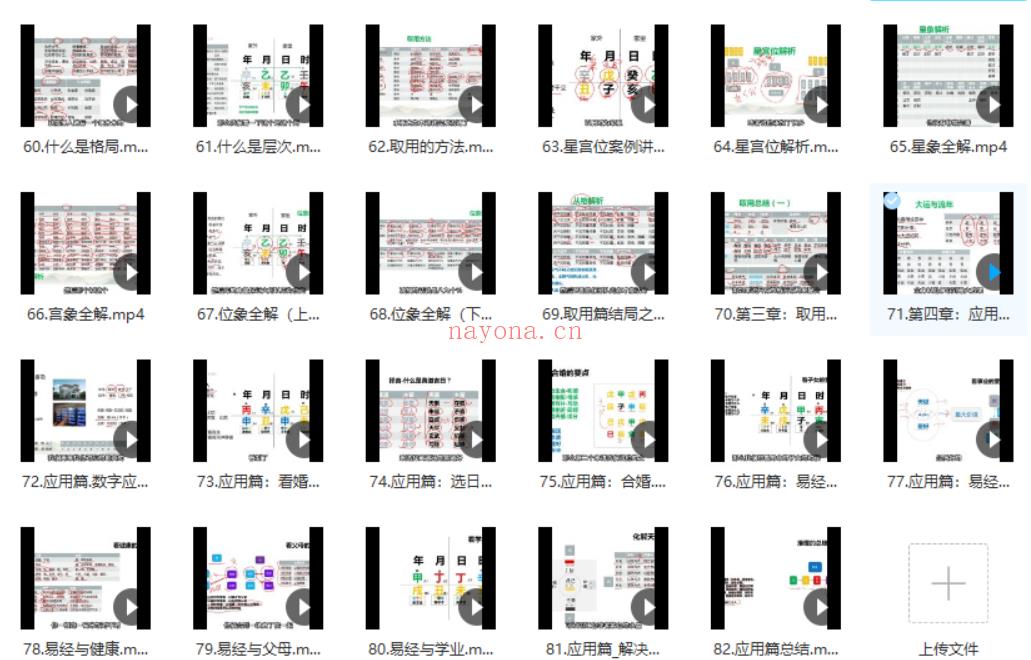
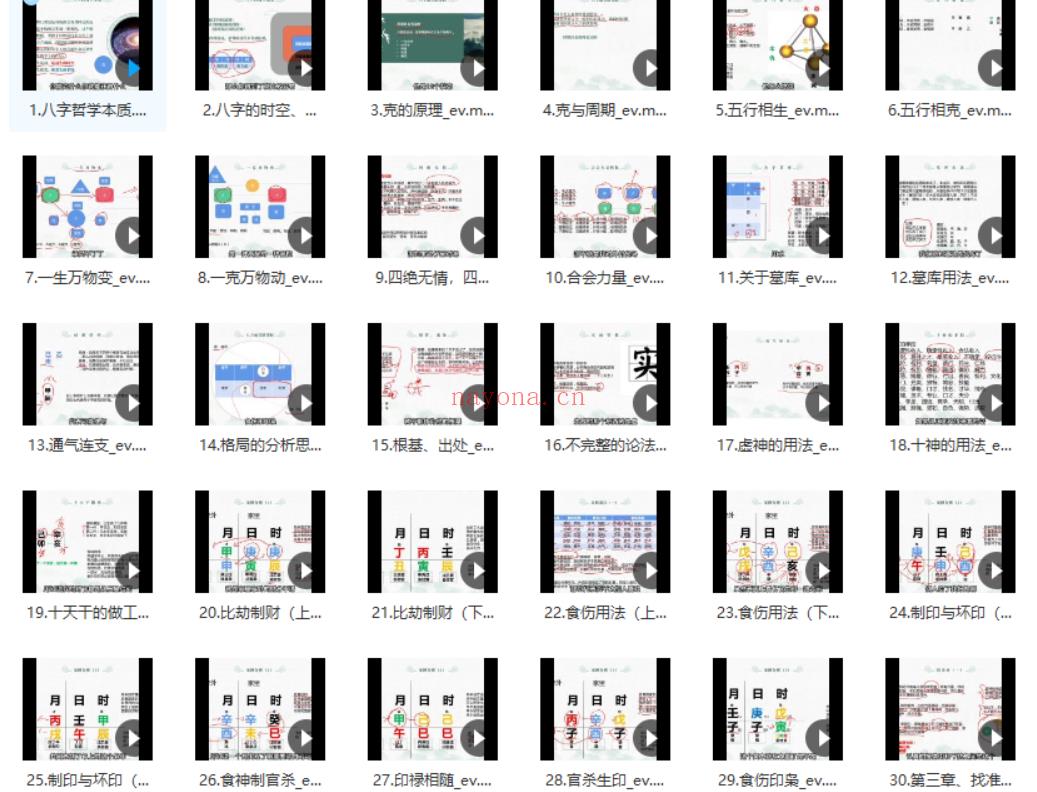
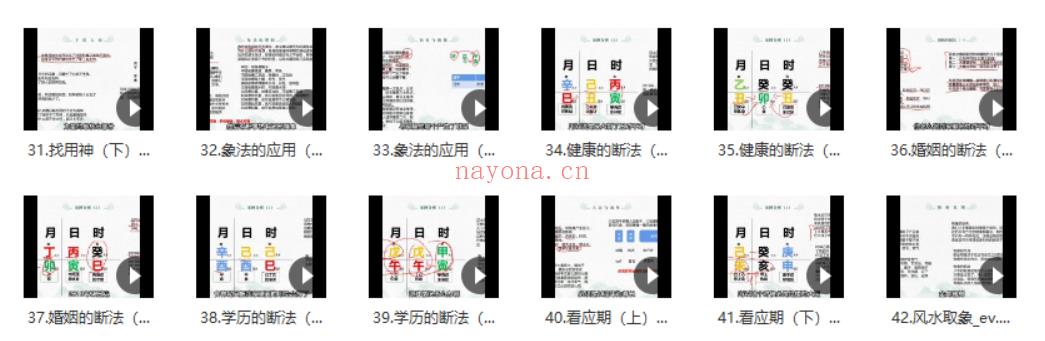
The following images are retained from the original nayona.cn course record for material identification and reference.

Who This Resource Is For
This material is suitable for adult learners exploring BaZi, Four Pillars chart reading, Chinese astrology or traditional destiny-analysis methods. Beginners should start with definitions and calculation rules before attempting interpretive exercises.
Learning Format and Digital Delivery
- Virtual digital resource; no physical shipment
- Course files and access instructions are supplied after purchase
- Lesson counts and file types follow the available source record
- Use the materials for personal study and reference
Source and Editorial Method
The curriculum facts and original material images are adapted from the source record at nayona.cn. Karma Kismet translated and reorganized the available information without inventing credentials, lesson counts or promised outcomes.
Frequently Asked Questions
Is this a physical product?
No. It is a virtual, downloadable educational resource.
Is BaZi scientifically validated?
No. BaZi is presented here as a symbolic and cultural interpretive tradition, not as scientific diagnosis or prediction.
Does this product include a personal consultation?
No, unless the product description explicitly states that a consultation is included.
Related BaZi Courses and Guides
- Xia Guangming Four Pillars BaZi Fast-Track Course
- Song Guoyuan Gan-Zhi Logic BaZi Chart Reading Course
- Wei Qianli BaZi Essentials and Day Master Study Guide
- Gao Dechen Ten Gods Intensive BaZi Course
- Zhuo Hong Five Elements BaZi Study Guide
- Pan Dongguang Annual Luck BaZi Practice Guide
- Blind School BaZi Marriage Compatibility Guide
- Jiulong Career and Wealth BaZi Training Course
- Fangzhou 105-Lesson Complete BaZi Course Bundle
What advanced practitioner study can mean
Wenzeng Advanced BaZi Practitioner Training appears in the Professional BaZi Training category, but the supplied source excerpt provides only a general resource heading and related recommendations. It does not reveal a readable syllabus, confirmed lesson count, examination process, or award. The English title is therefore a topic label rather than proof of a professional qualification. The companion below offers a rigorous way to organize advanced personal study. Its exercises are editorial suggestions and should not be mistaken for requirements or modules verified in the original course.
For a learner with some foundation, advanced study can mean making reasoning more explicit rather than accumulating more confident predictions. Can you show how a chart was constructed, how a relationship was classified, and why one interpretive feature received priority? Can another reader locate the passage supporting your explanation? These questions provide meaningful standards for a notebook. They also make it easier to identify the difference between vocabulary familiarity and an argument you can reconstruct. A practitioner-oriented title need not encourage certainty where the source or the chart remains ambiguous.
Audit your foundations before adding complexity
Begin by checking whether you can explain the notation used in the material without interpreting it. Review the four positions, visible stems and branches, and the reference role of the Day Master. Then test whether your English terms remain consistent across examples. If your terminology shifts between sources, document the shift rather than silently blending definitions. An advanced explanation built on an unnoticed translation change can look sophisticated while resting on a basic confusion. Foundation review helps you find that confusion before it spreads through a longer analysis.
Record calculation conventions separately from interpretive preferences. A calendar convention, treatment of an uncertain birth time, or assumption about a date boundary should remain visible in your notes. If a supplied example omits necessary information, do not guess it merely to produce a complete-looking chart. Mark the omission and explain what can still be studied. This is useful even when the course focuses primarily on interpretation, because it protects you from treating a reconstruction as original evidence. Clear inputs are part of clear reasoning.
Build an argument ledger
For a passage you want to understand deeply, divide your notes into observation, classification, interpretation, and uncertainty. Observation records what is printed or shown. Classification records the traditional labels applied to that notation. Interpretation summarizes the author's proposed meaning. Uncertainty identifies missing information or an unexplained step. This ledger prevents an appealing conclusion from hiding the pathway to it. It can also reveal when an interpretation depends on a condition that appeared earlier in the resource and needs to be cited again.
Keep the ledger concise enough to use repeatedly. You do not need to copy entire chapters. A short reference, a precise paraphrase, and a clear question can be sufficient. The goal is to make your understanding inspectable. If you cannot state the reasoning without introducing a new assumption, write that assumption down and identify it as yours. This discipline is especially useful in advanced study, where familiar terms can encourage a learner to fill gaps automatically and forget which parts of the explanation came from the source.
Compare interpretations without constructing a hybrid
When another teacher discusses a similar chart feature, make a separate entry. Compare the reference point, conditions, terminology, and priority rules. A shared label does not guarantee a shared method. Differences between approaches can be studied without deciding immediately that one must be wrong or that both can be combined. Your purpose is to understand how each explanation works. Only then can you discuss where they agree, where they diverge, and which assumptions account for the divergence in a way another reader can follow.
Avoid assembling an interpretation by selecting the most attractive conclusion from several sources. Such a result may be internally inconsistent even when every individual phrase comes from a recognized tradition. If you use a comparison exercise, identify which source provides each rule and whether the rules use compatible definitions. The supplied Wenzeng listing does not establish a particular lineage or relationship to other recommended resources. Those recommendations should remain discovery leads, not evidence that their methods are included or endorsed within this training item.
Practice explaining limits in ordinary language
An advanced student should be able to distinguish a traditional symbolic inference from a factual statement about a person's life. Try rewriting one interpretation in clear, attributed English: the author reads this feature as a particular theme under stated conditions. Then explain what the chart does not establish. This does not weaken an accurate account of the tradition. It makes the account more precise. Readers can understand a method better when its assumptions and limits are stated alongside its vocabulary instead of hidden behind authoritative language.
Be especially careful with passages touching health, wealth, legal disputes, or intimate relationships. A chart interpretation should not become a diagnosis, a financial recommendation, or a judgment about someone else's honesty. You can study how a source frames those themes while keeping practical decisions grounded in direct information. If you write about the material for others, avoid removing attribution in the pursuit of smoother prose. A sentence that clearly belongs to an author's traditional framework is more responsible than the same sentence presented as a verified personal fact.
Review examples for selection effects
When a case includes an event already known to the author, note that context. Ask whether the example demonstrates a symbolic explanation of an event or documents a forecast made beforehand. These are different forms of evidence. A learner can appreciate the internal reasoning of a retrospective case while recognizing that it does not automatically establish predictive performance. Record how the relevant chart features were selected, whether alternatives were considered, and what information about the case remains unavailable in the material you can see.
You can also review your own notes for hindsight. If you first wrote a broad interpretation and later revised it after learning an outcome, keep both versions. This helps you notice where new information changed your reasoning. It is a personal study practice, not a course requirement confirmed by the source. The benefit is methodological clarity: you learn to distinguish what you could explain from the chart notation alone and what became plausible only after additional context was supplied. That distinction supports honest discussion of interpretive systems.
A realistic advanced study plan
Choose a single recurring concept in the material and trace it through several passages actually available to you. Make an index of references, definitions, conditions, and examples. Then write a short synthesis that preserves differences among those passages. This is a manageable project because it has a specific subject and a visible set of evidence. It also avoids inventing a complete syllabus when the source listing is sparse. Your plan can grow from the resource itself rather than from assumptions about what every advanced course must contain.
Useful outcomes include clearer terminology, better documentation, and the ability to explain an interpretive argument without overstating what it proves. They do not establish licensing, accreditation, employment eligibility, or a guaranteed ability to predict events. Before relying on any claim about formal recognition, verify it from explicit documentation rather than the word practitioner in a product title. Approach Wenzeng's material as a study resource whose detailed contents must be confirmed in the actual files, and let the quality of your reasoning be the standard for personal progress.