Cai Cai's zero-basics tarot sequence starts with the four elements and numbers, then moves through suits, court cards, Major Arcana, spreads and reversed cards. The supplied directory names all 27 lessons.
Course Overview
Cai Cai Tarot from Zero: 27-Lesson Video Course is a digital learning resource about Tarot for Beginners. The English description summarizes the available course listing; the recordings themselves are in Chinese. English narration or subtitles are not confirmed.
What You Will Learn
Use the sequence and preview material below to identify the course’s scope, terminology and teaching approach. Compare each card interpretation with the original lesson rather than treating a short listing as a complete transcript.
Course Contents
- Four elements and numerical patterns
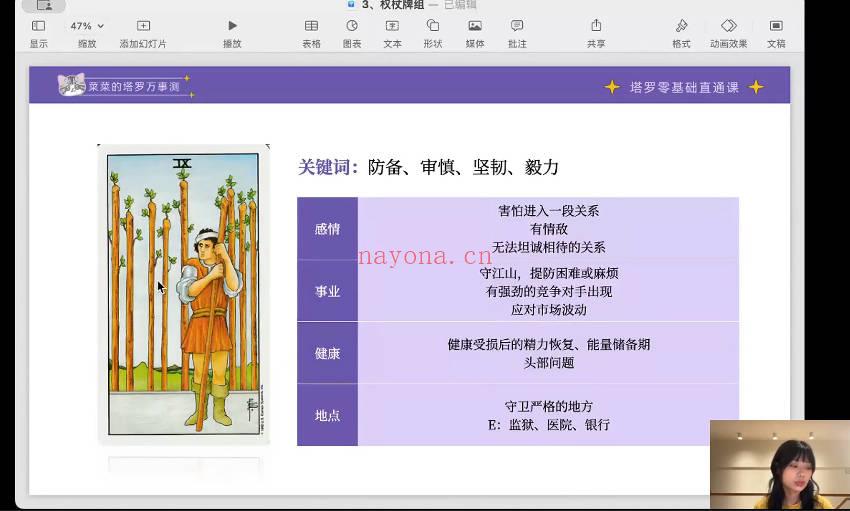
- Wands, Cups, Swords and Pentacles
- Court cards and Major Arcana
- Timeline and four-element spreads, reversed cards and course review
Original Course Images

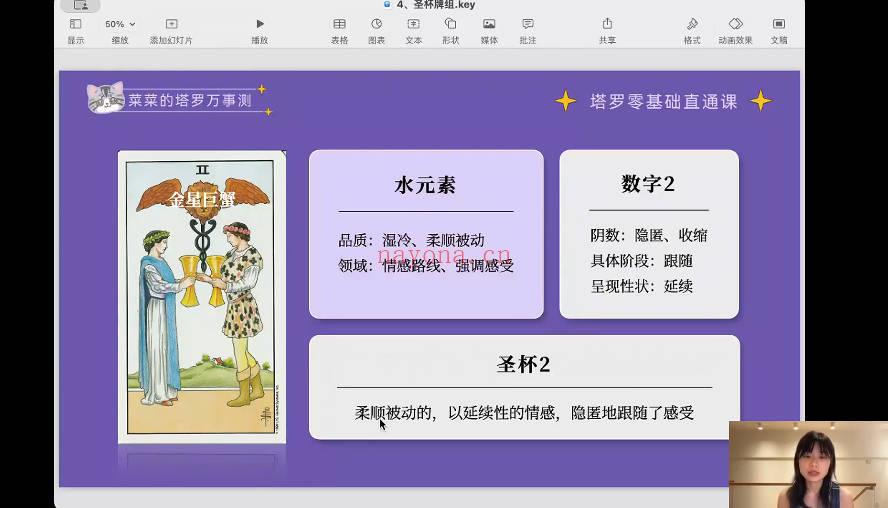
Who This Course Is For
This resource is for learners who can follow Chinese-language video teaching and want a named course on Tarot for Beginners. Beginners should compare the stated lesson scope; a fixed level of prior experience is not assumed unless the source directory says so.
Learning Format and Digital Delivery
27 Chinese-language video lessons; the source lists about 45 hours 52 minutes Virtual and downloadable; there is no physical shipment. Price: USD 9.00. A file link is not yet attached to this product. Please contact Karma Kismet before ordering to confirm delivery arrangements; immediate automated access is not promised.
Frequently Asked Questions
Are the videos in English?
No English recording or subtitles are confirmed. The original video lessons are Chinese-language material.
Is a personal reading included?
No individual consultation is listed with this course.
Does the course guarantee an outcome?
No. Tarot study is interpretive and educational, not a guaranteed prediction or substitute for professional advice.
Editorial Note
Karma Kismet translated and organized the course facts and original previews for English readers. Lesson counts and formats follow the available source listing; unspecified contents, certificates and instructor credentials are not asserted.
Related Courses
- Shen Xingyu Tarot for Beginners: 12 Video Lessons
- Huan Tarot Card Meanings: 42 Video Lessons
- Cat Six Tarot Card Meanings: 25 Video Lessons
Browse Tarot for Beginners and read digital delivery information.
Reading context and study practice
Cai Cai’s twenty-seven-recording directory begins with elements and numbers, moves through suits and court cards, and gives substantial space to Major Arcana before applications, reversals, and review. The source explicitly emphasizes structural understanding rather than depending primarily on spontaneous intuition. These reading notes follow that stated emphasis without inventing missing lesson details.
Elements as a framework
The first lesson is identified with the four elements, and the next names interactions among them. Study the assigned categories and their relationships as the course defines them. Do not treat them as measured physical forces or presume that a familiar elemental word supplies every tarot meaning. A useful note distinguishes the category, the card or suit associated with it, and the relationship discussed in the example. If the teacher uses an element to organize a question, record that function. The course’s structural emphasis is clearest when these relationships remain explicit instead of being reduced to isolated personality adjectives.
Numbered patterns
Early recordings name numerical topics before the full suit sequence. Use them to identify what role numbers play in the source’s framework. They may organize a sequence or a symbolic theme, but the actual explanation should come from the recording. A digit alone does not establish a universal card meaning. Compare a numerical theme across two examples only after checking how the source applies it. Preserve the suit and question context. This prevents a learner from assuming that every card with the same number says the same thing or that tarot numbering independently reveals factual information about a person.
Wands and Cups together
The directory gives consecutive lessons to Wands and then Cups. Compare the two suits under consistent headings: category, symbolic themes, card progression, and examples. If the source discusses element interaction, connect that definition to the suit comparison. Avoid ranking one suit as better or reducing it to a fixed type of person. A card’s role in a spread may qualify the broad suit theme. The comparison is useful because it shows how the course organizes its vocabulary, not because it establishes that a drawn suit determines a career event or an emotional outcome.
Question clarification and time flow
The eighth entry names question organization and a time-flow spread. The order is significant for study: clarify what is being asked before interpreting a sequence. A time-related position is a symbolic frame and should not be treated as a factual deadline. Record the exact position labels used in the lesson and keep them beside the cards. Do not invent future positions or a prediction horizon from the spread’s title alone. A thoughtful exercise can compare how changing the question alters an interpretation while acknowledging that the cards do not provide verified information about future events.
The four-element spread
The ninth directory entry names a four-element spread. Verify its layout and position definitions in the recording before using it. A spread title does not establish the number of cards, the order of placement, or the meaning assigned to every position. Once those details are clear, draw the layout and explain how the course connects it to the earlier elemental framework. This links definition and application without adding an invented spread. If a position is unclear, leave a question in the diagram rather than assigning it a familiar meaning from another tarot source.
Swords and Pentacles
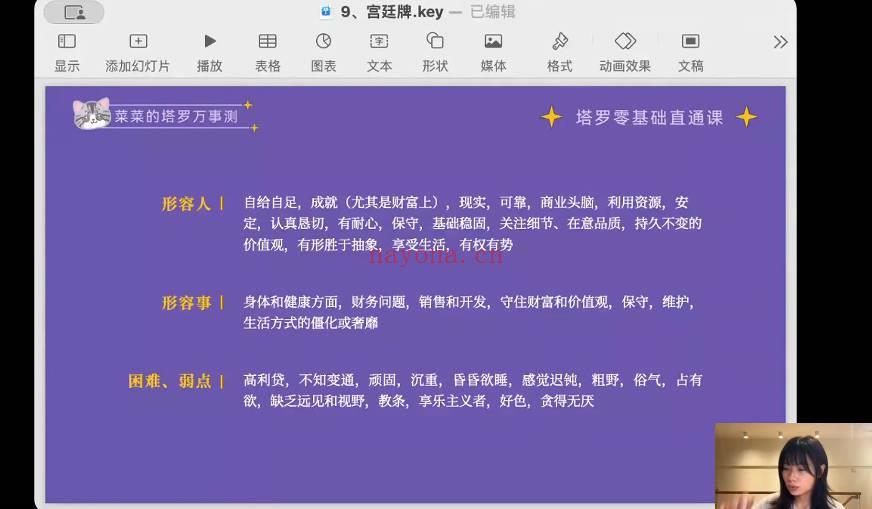
Swords and Pentacles each receive two named recordings. When moving into these suits, revisit the earlier framework and identify what new distinctions the teacher adds. Do not force every example into an emotional story just because earlier Cups lessons were memorable. Likewise, a material theme does not make a Pentacles reading financial advice. Separate the card meaning from the known circumstances of a case. The source can be studied for its symbolic structure while actual decisions about resources, work, or conflict remain based on facts and communication outside the spread.
Court-card structure
Two directory entries identify court-card study before the Major Arcana sequence. Record the categories and relationships the course uses, including any elemental or role-based explanation. A court card does not automatically denote a particular real person. If an example assigns it to a person or perspective, show the rule that supports that assignment in the reading. Avoid adding unsupported details about gender, age, profession, or intention. Structural understanding can be demonstrated by comparing the roles in the material without claiming that a card provides access to another person’s identity or private feelings.
Major Arcana study
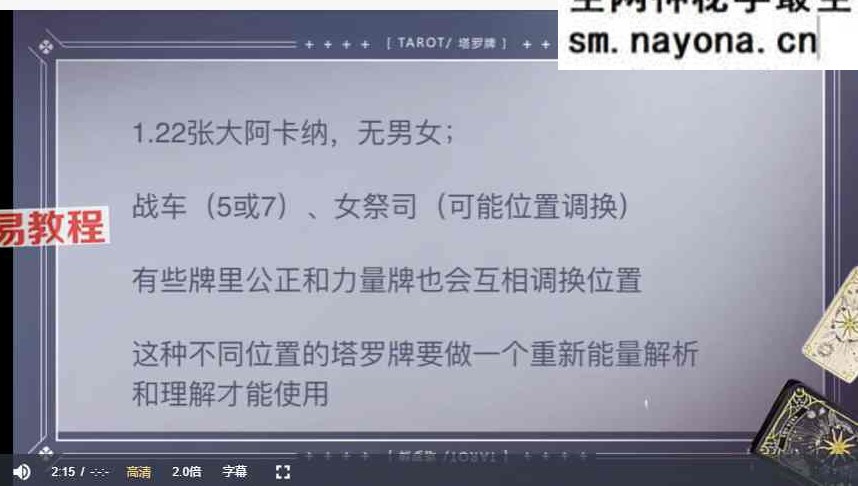
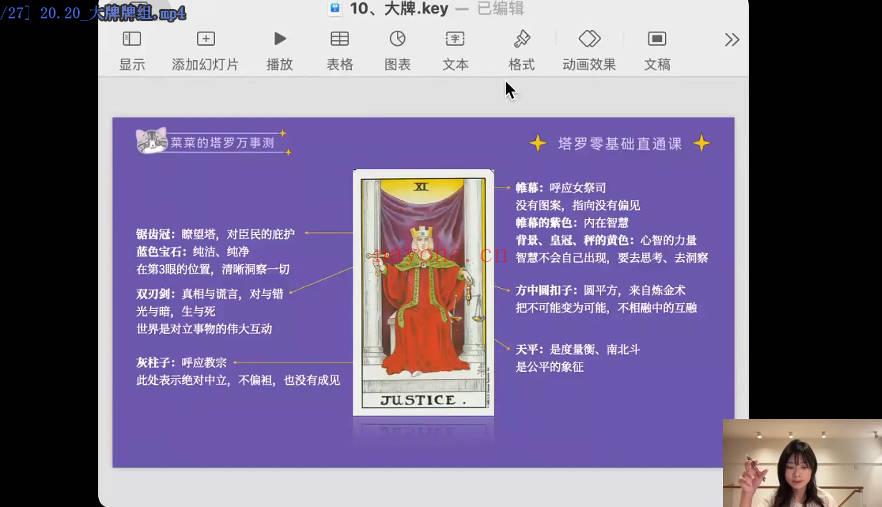
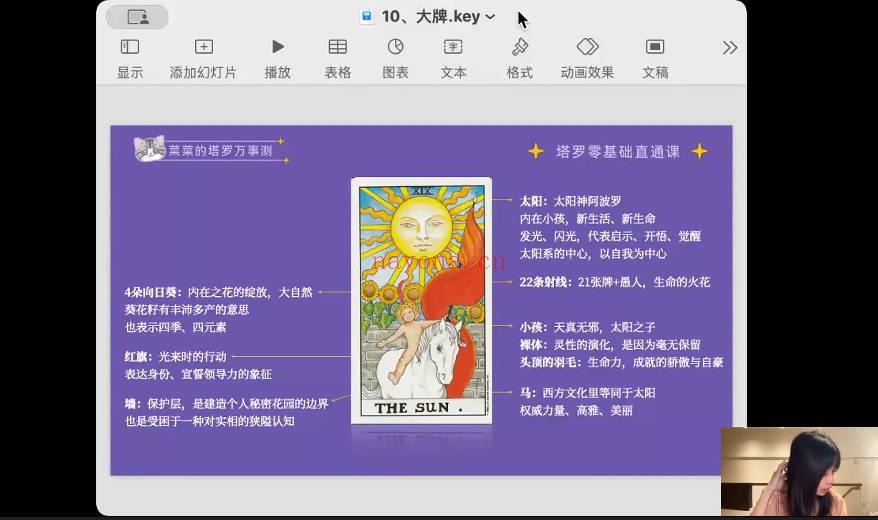
The directory contains a long sequence of Major Arcana recordings. Use the actual recording contents to create a card index; the repeated broad filename does not specify exactly which cards appear in each video. Identify the concepts introduced and their relationship to the earlier elements and numbers. A thematic narrative may connect several cards, but that narrative is symbolic. It should not be imposed as a compulsory life path. The course’s substantial attention to Major Arcana can support close study without establishing that every possible deck, tradition, or card correspondence is covered.
Applications and reversed cards
The later entries name Major Arcana application and spreads, followed by reversed-card interpretation. Learn the reversal convention actually taught before applying it. A reversed card is not automatically the opposite of an upright meaning, a warning of harm, or proof that a reading has failed. If the course gives several interpretive possibilities, preserve them with their conditions. Then compare an example using the convention with one that does not. This is a study of procedure, not a test of whether the learner has supernatural intuition or can guarantee an outcome.
Reviewing a whole reading
The final directory entry is a concluding lesson. A useful personal review can bring together question, positions, elements, numbers, suits, court roles, and card-specific meanings. Show which component supports each interpretive sentence. If a sentence has no visible connection to the framework, mark it as your own association instead of attributing it to the course. This respects the source’s emphasis on whole-reading understanding. The twenty-seven recordings and Chinese-language format are listing facts; additional translation, individualized feedback, certification, or promised predictive accuracy should not be assumed from the breadth of the sequence.