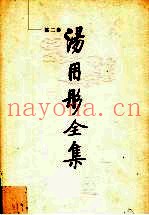
Volume 99 of a modern Buddhist academic collection, subtitled Studies in Mahayana Buddhism, second special collection. The listing is for a scholarly text.
Resource Overview
Studies in Mahayana Buddhism: Academic Collection 99 is a digital learning resource about Mahayana Buddhism. The English description summarizes the available source listing; the underlying recordings or books are in Chinese. An English translation of the full material is not confirmed.
What You Will Learn
Use the sequence and preview material below to identify the course’s scope, terminology and teaching approach. Check each topic against the original lesson rather than treating a short listing as a complete transcript.
Course Contents
- Mahayana scholarship
- Academic collection context
- Distinguishing this volume from the first special collection
Original Course Images

Who This Resource Is For
This resource is for readers or learners who can use Chinese-language materials and want a named resource on Mahayana Buddhism. Compare the stated scope and previews before ordering; a fixed level of prior experience is not assumed unless the source directory says so.
Learning Format and Digital Delivery
Chinese-language digital book; exact file type not confirmed Virtual and downloadable; there is no physical shipment. Price: USD 9.00. A file link is not yet attached to this product. Please contact Karma Kismet before ordering to confirm delivery arrangements; immediate automated access is not promised.
Frequently Asked Questions
Is the full material in English?
No English edition, recording or subtitle track is confirmed. The source material is Chinese-language.
Is a personal consultation included?
No individual consultation is listed with this resource.
Does this resource guarantee an outcome?
No. It is for educational and cultural study, not a guaranteed result or substitute for professional advice.
Editorial Note
Karma Kismet translated and organized the course facts and original previews for English readers. Lesson counts and formats follow the available source listing; unspecified contents, certificates and instructor credentials are not asserted.
Related Courses
- Shizhao Heart Sutra Commentary: 116 Videos
- Zhang Xianjun Heart Sutra Video Course: 85 Lessons
- Qingyun Tiangang Meditation: 21 Videos
- Buddhist Sitting Meditation Talks: 21 Videos
- On Mahayana Buddhist Thought: Digital Book
- Wings of Awakening: Theravada Texts in Translation
- History of Theravada Buddhism: Digital Book
- Geng Kan Twenty Verses on Consciousness-Only: 110 Videos
- Zhang Xiang Consciousness-Only Studies: 38 Videos
- Tang Yongtong Buddhist History of the Sui and Tang: Volume Two
- History of Chinese Buddhism: Republican-Era Series
- Pure Land Study Resources: Digital Collection
- Lotus Pure Land: The Buddhist Other Shore
Browse Mahayana Buddhism and read digital delivery information.
The identity of volume ninety nine
Studies in Mahayana Buddhism is identified as volume ninety nine of the Modern Buddhist Academic Collection, the second special collection on Mahayana Buddhism. The source record names Zhang Mantao, Dacheng Culture Publishing House, a 1979 publication, and 358 pages. The displayed directory contains contributions under several different names, so the volume should be approached as an academic collection rather than one continuous argument written entirely by a single author. Volume numbering identifies its place in a larger series; it does not mean that all ninety nine volumes are included in this digital product.
The subtitle helps distinguish this volume from a first special collection or another similarly titled work. The source directory is especially useful because it shows two major clusters of questions: classification of Buddhist teachings and debates over the status of Mahayana as the Buddha’s teaching. These are actual subjects named in the contents. The volume’s scholarly format does not establish a video component, a beginner course, or a practical meditation syllabus. Its arguments need to be read as contributions by particular writers within the collection.
The opening classification discussions
The first entries are attributed to Taixu and concern three approaches within Mahayana, classification of Buddhist teachings, and discussion of three Mahayana schools. A roundtable style entry follows, attributed in the directory to Ronghai and Guangzong, and a further contribution is listed under Liyan. Later entries attributed to Moru discuss and survey three systems, followed by Yinshun’s response after reading the overview and another Moru contribution on doctrinal classification. This sequence makes discussion and response visible in the table of contents, though the exact relationships should be confirmed in the essays themselves.
The terms translated here as approaches, schools, or systems are orientation labels rather than a complete account of the contributors’ classifications. Read the Chinese headings and definitions before deciding which categories each writer uses. A shared number does not prove that all authors divide the subject in the same way. One useful task is to draw a separate classification map for each essay, with page references for the definitions. Only then compare the maps. This can reveal a disagreement that would be lost if the whole collection were summarized as one three part scheme.
Responses and the structure of debate
The directory’s explicit response to a preceding overview gives the reader a reason to study those contributions together. Start with the position being discussed, then read the response, and return to the original passage when needed. Record the point under dispute rather than assuming the response rejects everything in the earlier essay. Academic discussion can involve agreement about a broad subject and disagreement about terminology, scope, or the organization of evidence. The contents page identifies the presence of discussion; it does not settle the conclusion on behalf of the reader.
Keep authorship clear in your notes. A summary can say that a particular contributor proposes a classification and another questions it, provided the essay supports that account. It should not silently assign the response to the editor or present one contributor’s view as the collection’s unanimous position. If an entry is a conversation record, identify speakers from the actual text before attributing individual statements. The volume format rewards this care because multiple voices are part of the resource’s substance, not incidental background to a single unified lesson.
The later question of Mahayana and the Buddha’s teaching
The later directory entries include essays attributed to Ito Giken on the origins and early development of arguments that Mahayana was not the Buddha’s teaching. Other entries attributed to Wang Enyang and Tongjie respond to that issue, and Yinshun is listed with an essay arguing for Mahayana as the Buddha’s teaching and a discussion with scholars of the Pali textual tradition. These are the topics and attributions in the source. The listing does not establish the outcome of the debate or supply enough evidence to decide it from the essay titles.
When reading this cluster, identify what each author means by a claim about the Buddha’s teaching. A historical claim about a text’s development, a doctrinal claim about legitimacy, and a religious claim about authority may use similar wording while asking different questions. Determine how the essay defines its question before comparing answers. It is also useful to note what evidence is cited and whether the author is responding to a specific earlier argument. This avoids treating a complex scholarly dispute as a choice between two slogans extracted from the contents page.
A method for reading the collection
Rather than reading every essay at the same pace, choose one cluster and make a short argument outline for each contribution. Record the thesis, key terms, cited evidence, and one unresolved question. Then write a comparison that preserves differences among contributors. The method is an independent study suggestion suited to the volume’s contents, not a claim that worksheets or editorial summaries are supplied. If you later read the other cluster, note whether an author’s classification assumptions affect their treatment of textual authority. Do not assume that connection before checking the essays.
Page numbers in the source directory help you locate contributions, but actual digital pagination may differ. Keep both printed page references and file page references if they are not the same. The record’s 358 page count identifies the bibliographic extent, while the delivered file needs its own completeness check. The surrounding source page includes unrelated book recommendations; those are not part of this volume’s contents. Restrict your inventory to the essays actually listed under the named collection and any further contents confirmed in the file.
Language, terminology, and historical setting
The text is Chinese language, and an English translation is not confirmed. Essays associated with different contributors may use different terminology, so a personal glossary should include the author’s name and context as well as the term. Avoid imposing one convenient English equivalent on every essay when the debate depends on distinctions in Chinese. If a translated essay appears in the actual volume, identify its translation information there. The product listing does not establish that every contribution was originally composed in Chinese or that all original language texts are reproduced.
The 1979 publication is an identification detail that also reminds the reader to consider the collection’s historical scholarly setting. It does not establish the original date of every essay. Check any publication notes within the volume before locating a contribution in a timeline. Likewise, a historical collection may remain useful without representing the latest research on every issue. Treat it as a specific set of arguments to understand and compare. Readers seeking current scholarship on one question can use the volume to formulate that question more precisely, while consulting additional sources separately.
Choosing the volume for serious textual study
This resource is most clearly suited to readers who want to examine classification and authority debates in Mahayana scholarship and can work with the Chinese text. Beginners can still read it, but should not assume that every term is explained from the ground up. Confirm that volume ninety nine and the second special collection subtitle match your purpose before ordering. No other series volumes, guided course, certificate, or physical book is implied. The actual directory offers a strong basis for choosing the resource: named contributions, visible responses, and specific scholarly questions rather than a promise of universal conclusions.