
A translated selection of Theravada Buddhist texts titled Wings of Awakening. This is a book for textual study rather than guided instruction.
Resource Overview
Wings of Awakening: Theravada Texts in Translation is a digital learning resource about Theravada Buddhism. The English description summarizes the available source listing; the underlying recordings or books are in Chinese. An English translation of the full material is not confirmed.
What You Will Learn
Use the sequence and preview material below to identify the course’s scope, terminology and teaching approach. Check each topic against the original lesson rather than treating a short listing as a complete transcript.
Course Contents
- Theravada textual tradition
- Translated source selection
- Reading the compilation as a book
Original Course Images
Who This Resource Is For
This resource is for readers or learners who can use Chinese-language materials and want a named resource on Theravada Buddhism. Compare the stated scope and previews before ordering; a fixed level of prior experience is not assumed unless the source directory says so.
Learning Format and Digital Delivery
Chinese-language digital book; exact file type not confirmed Virtual and downloadable; there is no physical shipment. Price: USD 9.00. A file link is not yet attached to this product. Please contact Karma Kismet before ordering to confirm delivery arrangements; immediate automated access is not promised.
Frequently Asked Questions
Is the full material in English?
No English edition, recording or subtitle track is confirmed. The source material is Chinese-language.
Is a personal consultation included?
No individual consultation is listed with this resource.
Does this resource guarantee an outcome?
No. It is for educational and cultural study, not a guaranteed result or substitute for professional advice.
Editorial Note
Karma Kismet translated and organized the course facts and original previews for English readers. Lesson counts and formats follow the available source listing; unspecified contents, certificates and instructor credentials are not asserted.
Related Courses
- Shizhao Heart Sutra Commentary: 116 Videos
- Zhang Xianjun Heart Sutra Video Course: 85 Lessons
- Qingyun Tiangang Meditation: 21 Videos
- Buddhist Sitting Meditation Talks: 21 Videos
- On Mahayana Buddhist Thought: Digital Book
- Studies in Mahayana Buddhism: Academic Collection 99
- History of Theravada Buddhism: Digital Book
- Geng Kan Twenty Verses on Consciousness-Only: 110 Videos
- Zhang Xiang Consciousness-Only Studies: 38 Videos
- Tang Yongtong Buddhist History of the Sui and Tang: Volume Two
- History of Chinese Buddhism: Republican-Era Series
- Pure Land Study Resources: Digital Collection
- Lotus Pure Land: The Buddhist Other Shore
Browse Theravada Buddhism and read digital delivery information.
What the supplied source confirms
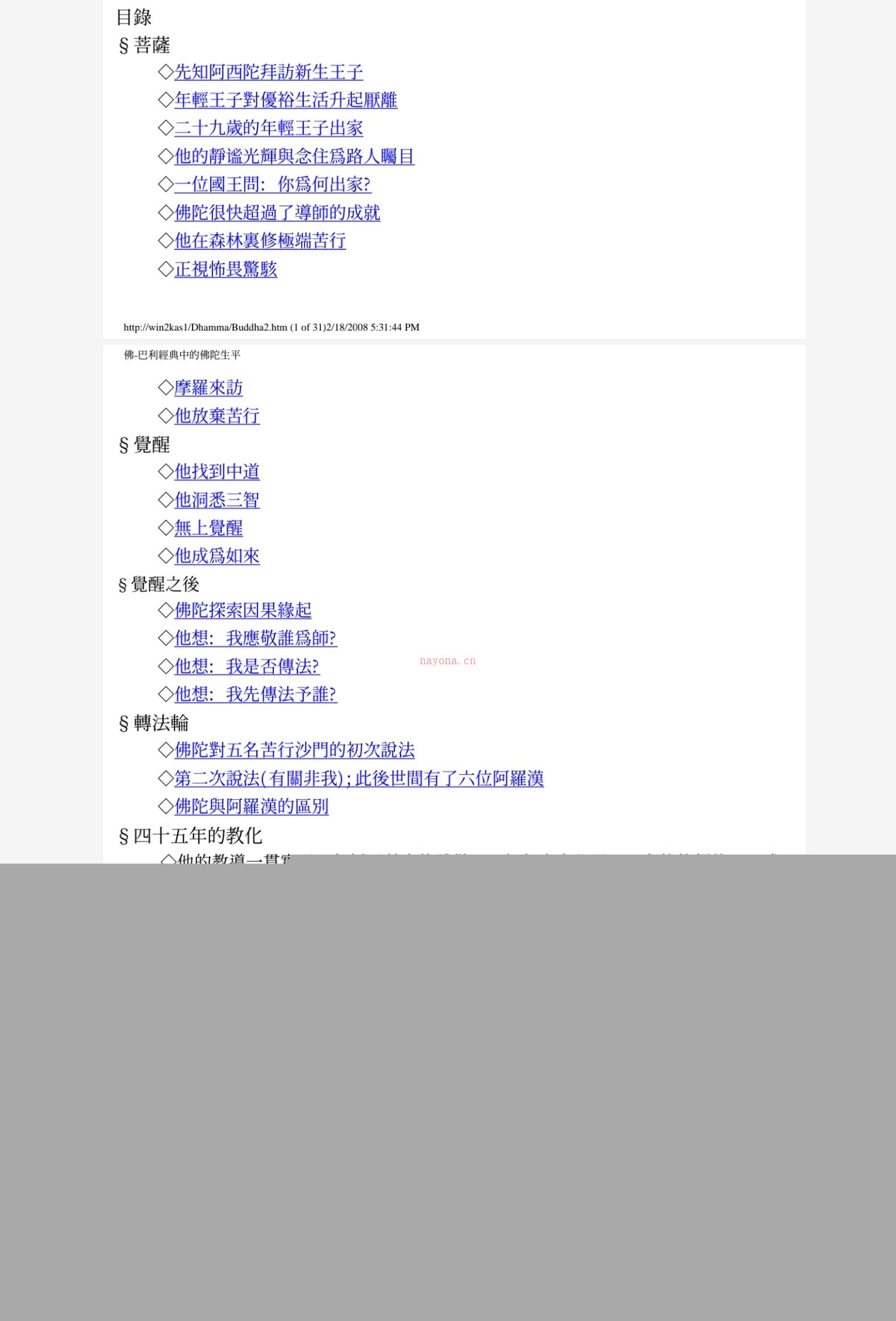
The supplied record for this product describes a Chinese PDF attributed to John Bullitt. It says the resource is a selection of passages from the Pali canon that gives a brief account of the Buddha’s life. The directory is referred to as being in an image, but its contents are not transcribed in the supplied text. These facts are the available basis for describing the underlying material. The English product title should therefore be checked against the delivered edition rather than used to import a chapter list or author details from another book with a similar title.
This distinction matters because a translated product label can suggest a familiar publication while the associated source record describes something more specific or different. Before choosing this resource for a particular edition, verify the title page, the attribution to John Bullitt, and the stated Pali passage selection. The description here does not assert an unverified syllabus, a complete biography, or a particular arrangement of awakening factors. It follows the source’s concrete characterization of selected canonical passages and a brief biographical outline. Any further details need the actual file or a readable contents image.
Reading a selection rather than a complete canon
A selection brings particular passages together. It does not establish that the entire Pali canon is included or that every period of the Buddha’s life receives equal treatment. The source’s word brief is an important limitation. A reader can use the collection to encounter textual portrayals of the Buddha’s life while recognizing that a selection necessarily has boundaries. Identify what the compiler includes and how the passages are connected when you open the material. Do not assume that a gap in the selection means the broader tradition has nothing to say about that period or subject.
For each passage, look for its stated source reference and any connecting explanation. If the edition supplies a reference, preserve it in your notes. If it does not, mark the provenance as something to investigate rather than assigning a text from memory. Canonical passage, translator wording, compiler introduction, and personal summary are distinct layers. Keeping them separate is particularly useful in an anthology because the transition between a passage and an editorial bridge can be easy to miss. No specific annotation system or source index is confirmed by the listing.
A biographical reading question
The source describes a rough outline of the Buddha’s life. That gives you a focused reading question: how do the selected passages present the life being narrated? Look for who speaks, what setting is described, and how a passage contributes to the outline. A speech, a remembered event, and a narrative introduction may have different functions. These are questions to ask of the material, not claims about particular chapters. The supplied text does not list the selected events, so it would be inaccurate to assign a fixed sequence of birth, renunciation, awakening, teaching, and final passing to this specific PDF without checking it.
If the actual file does arrange passages chronologically, record that arrangement based on the headings you see. If it organizes them thematically, preserve that organization instead. A reader made timeline can be helpful, but only add events and dates that the resource or separately identified evidence supports. Religious narrative and modern historical reconstruction are not the same activity. You can study the significance of a narrative passage without pretending that every detail has been independently established as a historical event. The collection’s source description supports textual study, not a claim of exhaustive historical verification.
Reading across translation layers
The resource is in Chinese, while the selected passages are described as coming from the Pali canon. The listing does not establish every stage of the translation process or provide an English version. If you keep English notes, distinguish your own summary from the Chinese wording in the PDF. A translated passage may contain technical terms that are not captured by a familiar English expression. Retain the Chinese term where needed and note the surrounding explanation. The aim is to understand the passage in this edition before making comparisons with another translation.
When comparing editions, begin with a confirmed source reference rather than the English product title. Two resources with similar titles may contain different selections, and two renderings of the same passage may divide or explain it differently. A careful comparison records the passage, the editions, and the wording under discussion. It does not silently treat a compilation as a full translation of a canonical collection. The source’s attribution to John Bullitt is a useful identification detail, but it does not establish an included English original, bilingual layout, or parallel Pali text.
A notebook for selected passages
Create an entry for each passage you study. Include its heading, any source reference, a brief summary, and a question about its role in the biographical outline. If an introduction connects it to another passage, note that connection separately. This method is a proposed reader aid rather than an official exercise supplied with the PDF. It is well suited to a selection because it allows you to understand individual pieces while retaining a sense of how the compiler brings them together. A short precise entry is preferable to a broad conclusion unsupported by the passage.
After several entries, review the questions that recur. You might notice an interest in narrative voice, the presentation of teaching, or the relation between an event and an explanation. Those interests can guide further study without requiring you to claim that the selection is comprehensive. If a passage inspires personal reflection, label that response as yours. A biographical account can prompt questions about priorities or learning, but it does not automatically prescribe the same decision for every reader. Keep personal application apart from claims about what the source text explicitly teaches.
Working with the missing contents transcription
The source points to a directory image whose actual headings are not available in the supplied text. This is a reason to confirm the contents, not a reason to generate plausible headings. If a particular chapter or passage is essential to your purchase, ask for direct confirmation from the actual material. Image file size and upload information identify a preview record but do not establish its legibility or the book’s completeness. The PDF format is confirmed in the source; page count, internal bookmarks, searchability, and image quality are not established here.
Once the file is available, compare the title and contents with the record before beginning extensive study. Note any mismatch and avoid merging details from an unrelated edition into your notes. This practical check protects the usefulness of the reading as well as the accuracy of attribution. The virtual product does not imply a printed book, a guided course, a teacher consultation, or a full English translation. Its strongest source based description remains a Chinese PDF selection of Pali canonical passages, attributed to John Bullitt, offering a brief outline of the Buddha’s life.
Who may find this resource relevant
This resource may interest readers who want to examine canonical passages arranged for a biographical overview and can read the Chinese material. Someone seeking a particular work titled Wings of Awakening should verify the edition rather than assuming a match from the shop label alone. Someone seeking guided meditation should recognize that the source describes a book. Choose it on the strength of its confirmed format and description, and let the actual passages determine the study path. Careful identification is part of thoughtful reading, especially when a short record supplies fewer details than a familiar title might suggest.



