
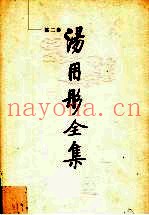
Volume two of the Tang Yongtong collected works, containing a study of Buddhist history in the Sui and Tang periods. This page is for the named text, not a general history course.
Resource Overview
Tang Yongtong Buddhist History of the Sui and Tang: Volume Two is a digital learning resource about Buddhist History & Culture. The English description summarizes the available source listing; the underlying recordings or books are in Chinese. An English translation of the full material is not confirmed.
What You Will Learn
Use the sequence and preview material below to identify the course’s scope, terminology and teaching approach. Check each topic against the original lesson rather than treating a short listing as a complete transcript.
Course Contents
- Sui and Tang Buddhist history
- Tang Yongtong collected works
- Period-specific historical study
Original Course Images
Who This Resource Is For
This resource is for readers or learners who can use Chinese-language materials and want a named resource on Buddhist History & Culture. Compare the stated scope and previews before ordering; a fixed level of prior experience is not assumed unless the source directory says so.
Learning Format and Digital Delivery
Chinese-language digital book; exact file type not confirmed Virtual and downloadable; there is no physical shipment. Price: USD 9.00. A file link is not yet attached to this product. Please contact Karma Kismet before ordering to confirm delivery arrangements; immediate automated access is not promised.
Frequently Asked Questions
Is the full material in English?
No English edition, recording or subtitle track is confirmed. The source material is Chinese-language.
Is a personal consultation included?
No individual consultation is listed with this resource.
Does this resource guarantee an outcome?
No. It is for educational and cultural study, not a guaranteed result or substitute for professional advice.
Editorial Note
Karma Kismet translated and organized the course facts and original previews for English readers. Lesson counts and formats follow the available source listing; unspecified contents, certificates and instructor credentials are not asserted.
Related Courses
- Shizhao Heart Sutra Commentary: 116 Videos
- Zhang Xianjun Heart Sutra Video Course: 85 Lessons
- Qingyun Tiangang Meditation: 21 Videos
- Buddhist Sitting Meditation Talks: 21 Videos
- On Mahayana Buddhist Thought: Digital Book
- Studies in Mahayana Buddhism: Academic Collection 99
- Wings of Awakening: Theravada Texts in Translation
- History of Theravada Buddhism: Digital Book
- Geng Kan Twenty Verses on Consciousness-Only: 110 Videos
- Zhang Xiang Consciousness-Only Studies: 38 Videos
- History of Chinese Buddhism: Republican-Era Series
- Pure Land Study Resources: Digital Collection
- Lotus Pure Land: The Buddhist Other Shore
Browse Buddhist History & Culture and read digital delivery information.
Identifying the second collected works volume
This resource is the second volume of Tang Yongtong’s collected works, containing a draft history of Buddhism in the Sui and Tang periods together with related papers and outlines. The source record names Hebei People’s Publishing House in Shijiazhuang, a 2000 publication, ISBN 7202025183, and 439 pages. These details identify a specific volume, not the complete collected works. The PDF title in the source also clarifies the digital format. The edition date should not be confused with the dates of all the original writings gathered in the volume.
The directory offers a substantial basis for understanding scope. It lists five main chapters of the draft history, appendices, and a later group of essays and outlines. This means the volume has more than one kind of scholarly material. A continuous historical chapter, a chronology, a review, and a short outline may need different reading approaches. Keep those forms distinct instead of assuming every page belongs to one uninterrupted narrative. The actual editorial explanation and introductory pages can help establish how the materials were arranged in this edition.
Changes in Buddhist influence
The first chapter concerns the growth and decline of Buddhist influence in the Sui and Tang periods. Its sections name the Sui, the early Tang rulers Gaozu and Taizong, Xuanzang, the period from 650 to 806, Han Yu and opposition among Tang officials and literati, the Huichang suppression, and the sangha. These are specific subjects in the directory. They make political context and institutional change visible parts of the history. The headings do not establish the author’s conclusions about each ruler or event; those conclusions require the chapter’s argument and evidence.
A useful reading aid is to create a timeline for this chapter while keeping causes and dates separate. An event date can orient you, but an explanation of changing influence may involve several factors. Record the author’s reasoning alongside the event rather than reducing the chapter to a list of favorable and unfavorable rulers. If a section concerns the sangha, note which institutional features are actually discussed. The title alone cannot establish a complete account of monastic life in every locality. The history is period specific, and local variation should not be erased by a broad chapter label.
Translation, travel, and written production
The second chapter names people involved in transmission and translation, travel west in search of the teaching, and the conditions of translation. The third chapter concerns Buddhist writing, including commentaries, treatises, compilations, historical and geographical works, and catalogues. This pairing gives a reader a route from the movement of people and texts to the production and organization of literature. It is an actual feature of the directory, but the relation between the chapters should be investigated in the text rather than assumed as a single causal story.
For study, distinguish the activity of translating a text from composing a commentary or compiling a catalogue. Each can shape how a tradition is understood, but they are different forms of work. If the chapter names an individual text, preserve the title and the role it plays in the author’s explanation. Do not assume that the volume reproduces every work it discusses. The resource is a historical study that names literary activity; it is not a full library of the translated scriptures and commentaries covered by that study.
Schools and the question of classification
The fourth chapter lists Sanlun, Tiantai, Faxiang, Huayan, Vinaya, Chan, Pure Land, esoteric teaching, and the Three Stages teaching, followed by an overall discussion of the schools. The later essay group includes a work questioning the idea of ten schools in Chinese Buddhism and a supplementary discussion of the school problem. This juxtaposition is particularly useful: the volume both uses school headings to organize material and includes writing about the adequacy of school classification. Do not treat the contents list as a timeless fixed map that resolves the very issue the essays discuss.
An optional reading sequence is to examine one school section and then read the later classification essays. Ask how Tang Yongtong uses the category in the historical chapter and how he qualifies it in the essay. Keep the two contexts visible. A heading can be a practical organizational device without implying that every period or community fits a rigid scheme. The source supports this classification question through specific listed essays, but it does not authorize summarizing their conclusions before reading them. A careful comparison can reveal how historical method affects familiar labels.
Spread, chronology, and later periods
The fifth main chapter concerns the spread of Buddhism in the Sui and Tang periods. The appendices include a chronology of major events and a brief account of Buddhism in the Five Dynasties, Song, Yuan, and Ming. These extend the volume’s reference value beyond the central narrative without making it a complete history of every later period. Use the chronology to locate an event and then return to the discussion for interpretation. A brief appendix may provide orientation while leaving many questions for a more detailed work.
The displayed contents give printed page references, which can help navigation if the PDF preserves them. Actual file page numbers may differ because of title pages and preliminary material. Record both where needed. The source’s 439 page count is bibliographic, not a guarantee of searchability, bookmark structure, or image quality. Confirm those practical features in the delivered file. The surrounding source page includes unrelated book recommendations, and those should not be treated as part of Tang Yongtong’s volume or as additional materials included with this product.
The related papers and outlines
The later group names subjects including features of Sui and Tang Buddhist thought, Taizong and Buddhism, the history of Sanlun at Sheshan, discussion with Hu Shi about Chan historical writing, Buddhist scripture translation, Xuanzang, the transition from Tang to Song thought, Faxiang and Consciousness Only studies, and Buddhism’s place in Chinese culture. It also includes a review and marginal notes associated with a Hu Shi work. These varied forms show why the volume should be read as collected scholarly material rather than a newly written general history course.
When moving between a draft history and a related essay, note what question each piece addresses and whether it supplies a different kind of evidence. A review may evaluate another author’s work; marginal notes may be compressed; an outline may leave an argument less developed than a full chapter. Do not fill those gaps by inventing a polished conclusion. Preserve the form of the material in your summary. This makes the collection useful for studying both the historical subject and the author’s methods without claiming more completeness than the text provides.
Reading the volume with a defined purpose
Choose one question, such as translation activity, political opposition, or school classification, and locate the relevant chapters and papers. Build a reading path from their actual headings, keeping page references and authorship clear. The Chinese language and scholarly forms may require slower reading than an introductory survey. No English translation, live instruction, certificate, or other collected works volumes are confirmed. Select this specific second volume if its period focus and listed scholarly materials fit your purpose, then let the actual arguments guide your interpretation of Sui and Tang Buddhist history.