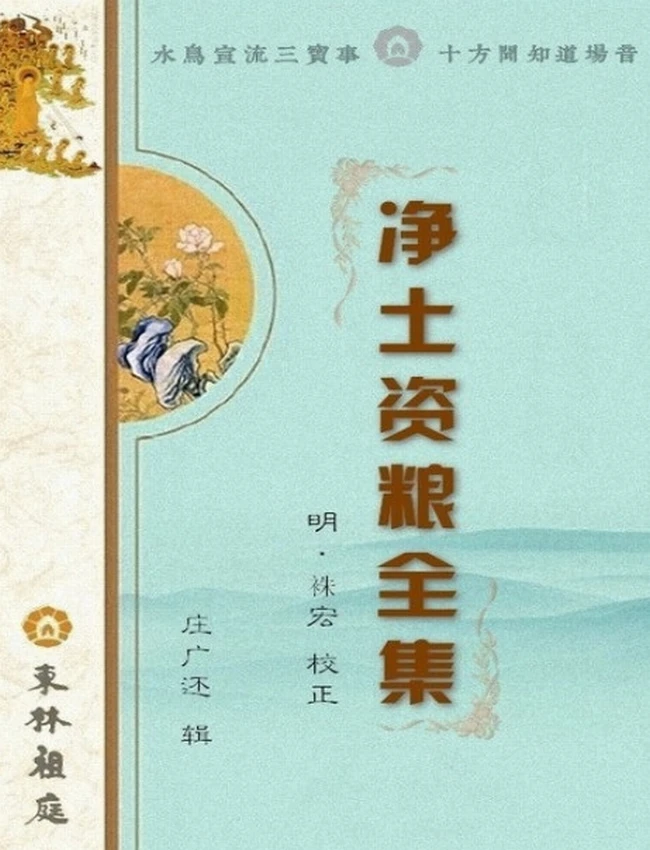
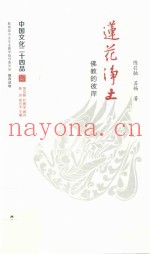
A Pure Land Buddhism book in the Twenty-Four Facets of Chinese Culture series. The title and series provide context for cultural and textual study.
Resource Overview
Lotus Pure Land: The Buddhist Other Shore is a digital learning resource about Pure Land Buddhism. The English description summarizes the available source listing; the underlying recordings or books are in Chinese. An English translation of the full material is not confirmed.
What You Will Learn
Use the sequence and preview material below to identify the course’s scope, terminology and teaching approach. Check each topic against the original lesson rather than treating a short listing as a complete transcript.
Course Contents
- Pure Land Buddhism
- Buddhist cultural context
- Twenty-Four Facets series
Original Course Images
Who This Resource Is For
This resource is for readers or learners who can use Chinese-language materials and want a named resource on Pure Land Buddhism. Compare the stated scope and previews before ordering; a fixed level of prior experience is not assumed unless the source directory says so.
Learning Format and Digital Delivery
Chinese-language digital book; exact file type not confirmed Virtual and downloadable; there is no physical shipment. Price: USD 9.00. A file link is not yet attached to this product. Please contact Karma Kismet before ordering to confirm delivery arrangements; immediate automated access is not promised.
Frequently Asked Questions
Is the full material in English?
No English edition, recording or subtitle track is confirmed. The source material is Chinese-language.
Is a personal consultation included?
No individual consultation is listed with this resource.
Does this resource guarantee an outcome?
No. It is for educational and cultural study, not a guaranteed result or substitute for professional advice.
Editorial Note
Karma Kismet translated and organized the course facts and original previews for English readers. Lesson counts and formats follow the available source listing; unspecified contents, certificates and instructor credentials are not asserted.
Related Courses
- Shizhao Heart Sutra Commentary: 116 Videos
- Zhang Xianjun Heart Sutra Video Course: 85 Lessons
- Qingyun Tiangang Meditation: 21 Videos
- Buddhist Sitting Meditation Talks: 21 Videos
- On Mahayana Buddhist Thought: Digital Book
- Studies in Mahayana Buddhism: Academic Collection 99
- Wings of Awakening: Theravada Texts in Translation
- History of Theravada Buddhism: Digital Book
- Geng Kan Twenty Verses on Consciousness-Only: 110 Videos
- Zhang Xiang Consciousness-Only Studies: 38 Videos
- Tang Yongtong Buddhist History of the Sui and Tang: Volume Two
- History of Chinese Buddhism: Republican-Era Series
- Pure Land Study Resources: Digital Collection
Browse Pure Land Buddhism and read digital delivery information.
A broader cultural book than its title suggests
Lotus Pure Land is identified as a book by Chen Yinchi and Su Chang in the Twenty Four Facets of Chinese Culture series. The source names Jiangsu People’s Publishing House in Nanjing, a 2017 publication, ISBN 9787214194749, and 189 pages. Its PDF listing supplies a five part directory. Although the shop category is Pure Land Buddhism, the actual contents range across Buddhist history, Chinese schools, thought, textual culture, society, ethics, and art. The title should therefore not be read as evidence that the book is exclusively a Pure Land practice manual.
The five part structure gives a reader a compact cultural reading path. Each part is followed by selections from original texts, according to the source description and directory. That is a concrete feature of the resource, but the supplied record does not identify every selection or establish that complete scriptures are reproduced. A reader can use the structure to move between explanation and selected source material while keeping the two layers distinct. The series name identifies this volume’s publishing context; it does not mean twenty four separate books are included in the digital product.
Historical development and Buddhism in China
The first part is titled around Buddhism’s course from Deer Park to the world. Its sections name Shakyamuni, Buddhism after the Buddha’s death, and Buddhism’s influence beyond its origins. The second part turns to China, with headings on Han, Wei, and Six Dynasties elite study, flourishing schools in the Sui and Tang, and changes in later transformative periods. These are the source’s actual subject headings. They provide a historical orientation without establishing the author’s conclusions or a comprehensive chronology of every Buddhist community.
For study, distinguish the narrative scale of the two parts. A global overview and a Chinese historical account can use different kinds of generalization. Ask which persons, texts, and periods the authors choose to emphasize and how the original text selections relate to those choices. A short cultural volume necessarily selects. Noticing the selection is more useful than treating the book as a complete history. You could keep a simple timeline of events discussed, but add only dates supported by the text and preserve questions that need a more detailed historical source.
Thought, scriptures, and scholarly organization
The third part concerns the development of Buddhism in a Chinese setting. Its sections name a movement from Prajna to Buddha nature, the history of the Buddhist canon from manuscripts to the internet, and scholarly activity from catalogues to monastic biographies. These subjects make the book’s textual and intellectual emphasis visible. They also show why a reader interested in literary or cultural history may find the volume relevant even without seeking devotional instruction. The directory identifies the questions, while the actual chapters are needed to understand the authors’ interpretation of their connections.
An optional reading notebook can distinguish ideas, material forms of texts, and scholarly tools. A discussion of a doctrine is different from a discussion of manuscript transmission, and a catalogue is different from a biography. If the authors connect them, record the steps in that connection. Avoid treating a heading about the internet as proof that the edition provides access to an online canon or a digital research service. The subject is the history of textual forms, not a promise of additional functionality. The digital product’s own searchability and navigation need separate confirmation.
Society, ethics, and everyday culture
The fourth part names karma and retribution, Buddhist ideas in relation to Confucianism and Daoism, and folk customs in Chinese Buddhism. These topics invite attention to the difference between a tradition’s beliefs and a historical account of their social role. A chapter can explain a karmic belief without establishing that a particular event happened because of it. Likewise, describing a custom does not prescribe that every reader adopt it. Keep descriptive, interpretive, and devotional statements distinct when summarizing the discussion.
If comparing this part with the earlier history, ask how social practices interact with textual or institutional changes. The answer should come from the passages you read rather than a general claim that religion influences everything in the same way. A custom may vary by setting or period, and an introductory chapter may focus on selected examples. Record those limits. The book’s cultural framing is an opportunity to examine relationships among ideas and everyday life, while retaining the possibility that other communities or historians would organize the subject differently.
Art and the original text selections
The fifth part names visual art and architecture, music and dance, and traces of Buddhism in Chinese literature. The directory then lists another original text selection. These are specific cultural subjects, not a promise of an illustrated art catalogue, audio performances, or full literary works. Determine what examples the authors actually discuss. If you encounter an image or a quotation, note how it functions in the argument rather than extracting it as a free standing symbol. A literary allusion can have a different role from a devotional representation even when both draw on Buddhist language.
The recurring original text selections offer a useful second pass through the book. After reading an explanatory section, examine its accompanying selection and ask what it directly supports. Does it illustrate a term, preserve a historical voice, or invite another question? Those are reader questions rather than confirmed editorial intentions for every excerpt. Keep quotations separate from the authors’ explanation and your own response. This prevents a selected passage from being mistaken for a complete scripture or a personal interpretation from being presented as the book’s conclusion.
Choosing a reading path
A reader interested in history could begin with the first two parts, while someone interested in cultural forms might start with art and return to the historical context. These are optional paths based on the actual directory, not a prescribed program. The Chinese language requirement remains important, and an English translation is not confirmed. Technical terms and literary quotations may need slower reading than a chapter summary. Preserve the original wording when an English equivalent seems too broad, and identify a passage before comparing it with another resource.
Before ordering, confirm the edition and file readability if you need the named authors, 2017 publication, or specific original text selections. The 189 page count is bibliographic and may differ from file pagination. No physical book, video course, other series volumes, or live guidance is implied. This volume’s documented strength is its five part cultural scope, which is broader than its evocative title alone reveals. Choose it for that scope and let the actual chapters establish how the authors connect Buddhist history, thought, social life, and artistic expression.