
A 16-video collection described as covering different ritual forms. The listing does not provide a verified English lesson-by-lesson syllabus.
Resource Overview
Apollo Ritual Studies: 16 Videos is a digital learning resource about Ritual & Symbolism Studies. The English description summarizes the available source listing; the underlying recordings or books are in Chinese. An English translation of the full material is not confirmed.
What You Will Learn
Use the sequence and preview material below to identify the course’s scope, terminology and teaching approach. Check each topic against the original lesson rather than treating a short listing as a complete transcript.
Course Contents
- Ritual forms named by the source
- Symbolic interpretation
- Limits of the available directory
Original Course Images
Who This Resource Is For
This resource is for readers or learners who can use Chinese-language materials and want a named resource on Ritual & Symbolism Studies. Compare the stated scope and previews before ordering; a fixed level of prior experience is not assumed unless the source directory says so.
Learning Format and Digital Delivery
16 Chinese-language videos Virtual and downloadable; there is no physical shipment. Price: USD 9.00. A file link is not yet attached to this product. Please contact Karma Kismet before ordering to confirm delivery arrangements; immediate automated access is not promised.
Frequently Asked Questions
Is the full material in English?
No English edition, recording or subtitle track is confirmed. The source material is Chinese-language.
Is a personal consultation included?
No individual consultation is listed with this resource.
Does this resource guarantee an outcome?
No. It is for educational and cultural study, not a guaranteed result or substitute for professional advice.
Editorial Note
Karma Kismet translated and organized the course facts and original previews for English readers. Lesson counts and formats follow the available source listing; unspecified contents, certificates and instructor credentials are not asserted.
Related Courses
- Candle Magic Ritual Course: 26 Lessons
- Wushuang Solomonic Ceremonial Magic: Four Videos
- Advanced Solomonic Magic Course
- Witch Market Hoodoo Studies: 14 Videos
- Witch and Oak Celtic Knot Magic: Ten Videos
- Magical Herbs and Potions: Two Video Courses and E-Books
- Cat Witch Herbal Magic Video Course
Browse Ritual & Symbolism Studies and read digital delivery information.
Reading this resource closely
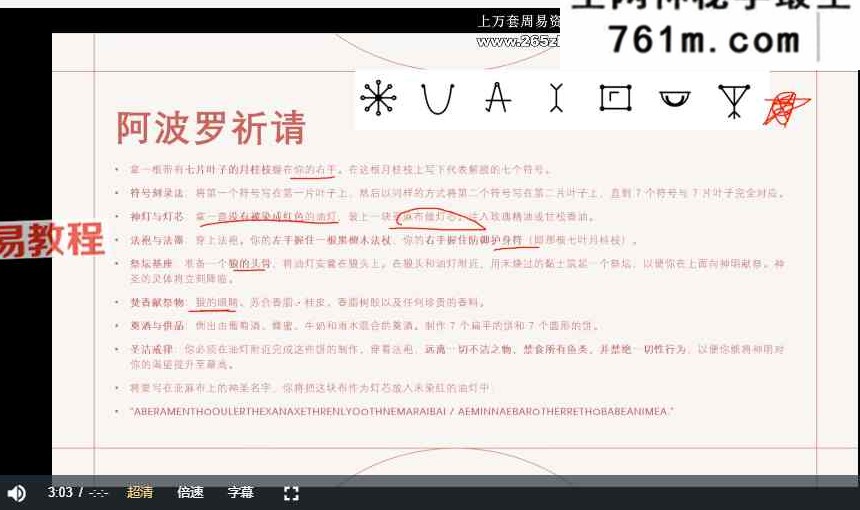
The sixteen-file Apollo directory names modern invocation, classical invocation and several intentions, including art, creativity, relationships and protection. These labels are useful for comparison as ritual language. They do not show that the rituals cause the named outcomes.
Modern and classical labels
Compare the two invocation labels without assuming that a modern presentation reproduces an ancient ceremony. Look for differences in wording, sequence and explanation. The distinction should remain descriptive until the recording supplies a source.
The contrast between modern and classical invocation can be explored through wording before any historical conclusions are drawn. Does a passage speak directly to a named figure, describe qualities associated with that figure or ask for a particular result? Does it explain why certain words or actions are used? Record answers from the actual recordings. The directory labels alone cannot show whether the classical file quotes a historical text or offers a contemporary reconstruction. If a quotation is named, keep that attribution separate from the presenter’s explanation. If no textual source is identified, use the label as a label. This preserves the distinction the collection makes while avoiding a claim that the recording documents an unchanged ceremony from antiquity.
Question for review: What makes this passage modern or classical according to the presenter?
Art and creativity
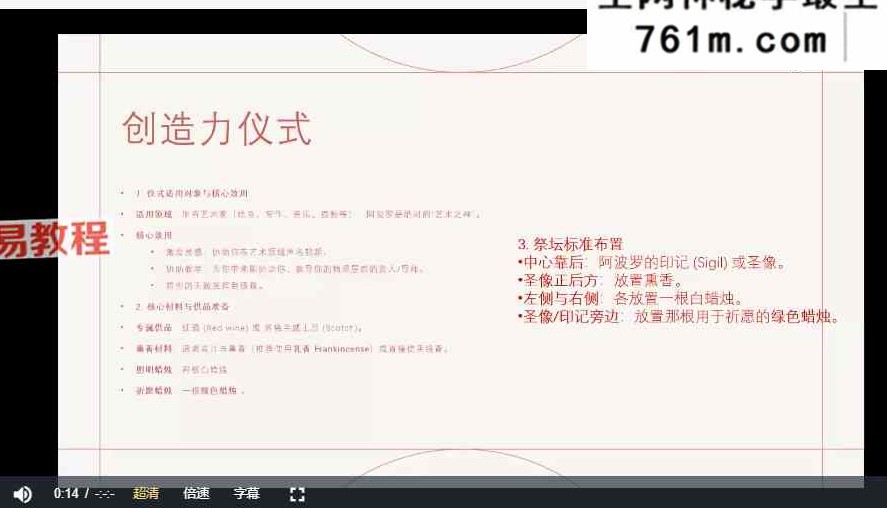
The directory separates artistic inspiration from creativity. Ask whether the recordings distinguish these ideas or use them interchangeably. For personal reflection, an artistic intention can become a practical question about time, materials and willingness to revise.
For the artistic themes, compare the language of receiving an idea with the language of developing one. A symbolic account may emphasize inspiration arriving suddenly, while an ordinary project also requires repeated choices, materials and revision. Write a reflection that connects the image to a practical next step: selecting a subject, preparing a workspace or finishing a small draft. The reflection need not assume that the ritual supplied the idea. It can simply explain how the image helps you articulate what you want to make. Because artistic inspiration and creativity are separate directory labels, look for any explicit distinction between them. If the distinction is absent in the material you inspect, preserve that absence instead of inventing a theoretical difference to justify the filenames.
Question for review: How is artistic inspiration distinguished from creative work?
Relationship intentions
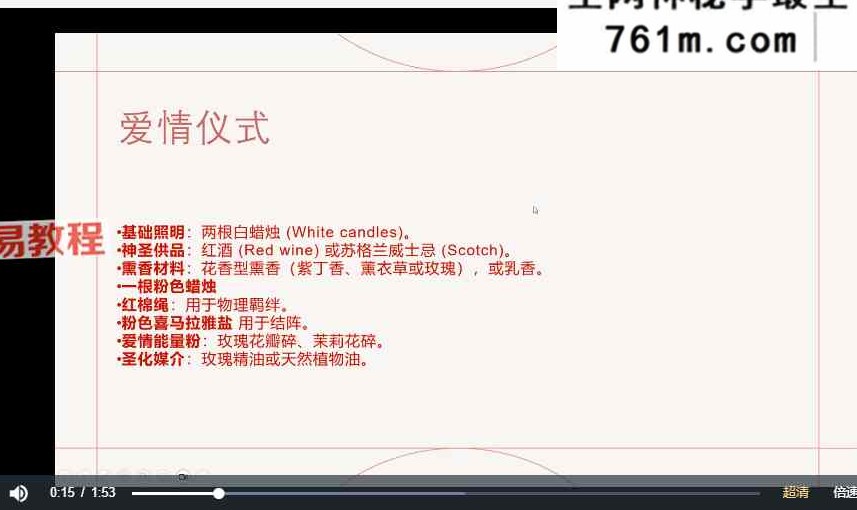
Love and reconciliation appear as file labels. Discuss them as expressions of wishes and uncertainty, while preserving the autonomy of other people. Symbolic study should not turn a desired relationship outcome into permission to pressure someone.
Relationship material requires particular care about whose perspective is being represented. A wish for reconciliation may express regret, hope or uncertainty, but another person’s response remains their own. In an editorial reflection, rewrite an externally directed wish as a question about your own conduct: what apology would be appropriate, what boundary should be respected or what conversation should wait? This keeps the symbolic theme connected to responsible action. The loyalty and submission label in the directory is also an opportunity to examine power language. Ask what kind of relationship the text assumes and whether the description permits disagreement. Studying that rhetoric is different from endorsing it. A clear analysis can identify the assumption without using the ritual as permission to control someone.
Question for review: Whose wishes and consent are represented in this intention?
Protection and strength
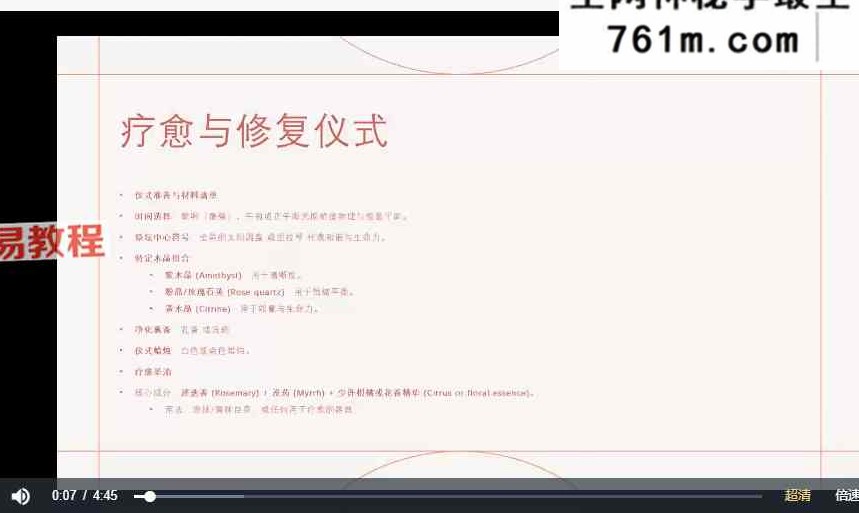
Protection and increased strength are named separately. Identify whether a passage uses physical, emotional or mythic language. A symbolic protective image can be studied for its meaning without being treated as a replacement for practical security.
Protection and strength can be compared by the problem each word implies. Protection suggests a boundary against a threat; strength suggests a capacity to respond or endure. Those are useful distinctions in textual analysis even when the recording uses them metaphorically. Identify the threat or capacity actually named, and avoid supplying a dramatic danger that the material does not mention. A practical boundary might involve privacy, time or the right to decline an invitation. Symbolic reflection can help name such a boundary, but it does not replace the action needed to maintain it. If the source speaks about health or repair, keep that claim attributed and distinguish it from ordinary wellbeing language. A named health ritual is not a medical intervention established by its filename.
Question for review: What kind of protection is the passage describing?
Wealth and chance
Wealth, career and luck or gambling occur among the directory labels. Read these as cultural representations of uncertain outcomes. Do not interpret a ritual demonstration as evidence that financial risk has decreased or a probability has changed.
The wealth, career and luck themes can be read as different ways people address uncertainty. Career concerns may involve choices and preparation; wealth language may focus on desired resources; gambling language concerns outcomes that remain uncertain. A comparison should preserve these distinctions rather than combine them under success. Write down what can be acted upon and what remains outside the participant’s control. Updating a work sample is an action; a favorable chance event is not something a ritual demonstration can establish. Do not describe a later win or improvement as proof without considering alternative explanations and the many outcomes that were not recorded. The educational value here lies in understanding the narrative of agency and hope, not in recommending risk on the basis of symbolic claims.
Question for review: What uncertainty remains after the ritual narrative is explained?
Sequence and file order
The visible filenames combine several numbering conventions. Alphabetical sorting can place a later topic before an earlier one. Create an index from complete filenames and preserve the order you actually verify rather than inventing sixteen English lesson titles.
Create a file index with three entries for each recording: its exact filename, the broad topic named by that filename and a short description verified through viewing. Keep those entries distinct. The directory includes nested numbers that can make a file appear to have more than one position in the sequence. Do not infer an extra lesson from that formatting. Similarly, listed file sizes are identifiers and storage information, not running times. When the recording introduces a subtopic, you may add a timestamp to your own index without changing the course’s stated count. This gives you a usable reference for sixteen listed recordings and a transparent account of what you have actually inspected. The index should help retrieval rather than manufacture a polished but unsupported curriculum.
Question for review: Does this order come from numbering, sorting or the recording itself?



