A candle-magic course listed as 26 video lessons. It is presented as cultural and symbolic study, not as a promise of results.
Resource Overview
Candle Magic Ritual Course: 26 Lessons is a digital learning resource about Ritual & Symbolism Studies. The English description summarizes the available source listing; the underlying recordings or books are in Chinese. An English translation of the full material is not confirmed.
What You Will Learn
Use the sequence and preview material below to identify the course’s scope, terminology and teaching approach. Check each topic against the original lesson rather than treating a short listing as a complete transcript.
Course Contents
- Candle ritual symbolism
- The 26-lesson sequence
- Responsible interpretation
Original Course Images
Who This Resource Is For
This resource is for readers or learners who can use Chinese-language materials and want a named resource on Ritual & Symbolism Studies. Compare the stated scope and previews before ordering; a fixed level of prior experience is not assumed unless the source directory says so.
Learning Format and Digital Delivery
26 Chinese-language video lessons Virtual and downloadable; there is no physical shipment. Price: USD 9.00. A file link is not yet attached to this product. Please contact Karma Kismet before ordering to confirm delivery arrangements; immediate automated access is not promised.
Frequently Asked Questions
Is the full material in English?
No English edition, recording or subtitle track is confirmed. The source material is Chinese-language.
Is a personal consultation included?
No individual consultation is listed with this resource.
Does this resource guarantee an outcome?
No. It is for educational and cultural study, not a guaranteed result or substitute for professional advice.
Editorial Note
Karma Kismet translated and organized the course facts and original previews for English readers. Lesson counts and formats follow the available source listing; unspecified contents, certificates and instructor credentials are not asserted.
Related Courses
- Apollo Ritual Studies: 16 Videos
- Wushuang Solomonic Ceremonial Magic: Four Videos
- Advanced Solomonic Magic Course
- Witch Market Hoodoo Studies: 14 Videos
- Witch and Oak Celtic Knot Magic: Ten Videos
- Magical Herbs and Potions: Two Video Courses and E-Books
- Cat Witch Herbal Magic Video Course
Browse Ritual & Symbolism Studies and read digital delivery information.
Reading this resource closely
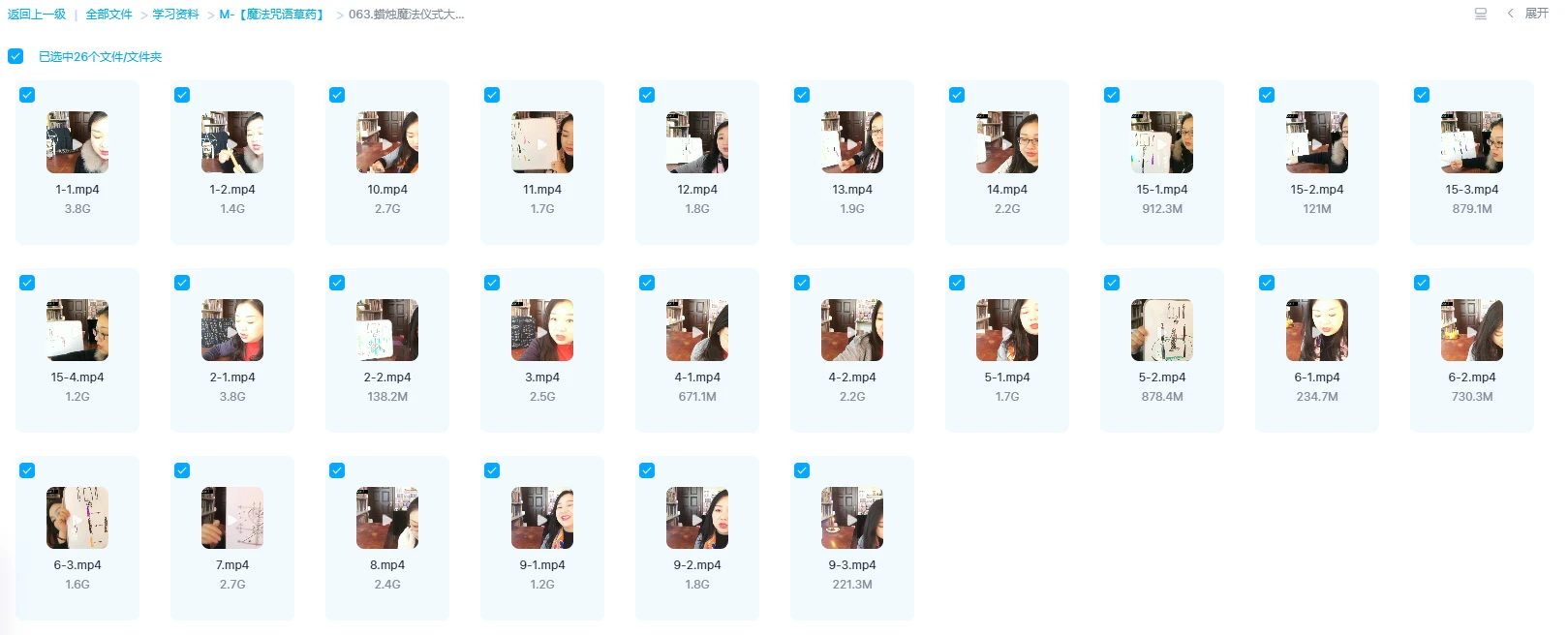
The candle collection is listed as twenty-six video lessons, while its visible filenames use split numbering such as 1-1 and 1-2. A careful reader can study candle symbolism and presentation without assuming that each file represents a different named ritual.
Split lesson numbering
A pair of numbered files may be portions of one discussion. Record the relationship only after checking the recordings. The distinction between file count and conceptual lesson count prevents a folder from becoming an invented syllabus.
A lesson index for this resource should preserve split numbers rather than translate each split into a new subject. For example, files whose names begin with the same main number may form several portions of one discussion. The only reliable way to describe their relationship is to inspect them. A useful index can contain a main-number column, a filename column and a verified subject column. Leave the subject empty until you know it. This approach may reveal a larger conceptual unit extending across several recordings. It can also reveal that two similarly numbered files are independent. Either result is more useful than a guessed twenty-six-part English syllabus, because it shows how the visible directory relates to the actual teaching.
Question for review: Does the second file continue the first discussion?
Color as a convention
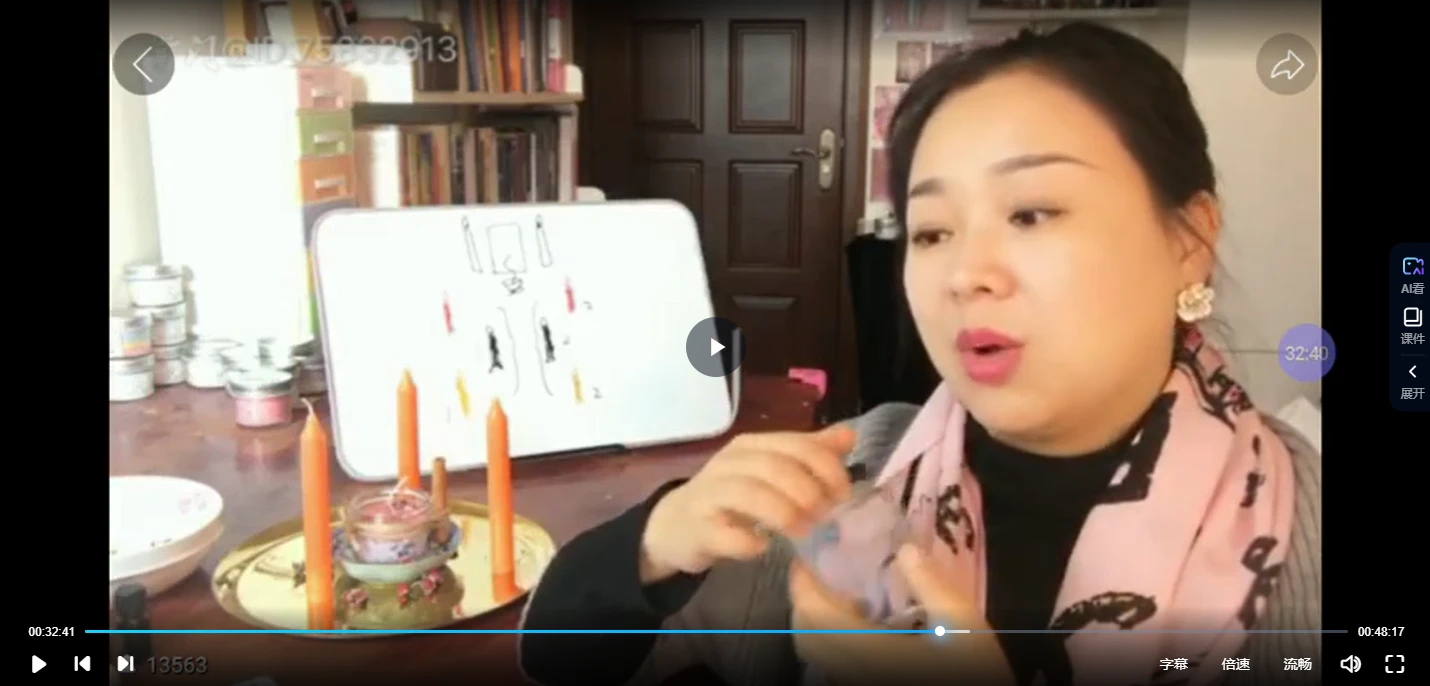
Candle colors can be assigned symbolic associations by a particular teaching. Record whose association is being used. A color meaning is a convention within a framework, not a universal property that must govern every reader.
To examine color symbolism, choose one association from a passage and identify how it is justified. The presenter may refer to a tradition, a feeling, a visual resemblance or a correspondence list. These rationales should not be treated as the same kind of explanation. Compare the association with the rest of that passage rather than searching immediately for a universal chart. A color may serve different meanings in different contexts. If you make your own diagram, label it as a diagram of the specific explanation you read. Personal preference can also be recorded, but in a separate note. This keeps an aesthetic response from being mistaken for a rule supplied by the course or a fact about what the color inevitably causes.
Question for review: Is this color association stated or inferred?
Object and intention
Distinguish the physical candle from the intention attached to it. Shape, scent and placement can be read as design choices. An intention becomes easier to discuss when it is written plainly before any symbolic objects are added.
An intention worksheet can begin with a plain sentence such as I want to make time for a neglected project. Describe the choices that sentence implies before assigning an object to it. You may then ask how candle color, shape or placement represents some part of the intention in the passage being studied. If there is no explicit connection, do not invent one just to complete the worksheet. The object and the intention can remain only loosely related. This is a useful finding because ritual descriptions often invite the reader to supply meanings from personal experience. Understanding where that contribution occurs makes the interpretation clearer. The worksheet should end with an ordinary action that would support the intention independently of any claim about the candle.
Question for review: What does the object contribute to the stated meaning?
Reading a demonstration
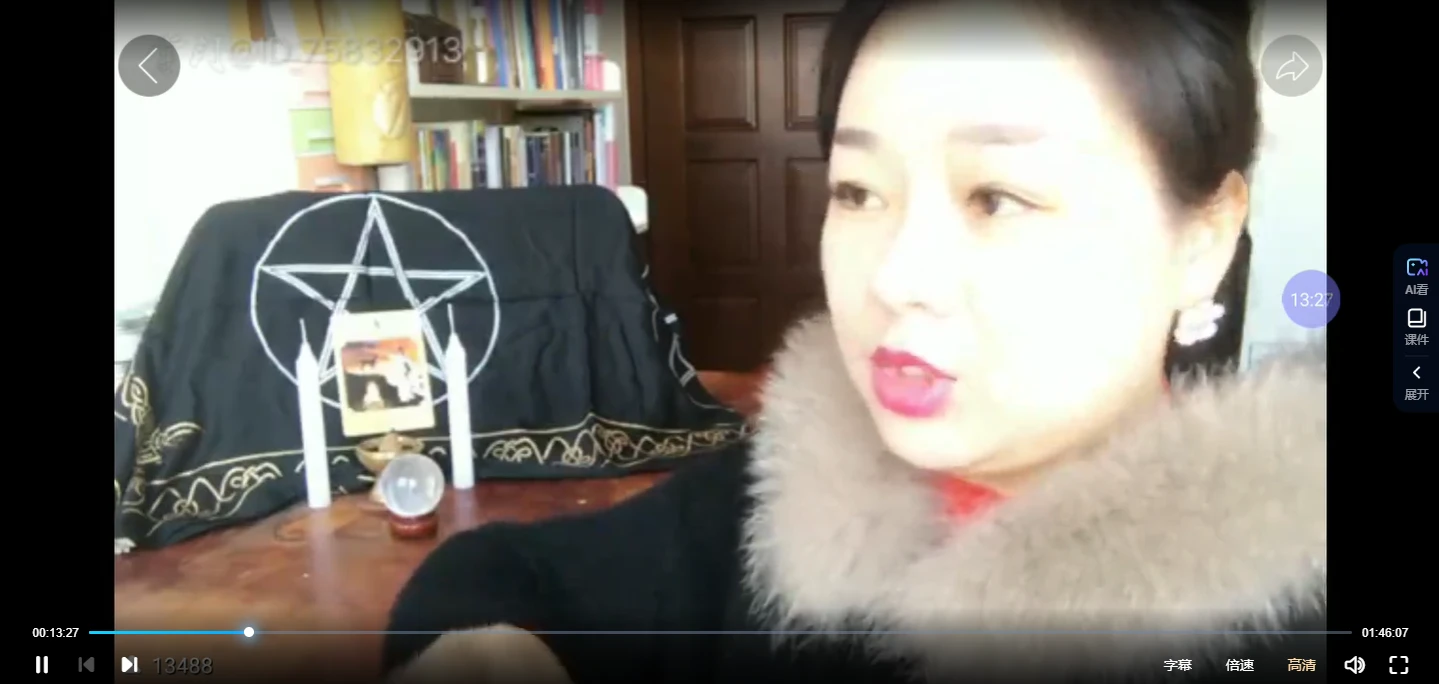
Watch a demonstration first as a sequence of observable actions. Record preparation, arrangement and closure before interpreting them. Do not silently turn a commentary about meaning into evidence that the sequence produces an external result.
A viewing note can distinguish three levels of description. At the first level, record only actions visible on screen, such as arranging an object or speaking a phrase. At the second, record what the presenter says those actions mean. At the third, record any claimed result. The distance between the levels is analytically important: a visible arrangement can verify that an action occurred, while it cannot by itself verify an unseen mechanism. If the demonstration is edited, avoid assuming that every interval or step is shown. An honest sequence may include a gap. This gives you a cultural reading of the demonstration without turning production choices, confident narration or a striking visual into evidence of ritual efficacy.
Question for review: Which actions are visible and which effects are merely claimed?
Flame-free study
A paper sketch or an unlit arrangement is sufficient for an editorial symbolism exercise. There is no need to reproduce a flame to analyze a recording. If fire is used independently, ordinary fire precautions take priority over ritual language.
The symbolism of a candle can be studied through an unlit object, a photograph already present in the material or a paper diagram. These alternatives let you observe placement and color while keeping the exercise about analysis. If you choose to use a real flame independently, keep it on a stable nonflammable surface, away from fabric, unattended spaces and added loose materials. A source’s symbolic instruction does not override ordinary fire precautions. Avoid adding oils, herbs or other substances simply because they appear in a ritual narrative. Their properties and safe use are separate questions. There is no loss of educational seriousness in remaining with an unlit model: the task is to understand the relationship between the object and the explanation, not to prove commitment by reenactment.
Question for review: Can I explain this symbolism without lighting anything?
Evaluating a reflection
After reviewing a candle theme, write what the image means to you and what practical action remains. Personal resonance can be recorded honestly without treating an unrelated later event as proof that the candle changed its cause.
A reflection after viewing should distinguish a change in understanding from a change in the outside world. You may find that an image helps you express a goal or notice a concern. That is a report about your response, and it can be written precisely. A later event requires a different kind of claim. Ask what other factors were present and whether the same conclusion would be drawn if the event had gone differently. This helps guard against selecting only favorable outcomes. For a useful final note, identify one symbolic association you can explain, one practical step you choose and one claim the material does not establish. These entries keep the candle theme connected to thoughtful learning rather than to an unsupported promise.
Question for review: What interpretation changed, and what evidence would support a causal claim?