A Green Tarot series devoted to spread methods. The source identifies ten videos and discusses introductory card structure, spread positions and examples; named example spreads should be checked against the recordings.
Resource Overview
Green Tarot Spread Methods: 10 Video Lessons is a digital learning resource about Tarot Spreads & Reading Methods. The English description summarizes the available source listing; the underlying recordings or books are in Chinese. An English translation of the full material is not confirmed.
What You Will Learn
Use the sequence and preview material below to identify the course’s scope, terminology and teaching approach. Compare each card interpretation with the original lesson rather than treating a short listing as a complete transcript.
Course Contents
- Deck structure and basic card meaning
- Choosing a spread for a question
- Interpreting positions together
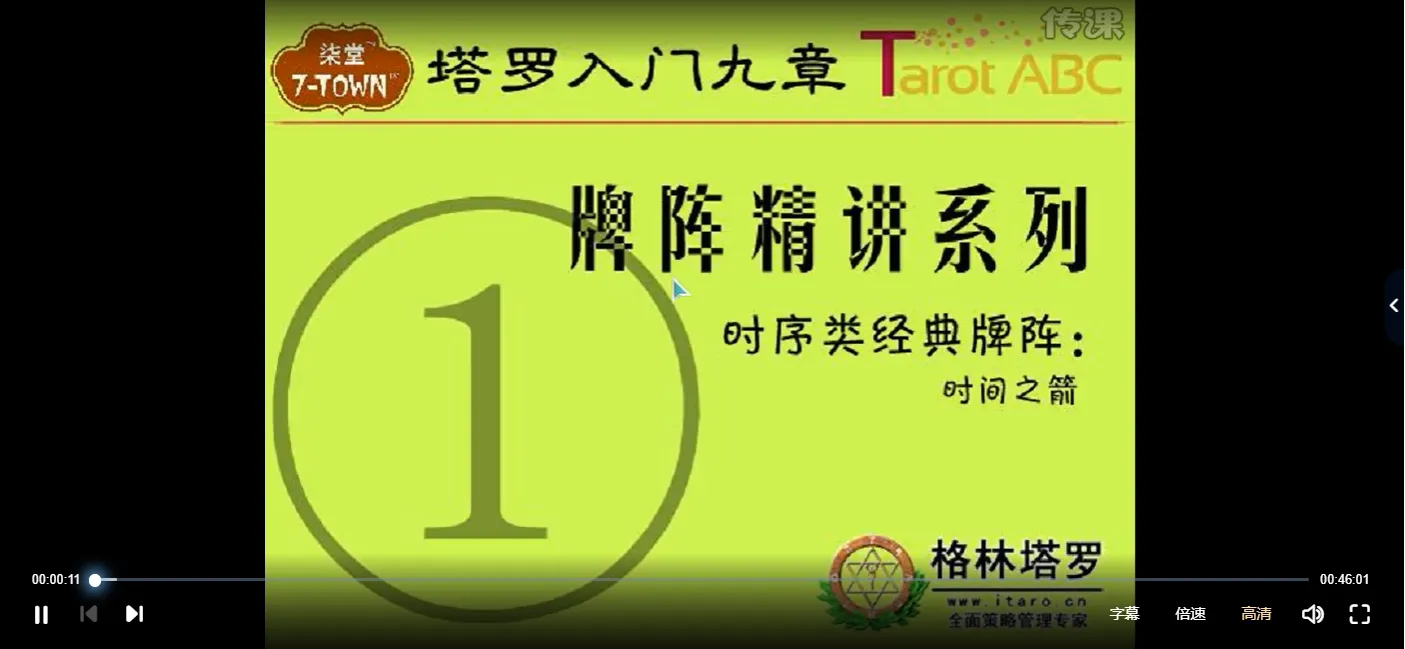
- Worked spread examples in the source description
Original Course Images
Who This Resource Is For
This resource is for readers or learners who can use Chinese-language materials and want a named resource on Tarot Spreads & Reading Methods. Compare the stated scope and previews before ordering; a fixed level of prior experience is not assumed unless the source directory says so.
Learning Format and Digital Delivery
10 Chinese-language video lessons Virtual and downloadable; there is no physical shipment. Price: USD 9.00. A file link is not yet attached to this product. Please contact Karma Kismet before ordering to confirm delivery arrangements; immediate automated access is not promised.
Frequently Asked Questions
Is the full material in English?
No English edition, recording or subtitle track is confirmed. The source material is Chinese-language.
Is a personal consultation included?
No individual consultation is listed with this resource.
Does this resource guarantee an outcome?
No. It is for educational and cultural study, not a guaranteed result or substitute for professional advice.
Editorial Note
Karma Kismet translated and organized the course facts and original previews for English readers. Lesson counts and formats follow the available source listing; unspecified contents, certificates and instructor credentials are not asserted.
Related Courses
- Long Nu Tarot Spreads and Reading Examples: 15 Videos
- Star Heart Tarot Practical Reading Class: 21 Videos
- Thoth Tarot Practice Collection: 23 Videos and Three E-Books
- Mindful Tarot Advanced Camp: Relationship and Career Spreads
- Latte Relationship Tarot Special Course
- Chen Qingqing Tarot Consultation Training: 122 Videos
- Gui Gui Tarot Training Camp, Fifth Cohort: 61 Videos
- Ya Ta 2026 Lenormand System Course: Nine Videos
- Ju Zi Complete Lenormand Course: 19 Videos
- Osho Zen Tarot Card Practice: 20 Videos
- Oracle Card Growth Series: 19 Videos
Browse Tarot Spreads & Reading Methods and read digital delivery information.
Reading context and study practice
The Green Tarot listing identifies ten recordings devoted to spread methods. The source also discusses deck structure, meanings, positions, and examples, while using several spread names in broad prose. Treat those names as subjects to verify in the recordings rather than a guaranteed complete directory of demonstrated layouts.
A question before a layout
Choose a clear question before discussing a spread. A vague question encourages an interpretation to expand beyond what the person actually wants to consider. For study, use an ordinary fictional question such as how to organize competing tasks. Then identify the layout the recording actually demonstrates and the purpose assigned to each position. Do not presume that a larger spread gives a more reliable answer. The quality of the exercise depends on a visible relationship among question, positions, and explanation. The cards remain symbolic prompts rather than a source of verified instructions about consequential decisions.
Position labels are part of meaning
A card’s interpretation depends on the role of its position. Record the position labels exactly before summarizing the reading. If a position asks about a present concern, do not treat its card as a fixed future outcome. If it represents an option, keep the option separate from a prediction that the option will occur. These distinctions can be lost when a spread is compressed into one story. A diagram with explicit labels is a useful study aid because it shows what the course actually asks each card to contribute and makes an invented role easier to notice.
Deck structure as preparation
The source describes introductory deck structure alongside spread work. Use that material to identify the card categories referred to in examples. A broad category can organize interpretation, but it should not replace the individual card explanation or the position’s role. If an unfamiliar term appears, check it before proceeding with the whole spread. This prevents an error in basic identification from becoming an elaborate narrative. The subject is traditional tarot interpretation; recognizing deck categories does not establish that a particular spread can determine facts about a person’s health, finances, relationships, or future.
Named spreads need verification
The article names several example spreads, including time-related and crossroads-style layouts. Broad prose can use different labels or translations, so verify the actual layout and positions in the recording. A spread name alone does not supply card count, placement order, timing horizon, or reversal policy. Do not reconstruct those details from a familiar spread elsewhere and then claim they belong to this course. A verified sketch can include the original name, the position labels, and the recording reference. Where the material is unclear, the honest result is an open question rather than an invented diagram.
Reading cards together
A whole-spread interpretation should explain relationships among positions rather than merely add card meanings. Ask whether two positions describe different aspects of the same question, alternative possibilities, or a sequence defined by the layout. Then show how the relevant card themes interact within that structure. A repeated image or category can be noted without assuming it predicts an event. If the relationship is your own association, label it. This keeps the reading traceable and allows another learner to question the reasoning. A persuasive story is not enough if its connection to the question and positions cannot be shown.
Time-related layouts
A time-flow or past-present-future style spread uses temporal labels as part of the interpretive frame. It does not establish a verified timeline. Keep the labels visible and avoid adding an exact date or deadline unless you are explicitly describing a convention stated in the lesson. Even then, identify it as symbolic. A future-oriented position can be discussed as a theme or possibility without claiming that it must occur. This is particularly important when an example involves major life choices. Calendar language should not turn a reflective tarot exercise into a guaranteed forecast.
Choice layouts and agency
A choice-oriented spread can organize reflection on alternatives, but it cannot decide which option is objectively best. For each alternative, distinguish the symbolic discussion from factual information such as cost, feasibility, obligations, and personal preference. Do not treat one card as permission to ignore those facts. A useful exercise ends with questions to investigate rather than a command to act. This respects the person’s agency and keeps the spread within its educational role. The course can illustrate interpretive methods without promising that tarot will choose a career, settle a relationship, or identify a certain outcome.
Worked examples as teaching material
When watching a worked example, note what background information is supplied before the interpretation. Keep that information separate from the cards and positions. Then identify the rule or image used for each main sentence. If a statement goes beyond the available information, mark it as an inference. This allows you to learn the teacher’s procedure without treating every conclusion as a factual discovery. A case selected for instruction may be memorable because it fits a theme particularly well. That selection does not establish how the method performs across unfamiliar questions or cases that were not selected.
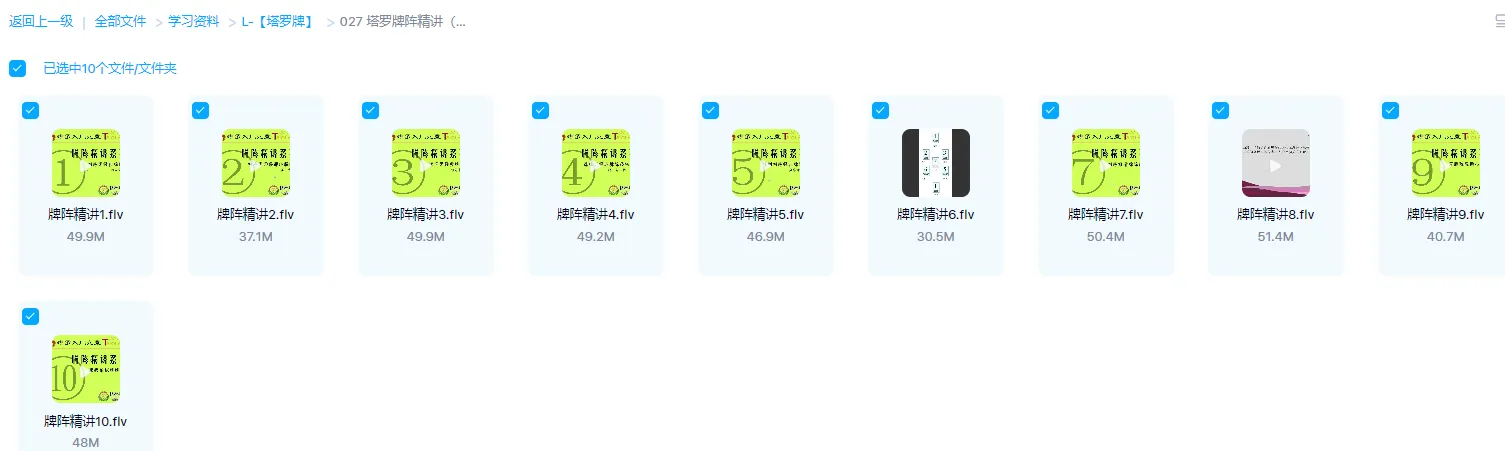
A ten-recording index
The source directory lists ten numbered spread-method files. Their generic titles do not provide a verified subject for every recording. As you review them, create an index of the layouts actually shown and the definitions actually given. Do not fill the index in advance with spread names from the article’s general prose. This distinction preserves both useful source facts: ten recordings are listed, and the broader description discusses several kinds of layout. It avoids claiming that a particular named spread is guaranteed to appear in a particular file without checking the material.
Reviewing an interpretation’s scope
After an exercise, read the summary and ask whether every sentence addresses the original question. Remove personal claims that the cards cannot establish, especially allegations about absent people or assurances about future results. Keep alternatives where the position or card meaning is ambiguous. A shorter, clearly linked interpretation can be more useful than an expansive narrative. The Green Tarot page identifies Chinese-language educational material on spread methods; it does not confirm a full English translation, certification, individualized consultation, or guaranteed accuracy. The aim is understanding the layouts and reasoning actually demonstrated in the recordings.