Long Nu's December 2024 tarot series is listed as 15 videos and describes personality-card work, spread interpretation and examples. The available article does not provide a fully verified lesson-by-lesson file list.
Resource Overview
Long Nu Tarot Spreads and Reading Examples: 15 Videos is a digital learning resource about Tarot Spreads & Reading Methods. The English description summarizes the available source listing; the underlying recordings or books are in Chinese. An English translation of the full material is not confirmed.
What You Will Learn
Use the sequence and preview material below to identify the course’s scope, terminology and teaching approach. Compare each card interpretation with the original lesson rather than treating a short listing as a complete transcript.
Course Contents
- Personality-card interpretation as named in the source
- Reading a spread as a whole
- Comparing worked examples
- Limits of the published lesson directory
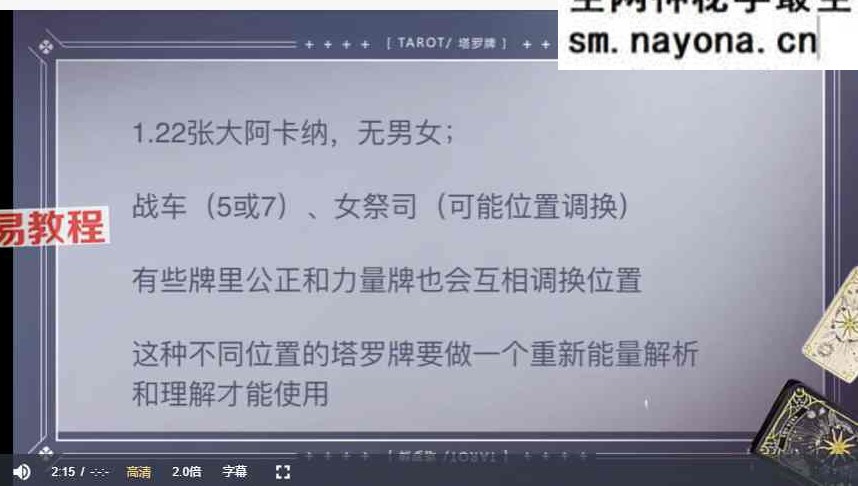
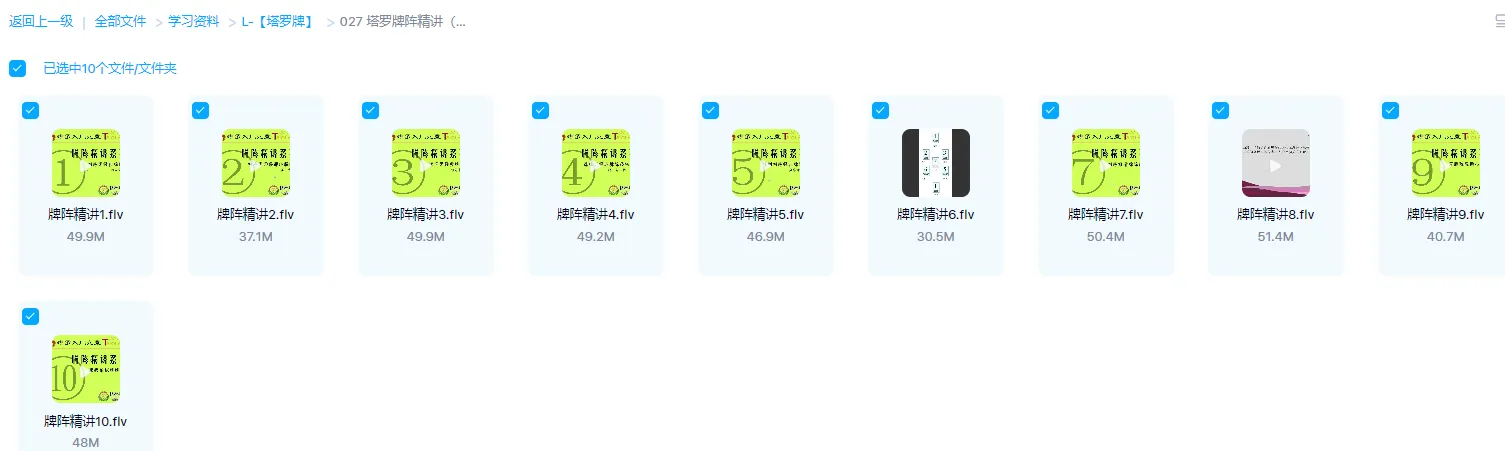
Original Course Images


Who This Resource Is For
This resource is for readers or learners who can use Chinese-language materials and want a named resource on Tarot Spreads & Reading Methods. Compare the stated scope and previews before ordering; a fixed level of prior experience is not assumed unless the source directory says so.
Learning Format and Digital Delivery
15 Chinese-language video lessons Virtual and downloadable; there is no physical shipment. Price: USD 9.00. A file link is not yet attached to this product. Please contact Karma Kismet before ordering to confirm delivery arrangements; immediate automated access is not promised.
Frequently Asked Questions
Is the full material in English?
No English edition, recording or subtitle track is confirmed. The source material is Chinese-language.
Is a personal consultation included?
No individual consultation is listed with this resource.
Does this resource guarantee an outcome?
No. It is for educational and cultural study, not a guaranteed result or substitute for professional advice.
Editorial Note
Karma Kismet translated and organized the course facts and original previews for English readers. Lesson counts and formats follow the available source listing; unspecified contents, certificates and instructor credentials are not asserted.
Related Courses
- Green Tarot Spread Methods: 10 Video Lessons
- Star Heart Tarot Practical Reading Class: 21 Videos
- Thoth Tarot Practice Collection: 23 Videos and Three E-Books
- Mindful Tarot Advanced Camp: Relationship and Career Spreads
- Latte Relationship Tarot Special Course
- Chen Qingqing Tarot Consultation Training: 122 Videos
- Gui Gui Tarot Training Camp, Fifth Cohort: 61 Videos
- Ya Ta 2026 Lenormand System Course: Nine Videos
- Ju Zi Complete Lenormand Course: 19 Videos
- Osho Zen Tarot Card Practice: 20 Videos
- Oracle Card Growth Series: 19 Videos
Browse Tarot Spreads & Reading Methods and read digital delivery information.
Reading context and study practice
Long Nu’s December 2024 series is listed as fifteen videos with personality-card work, spread interpretation, and examples. The article supplies a broad description rather than a verified lesson-by-lesson directory. A useful study approach is to distinguish those named subjects and trace the reasoning in examples actually presented.
Personality cards as symbolic roles
Personality-card language in tarot should not be mistaken for a validated personality assessment. First establish how the teacher chooses or identifies the card in the example. The available page does not confirm a particular calculation or assignment rule, so do not invent one. Then record the themes attributed to the card and the way the example uses them. A symbolic role may support reflection on a perspective or a recurring narrative, but it does not establish someone’s identity. Keep the person’s actual account separate from the card description and leave room for the association to be rejected.
Personality and spread context
A card identified as a personality card may function differently when it appears in a spread position. Ask whether the example treats it as a background theme, an assigned role, a drawn card, or another stated convention. These are not interchangeable uses. Preserve the exact procedure shown. If the article’s broad description leaves the role unclear, wait for the recording rather than filling the gap with a rule from another teacher. This distinction helps explain how personality-card work and whole-spread interpretation can be combined without turning every appearance of a familiar card into a fixed personal label.
The whole spread before the story
Record the question and position labels before writing a narrative. Then identify what each card contributes and how the positions relate. A coherent spread summary should retain these relationships rather than simply join several attractive card phrases. If one card seems to contradict another, check whether they occupy different roles. A contrast can be part of the symbolic discussion without needing to be eliminated. The source’s named emphasis on combined examples can be studied through this visible structure. It does not prove that the spread describes future events or reveals an absent person’s motives.
Case background and interpretive input
A case explanation may begin with information about the questioner’s circumstances. Keep that background in a separate area of your notes. Then record the cards, positions, and reasoning used in the interpretation. If the resulting story resembles the background, do not assume the cards independently discovered it. The example may be illustrating how known concerns are organized symbolically. This remains a legitimate educational subject when represented accurately. A case should not be promoted as proof of predictive accuracy merely because its narrative is detailed or the teacher’s wording feels personally convincing.
Intuitive associations with references
The source attributes a distinctive intuitive style to Long Nu. Treat an intuitive association as an interpretive contribution, not verified hidden information. When studying one, identify the image detail, positional relationship, or question context that prompted it, if the recording explains that connection. If the connection is not supplied, mark the association as such. This allows intuition and careful reasoning to be discussed together without claiming that a strong impression establishes a fact. It also helps the learner recognize which part of an example follows a stated convention and which part depends on the presenter’s personal style.
Comparing two examples
Choose two examples actually shown in the series and compare their questions, personality-card roles, spread layouts, and conclusions. Avoid comparing only the final story. A similar card can have a different role because the question or position differs. Conversely, different cards may be used to discuss a similar theme. A useful comparison explains those routes and preserves the teacher’s qualifications. It does not rank the examples by how dramatic they sound. This approach supports close reading of the fifteen-video subject without inventing a complete curriculum from the article’s broad statements about methods and cases.
Date and edition boundaries
December 2024 identifies the series described in the source. It should not be treated as the learner’s current date or as proof that later material is included. Keep the date in the inventory when distinguishing this listing from another Long Nu course. The fifteen-video count likewise identifies the named resource without confirming the topic of each recording. If a lesson is not titled in a verified directory, do not assign it a guessed subject. A clear edition boundary helps readers understand exactly which resource is being discussed and prevents unrelated classes or services from being silently added.
Reflective language in relationship examples
If a spread example concerns relationships, use wording that invites consideration rather than claiming knowledge of another person’s feelings. A card theme might prompt questions about expectations, boundaries, communication, or available choices. The answers come from the people and circumstances involved. Personality-card terminology should not be used to blame someone or pressure them to accept a role. The course can be studied for its symbolic and narrative approach while leaving consent and practical decisions grounded in real life. No reading can establish a guaranteed reconciliation, partnership, or outcome simply through card symbolism.
A case-review page
A personal review page can contain the actual question, the verified layout, the cards, the personality-card convention if used, the source explanation, and your unresolved questions. Add a short note distinguishing observed image details from inferred meanings. If you write an alternative reading, label it as yours rather than attributing it to the teacher. This makes the comparison honest and reviewable. The suggested review page does not imply an included workbook or individualized feedback. It is a way to study the named series without allowing a memorable case story to replace the procedure that produced it.
Scope of an English guide
This English description organizes facts from a Chinese-language listing. It does not confirm translated recordings, subtitles, a complete transcript, or personal consultation. Use the guide to understand the named subject and then verify technical details in the original material. When summarizing the series, preserve its date, lesson count, and broad themes while omitting promotional claims of accurate prediction or transformative results. An educational account can be thoughtful without making those promises. The useful outcome is a clearer understanding of how personality-card work, positions, and case narratives are combined in the examples actually available.