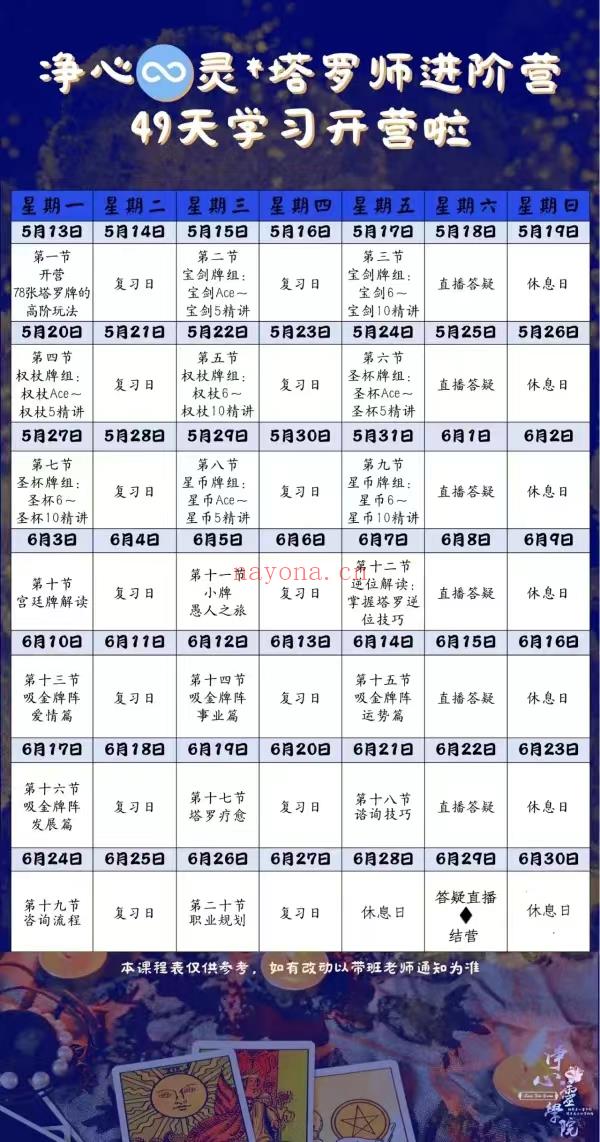
An advanced reflective Tarot camp that names love, career, outlook and development spreads. The relationship component is one part of a broader course, rather than a course exclusively about love readings.
Resource Overview
Mindful Tarot Advanced Camp: Relationship and Career Spreads is a digital learning resource about Relationship Tarot. The English description summarizes the available source listing; the underlying recordings or books are in Chinese. An English translation of the full material is not confirmed.
What You Will Learn
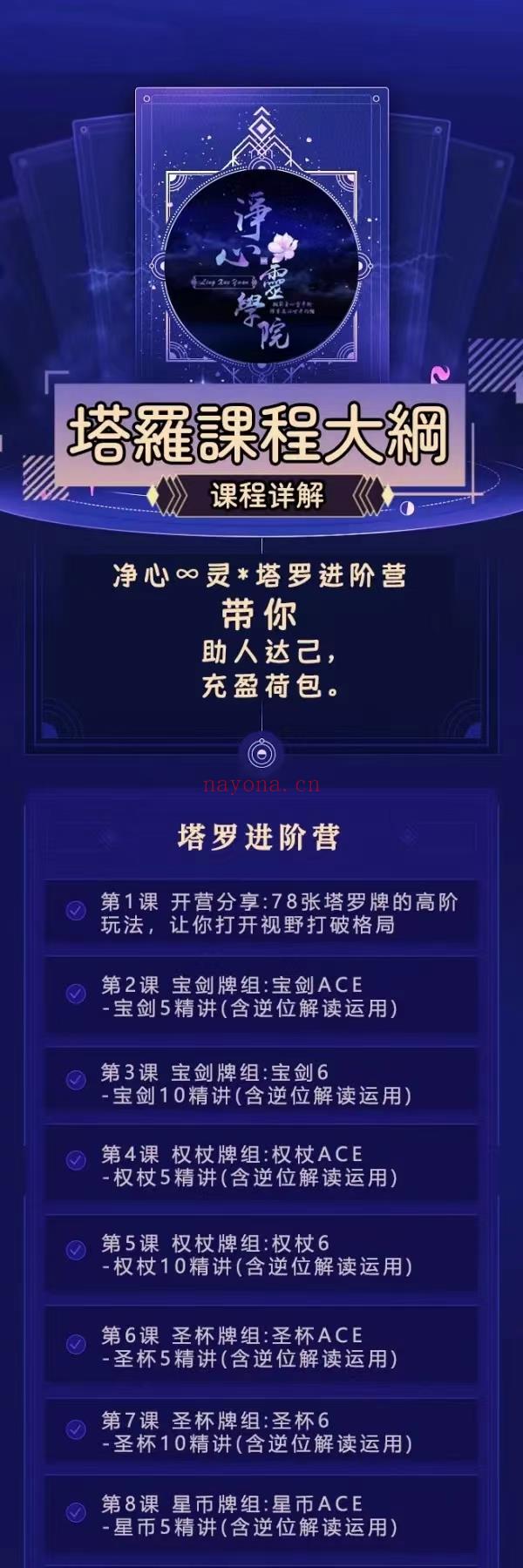
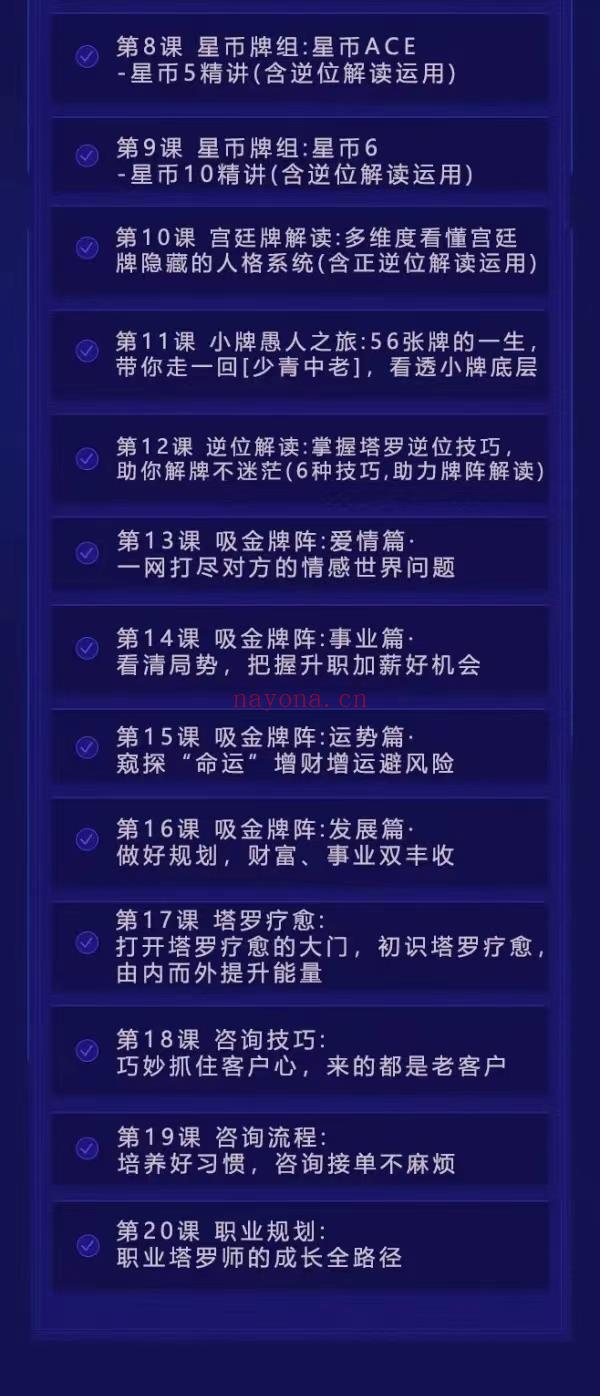
Use the sequence and preview material below to identify the course’s scope, terminology and teaching approach. Compare each card interpretation with the original lesson rather than treating a short listing as a complete transcript.
Course Contents
- Relationship spreads named in the source
- Career and outlook spreads as additional topics
- Reflective interpretation in the course description
- Distinguishing this mixed course from a dedicated relationship course
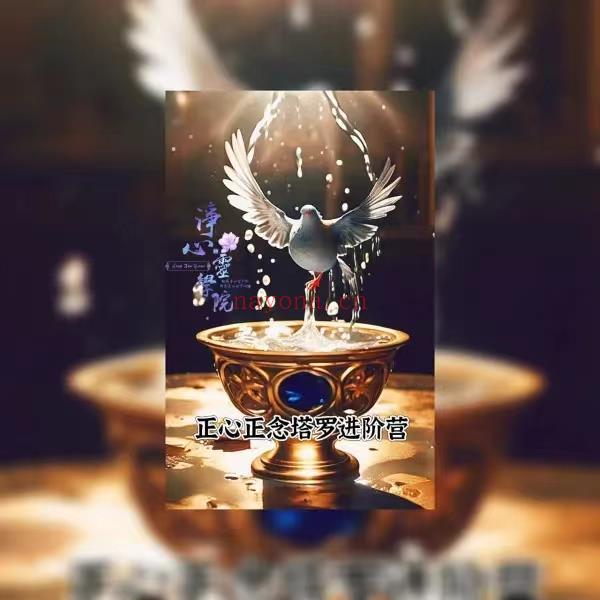
Original Course Images
Who This Resource Is For
This resource is for readers or learners who can use Chinese-language materials and want a named resource on Relationship Tarot. Compare the stated scope and previews before ordering; a fixed level of prior experience is not assumed unless the source directory says so.
Learning Format and Digital Delivery
Chinese-language video course; exact lesson count is not confirmed in the source Virtual and downloadable; there is no physical shipment. Price: USD 9.00. A file link is not yet attached to this product. Please contact Karma Kismet before ordering to confirm delivery arrangements; immediate automated access is not promised.
Frequently Asked Questions
Is the full material in English?
No English edition, recording or subtitle track is confirmed. The source material is Chinese-language.
Is a personal consultation included?
No individual consultation is listed with this resource.
Does this resource guarantee an outcome?
No. It is for educational and cultural study, not a guaranteed result or substitute for professional advice.
Editorial Note
Karma Kismet translated and organized the course facts and original previews for English readers. Lesson counts and formats follow the available source listing; unspecified contents, certificates and instructor credentials are not asserted.
Related Courses
- Long Nu Tarot Spreads and Reading Examples: 15 Videos
- Green Tarot Spread Methods: 10 Video Lessons
- Star Heart Tarot Practical Reading Class: 21 Videos
- Thoth Tarot Practice Collection: 23 Videos and Three E-Books
- Latte Relationship Tarot Special Course
- Chen Qingqing Tarot Consultation Training: 122 Videos
- Gui Gui Tarot Training Camp, Fifth Cohort: 61 Videos
- Ya Ta 2026 Lenormand System Course: Nine Videos
- Ju Zi Complete Lenormand Course: 19 Videos
- Osho Zen Tarot Card Practice: 20 Videos
- Oracle Card Growth Series: 19 Videos
Browse Relationship Tarot and read digital delivery information.
Understanding the four named reading areas
Mindful Tarot Advanced Camp is described through four areas of spread work: relationships, career, outlook and development. This is a broader scope than a course devoted exclusively to romantic questions. A useful way to approach it is to ask how the subject of a reading changes the wording of the question and the meaning of a spread position. A position about personal responsibility in a relationship has a different context from a position about preparation for work. The card image may remain the same while the question determines which associations are relevant.
The source uses spiritual and healing language, but that wording does not establish a clinical method or a verified therapeutic effect. Here, a reflective reading means using images and structured questions to examine one's own interpretation of a situation. It does not mean diagnosing distress, discovering another person's private thoughts or proving what will happen. Keeping that distinction visible allows the four named topics to be explored thoughtfully without assigning the cards authority over decisions that require conversation, practical information or professional support.
Relationship spreads and the limits of inference
For independent relationship study, start with a question about your own perspective. For example, a learner might explore which expectations they bring to a conversation and which expectations have actually been discussed. That question leaves room for observation and choice. By contrast, a demand to reveal a partner's hidden intentions invites conclusions the cards cannot verify. When watching an example, note whether the interpretation describes the questioner's experience, proposes a possibility or states an unsupported fact about somebody absent from the reading.
It can help to divide notes into three short paragraphs: what was said, what was inferred and what could be checked through ordinary communication. A card associated with distance might prompt a reflection on communication habits, but it does not demonstrate betrayal or emotional withdrawal. If several interpretations are plausible, preserve more than one. A careful reading should not turn uncertainty into a damaging label. This is particularly important when emotionally charged questions make a confident narrative feel more reassuring than the available facts justify.
Career questions as practical reflection
Career spreads can be studied as a way of organizing concerns rather than forecasting employment or income. Before interpreting an example, identify the actual decision: preparing for an interview, discussing responsibilities, comparing learning opportunities or responding to a workplace difficulty. These situations involve different information. A broad question about future success may be less useful than a narrow question about what the learner can prepare. After the symbolic interpretation, write down which parts of the issue require evidence such as a role description, feedback or a realistic schedule.
A useful independent exercise is to make two versions of a career question. The first can preserve the question as it initially arose; the second should focus on an action within the questioner's control. Compare the resulting interpretations without assuming that one draw validates the other. The aim is to notice how framing influences meaning. If a reading encourages a major change, separate the emotional response to that suggestion from the practical assessment of costs, obligations and alternatives. A card spread does not supply those missing facts.
Outlook without a fixed prediction
The source names outlook spreads, a phrase that may invite readers to expect forecasts. For responsible study, treat any forecast as an interpretation made from a particular perspective at a particular time. Record the original wording before later events occur. Avoid quietly changing a broad statement after the fact so that it appears exact. A journal can include what was anticipated, what was uncertain and what eventually happened, including cases that did not resemble the interpretation. That record is more informative than remembering only the striking matches.
Outlook work can also be reframed as a discussion of possible responses. If an image brings uncertainty to mind, the practical question might concern preparation for several scenarios rather than identifying one inevitable future. This preserves the imaginative function of Tarot while acknowledging that real events depend on many factors outside a reading. The source's spiritual framing can be studied as the course's interpretive language; it does not need to become a promise about the accuracy of every statement or the outcome of every situation.
Development spreads and measurable intentions
Development is the fourth named area and can connect the other topics through personal review. A learner might use a spread to reflect on a habit, a skill or a repeated assumption. Make the subject specific enough to revisit later. Instead of recording a vague intention to become more positive, describe a small observable action such as preparing notes before a difficult conversation. The image can prompt the idea, while the action and its consequences remain open to ordinary evaluation. This separation prevents a symbolic exercise from becoming an untestable explanation for everything.
For a development journal, write the interpretation, the action chosen and the date of a later review. At review, consider whether the action was attempted and what was learned, rather than whether the card was right. An unexpected result can lead to a revised plan without requiring a new claim about hidden forces. Personal growth language is most useful when it respects limits and changing circumstances. There is no need to describe every obstacle as a failure of belief, spiritual readiness or willingness to accept a reading.
Studying an advanced resource carefully
The word advanced indicates the positioning of the camp, but the available description does not establish a detailed prerequisite list. Before proceeding, check whether you can follow the deck terminology, understand spread positions and explain the difference between a card association and a conclusion about a person. If an example depends on an unfamiliar method, pause and identify it rather than filling the gap with assumptions from another course. An advanced label does not make every interpretation authoritative or remove the need for careful reasoning.
Because the listing does not provide a verified complete lesson directory, the four named areas are the reliable guide to scope. The study suggestions here are not a promised sequence of recordings, assignments or instructor feedback. When reviewing the material, maintain a topic index using the actual filenames and timestamps. Place each example under the area it addresses and note overlaps. A relationship issue may involve work or personal development, but the overlap should be explained rather than used to claim that the course covers every possible life situation.
The value of this resource for a prospective learner lies in its stated combination of reflective topics. It may suit someone interested in how questions about relationships, work and personal direction can be discussed through Tarot imagery. A good study outcome would be more precise questions, clearer distinctions between observation and interpretation, and greater care in communicating uncertainty. Those are reasonable learning aims to pursue independently. They are not guaranteed results, a substitute for support with serious difficulties or evidence that an interpretive exercise can determine another person's future.