
A five-part self-reflection course attributed to Li Yan. The source names opening and noticing, releasing, renewal, joy and integration as lesson themes. These are course themes, not medical claims.
Resource Overview
Li Yan Inner-Energy Reflection: Five Videos is a digital learning resource about Energy Practice Studies. The English description summarizes the available source listing; the underlying recordings or books are in Chinese. An English translation of the full material is not confirmed.
What You Will Learn
Use the sequence and preview material below to identify the course’s scope, terminology and teaching approach. Check each topic against the original lesson rather than treating a short listing as a complete transcript.
Course Contents
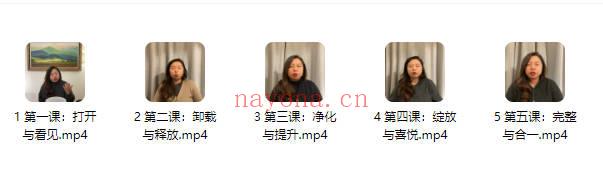
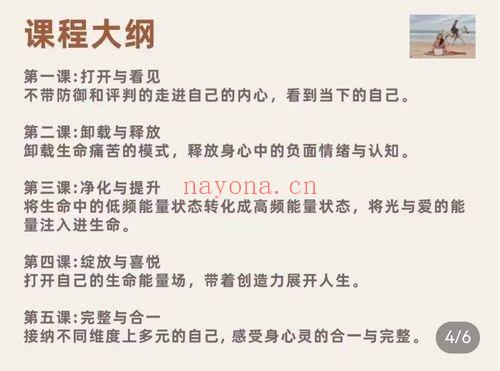
- Opening and noticing
- Release and renewal themes
- Joy and integration lessons
Original Course Images





Who This Resource Is For
This resource is for readers or learners who can use Chinese-language materials and want a named resource on Energy Practice Studies. Compare the stated scope and previews before ordering; a fixed level of prior experience is not assumed unless the source directory says so.
Learning Format and Digital Delivery
Five Chinese-language videos Virtual and downloadable; there is no physical shipment. Price: USD 9.00. A file link is not yet attached to this product. Please contact Karma Kismet before ordering to confirm delivery arrangements; immediate automated access is not promised.
Frequently Asked Questions
Is the full material in English?
No English edition, recording or subtitle track is confirmed. The source material is Chinese-language.
Is a personal consultation included?
No individual consultation is listed with this resource.
Does this resource guarantee an outcome?
No. It is for educational and cultural study, not a guaranteed result or substitute for professional advice.
Editorial Note
Karma Kismet translated and organized the course facts and original previews for English readers. Lesson counts and formats follow the available source listing; unspecified contents, certificates and instructor credentials are not asserted.
Related Courses
- Guo Heren Taishang Kunlun Contemplation: Four Videos
- Awakening Through Contemplation: 305 Video Collection
- Yingxin Seven Chakras: 22 Lessons and Audio Practices
- Seven Chakras in Depth: Ten Video Lessons
- Violet Flame Reiki: Six-Part Video Course
- Wuzi Studio Western Reiki: 15 Videos
- Energy Reflection Cards: 23 Video Lessons
- Casey Akashic Reading Course 2025: 45 Videos
- Guo Xuhui Akashic Records Reading: 22 Lessons
- Li Linhao Breathing and Relaxation Practice: Nine Videos
- Zhan Tangning 21-Day Breathing Meditation: 30 Videos
Browse Energy Practice Studies and read digital delivery information.
Five named stages of self-reflection
Li Yan’s five-video directory names opening and noticing, unloading and releasing, renewal and elevation, blossoming and joy, and completeness and unity. These are the course’s themes. They should not be described as established stages of recovery, a medical program or a guarantee of positive living. A useful approach studies the wording and uses optional, modest reflective questions. The suggestions below are editorial activities grounded in those themes, not additional exercises claimed to be part of the recordings.
Opening and noticing
The first theme can begin with a distinction between noticing an experience and explaining it. A thought, feeling or ordinary bodily sensation can be described without immediately assigning a hidden cause. Record the words the presenter uses and identify whether the passage asks for observation, interpretation or a change.
For an independent reflection, choose a small recent situation and describe what you noticed. Keep the account concrete: what happened, what you thought and what you chose to do. You do not need to disclose personal material or revisit a difficult event to take the subject seriously. A neutral example is enough to examine the difference between observation and judgment. The source’s opening language can be understood as an invitation within the teaching, while the learner retains control over how much to engage.
Unloading and releasing
The second theme uses release language. Ask what the recording means by release before assuming a specific technique or outcome. It might describe an image, a change in perspective or an activity; the listing does not supply the complete instruction. Keep the exact meaning tied to a passage.
A reflective note can distinguish something you can change from something you wish would change. You might choose to set aside an unnecessary task or revise a harsh self-description. That is an ordinary decision, not proof that an unseen burden has been removed. Avoid turning a difficult emotion into a failure to release correctly. Experiences do not need to fit a neat sequence. A reader can analyze the theme textually or pause a reflection when it feels unhelpful, without being told that continuing is required for progress.
Renewal and elevation
Renewal and elevation are evocative words that need context. Identify what is being renewed in the presenter’s account and what elevation is intended to mean. Do not translate them automatically into improved health, higher energy levels or a universal ranking of people.
For an editorial activity, choose a small routine you would like to reconsider. Describe the current routine, one possible change and what information would help judge that change. This gives renewal a practical meaning within your own choices. Keep the source’s symbolic explanation in another field if it differs. A modest plan can be useful without guaranteeing that you will feel better or achieve a particular result. The educational goal is clearer language about change, supported by the theme’s actual explanation rather than by broad promises in the surrounding article.
Blossoming and joy
The fourth theme should not become an instruction to feel happy on demand. Examine how the presenter uses the blossoming image and whether joy is described as an experience, an aspiration or a quality. These possibilities carry different implications. Preserve the actual wording where the distinction matters.
For a gentle reflection, identify an ordinary moment you appreciated and describe what made it noticeable. There is no need to reinterpret every difficulty positively or to find joy where you do not feel it. A record can acknowledge mixed feelings. The theme can help explore what the image means without treating a lack of happiness as resistance or failure. If the source promises a transformation, attribute that promise rather than repeat it as a dependable outcome. Personal appreciation is a response to describe, not a test that validates the entire framework.
Completeness and unity
The final theme may offer a way of bringing earlier ideas together, but inspect the recording before assuming that it resolves every issue introduced by the series. Completeness can function as an image or an aspiration. It should not be treated as a factual assessment that a person is incomplete before viewing the course.
A study exercise can compare one term from the first recording with its use in the last. Does the final passage restate, qualify or expand it? Record the actual relationship. If you reflect personally, ask what parts of your account you can hold together without forcing agreement. A useful conclusion may include an unresolved question. Unity need not mean erasing differences or denying an uncomfortable experience. The five-theme structure can organize a course while real reflection remains less linear and more open-ended.
Energy language and ordinary experience
The resource uses inner-energy language in its title and surrounding description. Treat that vocabulary as part of the teaching’s account. Ask whether a passage uses energy metaphorically, describes a feeling or claims a physical mechanism. Keep those types of statement distinct.
In a personal log, ordinary words such as motivation, fatigue, attention or comfort may describe an experience more precisely than an unexplained energy label. You can record the source’s interpretation separately. A feeling does not verify a hidden process, and a change after a session does not alone establish causation. The listing does not substantiate healing efficacy or a guaranteed effect on emotional conditions. A clear explanation can preserve the course’s vocabulary while leaving such claims unverified, allowing readers to understand the framework without being asked to accept a medical or scientific conclusion.
A flexible route through five recordings
The named themes suggest an order, but the listing does not establish a required daily schedule, practice duration or assessment. Preserve the five-file sequence while keeping your viewing plan separate. You may inspect a recording, write a note and return later rather than rush to complete every theme.
After each file, identify a phrase clarified and a question still open. If you keep an experience note, separate it from the source summary. This prevents personal responses from being treated as curriculum facts or evidence that every learner will have the same outcome. A pause or a neutral response is compatible with careful study. The value of the route lies in understanding what each named theme contributes, not in producing a predetermined story of transformation by the time the fifth recording ends.
Integration without exaggerated claims
A final summary can connect the five themes through the passages actually inspected. Explain one relationship, identify one difference and preserve one limit. Do not infer teacher credentials, certificates or individualized support from the attribution to Li Yan or from a broad description of the course.
The resource can be approached as self-reflection with a particular sequence of metaphors and questions. It does not establish a treatment or guarantee that a viewer will recover an inner force, release every difficulty or live positively in every circumstance. A thoughtful result may be a more precise description of an experience, a small practical choice or a clearer understanding of the teaching’s language. Those outcomes are concrete and reviewable while keeping the learner’s autonomy intact.