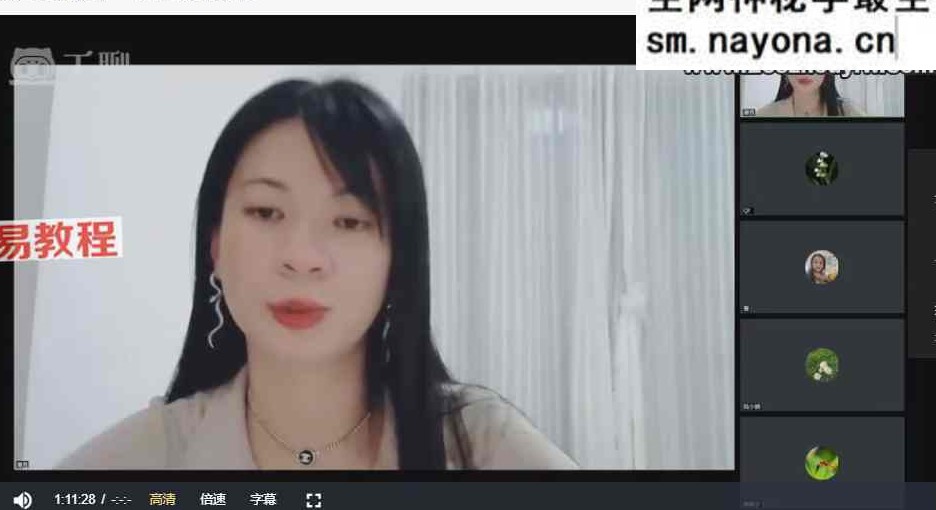
A 21-day breathing-meditation program listed as 30 videos. The directory includes introductory guidance, guided practice, walking meditation and themed breathing lessons.
Resource Overview
Zhan Tangning 21-Day Breathing Meditation: 30 Videos is a digital learning resource about Breathing & Relaxation Studies. The English description summarizes the available source listing; the underlying recordings or books are in Chinese. An English translation of the full material is not confirmed.
What You Will Learn
Use the sequence and preview material below to identify the course’s scope, terminology and teaching approach. Check each topic against the original lesson rather than treating a short listing as a complete transcript.
Course Contents
- Introductory and guided practice
- Walking meditation
- Themed breathing sessions
Original Course Images



Who This Resource Is For
This resource is for readers or learners who can use Chinese-language materials and want a named resource on Breathing & Relaxation Studies. Compare the stated scope and previews before ordering; a fixed level of prior experience is not assumed unless the source directory says so.
Learning Format and Digital Delivery
30 Chinese-language videos Virtual and downloadable; there is no physical shipment. Price: USD 9.00. A file link is not yet attached to this product. Please contact Karma Kismet before ordering to confirm delivery arrangements; immediate automated access is not promised.
Frequently Asked Questions
Is the full material in English?
No English edition, recording or subtitle track is confirmed. The source material is Chinese-language.
Is a personal consultation included?
No individual consultation is listed with this resource.
Does this resource guarantee an outcome?
No. It is for educational and cultural study, not a guaranteed result or substitute for professional advice.
Editorial Note
Karma Kismet translated and organized the course facts and original previews for English readers. Lesson counts and formats follow the available source listing; unspecified contents, certificates and instructor credentials are not asserted.
Related Courses
- Guo Heren Taishang Kunlun Contemplation: Four Videos
- Awakening Through Contemplation: 305 Video Collection
- Yingxin Seven Chakras: 22 Lessons and Audio Practices
- Seven Chakras in Depth: Ten Video Lessons
- Violet Flame Reiki: Six-Part Video Course
- Wuzi Studio Western Reiki: 15 Videos
- Energy Reflection Cards: 23 Video Lessons
- Li Yan Inner-Energy Reflection: Five Videos
- Casey Akashic Reading Course 2025: 45 Videos
- Guo Xuhui Akashic Records Reading: 22 Lessons
- Li Linhao Breathing and Relaxation Practice: Nine Videos
Browse Breathing & Relaxation Studies and read digital delivery information.
Understanding the Structure of the Thirty Video Program
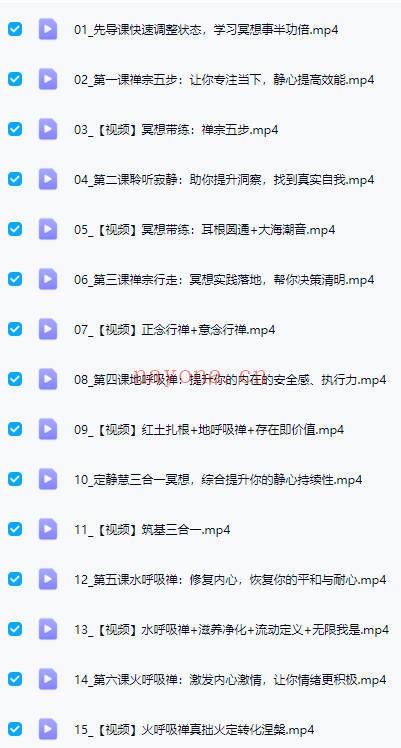
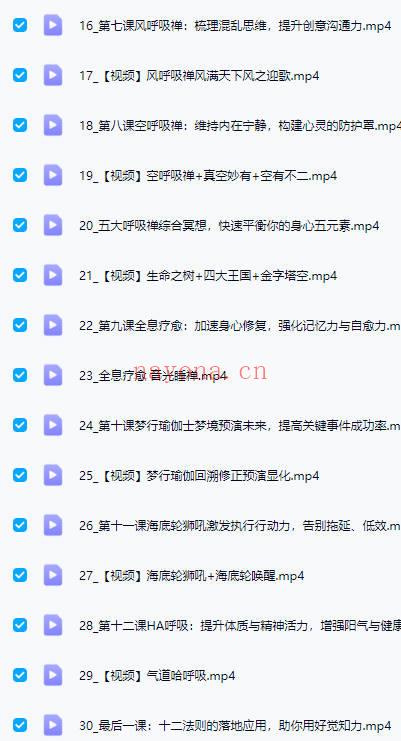
The source directory for Zhan Tangning’s program gives this listing more detail than a title alone. It names thirty video files within a program described as twenty one days. These numbers refer to different things: the advertised program span and the listed recordings. They do not establish that one file belongs to each day, that all files have equal duration, or that every viewer must follow the original timetable. Start by retaining the supplied order and identifying entries labeled as explanation or guided practice.
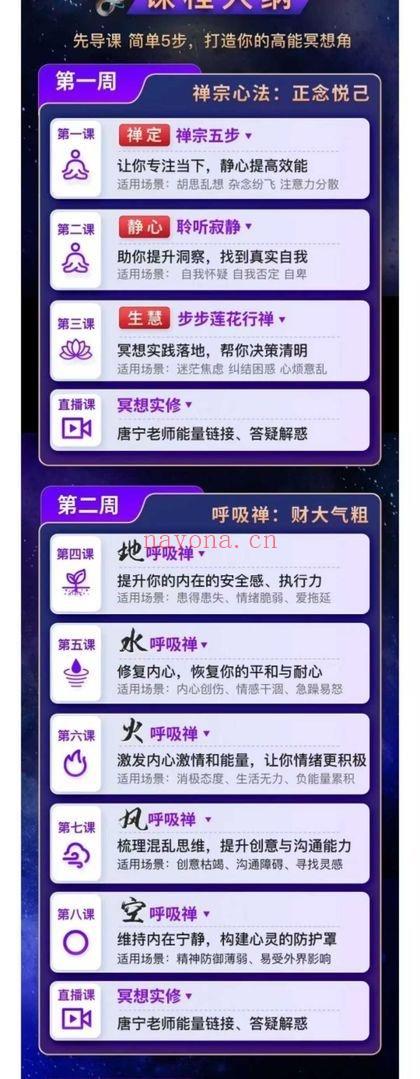
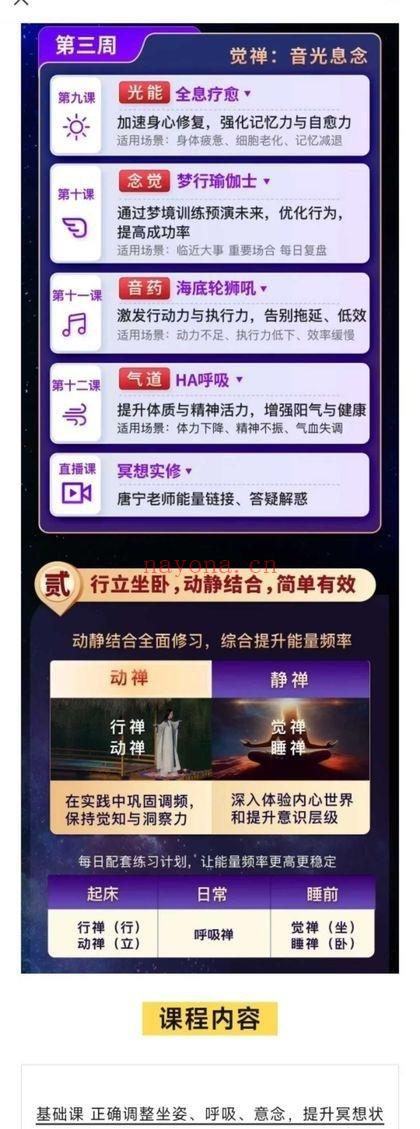
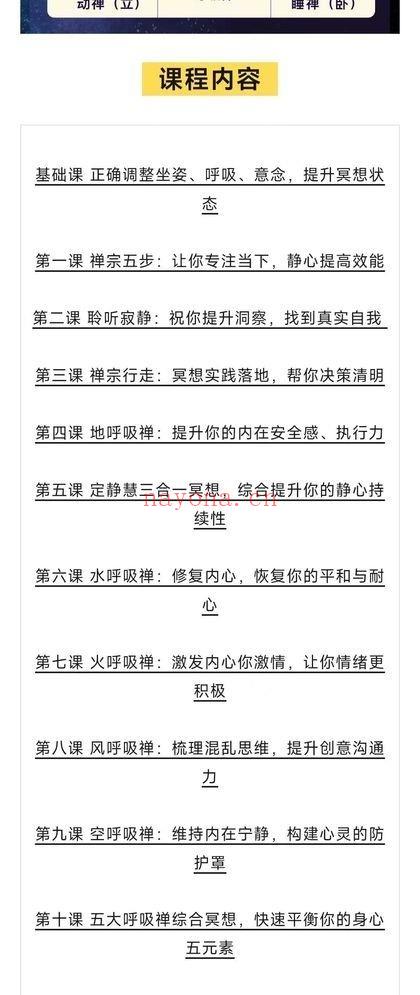
The directory begins with an introductory recording, then names a five step Chan themed lesson and accompanying practice. It includes listening, walking meditation, and breathing themes associated with earth, water, fire, wind, and space. Later filenames refer to combined practice, dream imagery, sound, and application. This description reports labels present in the directory. It does not confirm promotional effects attached to those labels, such as improved performance, healing, or prediction of future events. Reading the names carefully is an orientation to content, not a validation of every claim.
Pairing explanation with the relevant practice
Several entries appear to alternate an explanation with a practice bearing a related name. Use this visible relationship to make notes easier to navigate. Watch the explanation and write down its terms before deciding whether to follow the practice. An explanation may contain conditions or distinctions that are difficult to infer from a guided recording alone. Keep original filenames alongside personal labels so you can return to the intended entry without confusing two passages with similar themes.
The listening themed entries suggest a useful viewing question. Is the instruction about attending to ordinary sound, imagining a sound, or interpreting silence through a spiritual vocabulary? The filename cannot answer that. Listen for the actual direction and describe it precisely. This lets you distinguish a sensory attention exercise from a claim about insight or identity, even when both appear within the same discussion. It also helps when an English translation compresses several Chinese expressions into one familiar word.
The walking entries raise a different question: how does the recording describe attention while moving? Study the demonstration before copying it, and do not assume a quiet indoor demonstration transfers to a busy public environment. A course file is not aware of your surroundings. Examine the idea of walking meditation through its language and pacing without attempting it while crossing roads, navigating obstacles, or doing another task requiring ordinary external attention. Watching is itself a valid way to study a demonstration.
Reading the five element imagery as imagery
Earth, water, fire, wind, and space provide a recognizable set of themes. In a reflective context, these images can suggest qualities such as steadiness, movement, intensity, openness, or change. Those associations remain interpretive; they are not measurements of elements inside the body. Let the recording define its use of each term before importing a meaning from another tradition. Similar words can serve different purposes in meditation, medicine, poetry, and religious philosophy, so a shared label does not establish an identical practice.
A useful note for each themed recording has three parts. First, copy the image or phrase used. Second, describe the instruction attached to it without adding an explanation. Third, record your interpretation separately. For example, a named element does not establish that an exercise diagnoses an imbalance or corrects a bodily condition. This method keeps study close to the actual teaching while allowing personal responses to remain personal. It also shows where the explanation stops and your own associations begin.
The directory includes combined practices. Their presence suggests the course revisits earlier themes, but it does not reveal how much prior participation is expected. If a combined recording assumes terms you do not understand, return to the relevant explanation. There is no advantage in rushing through an unfamiliar sequence simply to match the twenty one day label. Understanding one instruction clearly is a more useful study milestone than completing many recordings without knowing what they ask or how their themes relate.
Handling ambitious claims in lesson titles
Some filenames connect practices with memory, vitality, personal effectiveness, or future situations. These are claims in the source naming, not established outcomes supplied by this description. When a title promises a result, ask how the recording supports it and whether the claim is literal, metaphorical, or motivational. A vivid title can draw attention without supplying reliable evidence. Preserve that difference in your notes rather than repeating a title as a fact about what the practice will do for you.
Dream related language deserves care. Imagining a future conversation or reflecting on a dream can be approached as personal narrative work. It does not establish knowledge of what will happen and should not override present evidence in decision making. Likewise, a reference to a chakra or energetic image belongs to the course’s spiritual vocabulary. It should not become a medical explanation or a reason to regard an ordinary difficulty as a hidden defect. You can study an image without accepting every conclusion attached to it.
A flexible twenty one day study calendar
If the time frame is helpful, use it as a planning aid rather than a deadline. Reserve some days for viewing and others for terminology review. Because thirty files are listed, inventing a one video per day schedule and presenting it as the instructor’s plan would be misleading. Create your calendar only after checking lengths and instructions. Leave room for pauses, replaying, and choosing not to participate in an exercise. Your calendar should describe your study, not pretend to reconstruct undocumented teaching arrangements.
After each study period, record one clear observation and one remaining question. An observation might concern how a guided passage uses repetition or how a lecture distinguishes attention from interpretation. A question might concern a translated term or relationship between two practices. These notes help measure understanding without relying on promised inner states. A day with no striking experience can still involve careful listening. Equally, a strong personal response does not automatically make an interpretation more accurate or generally applicable.
Before ordering, check the practical details raised on this product page, especially language and delivery. The English overview does not establish English narration, translated subtitles, personal supervision, or certification. With those boundaries clear, study this collection as a specific thirty video presentation combining breathing, guided attention, movement, and spiritual imagery. Its suitability depends on the actual material and your interests, rather than an assumption that twenty one days produces a particular result. A well organized record of the content will support a more thoughtful decision about revisiting it.