A Guo Xuhui course on Akashic Records reading listed as 22 lessons. This page identifies the spiritual framework and documented lesson count without validating claims about past lives or future events.
Resource Overview
Guo Xuhui Akashic Records Reading: 22 Lessons is a digital learning resource about Akashic Records. The English description summarizes the available source listing; the underlying recordings or books are in Chinese. An English translation of the full material is not confirmed.
What You Will Learn
Use the sequence and preview material below to identify the course’s scope, terminology and teaching approach. Check each topic against the original lesson rather than treating a short listing as a complete transcript.
Course Contents
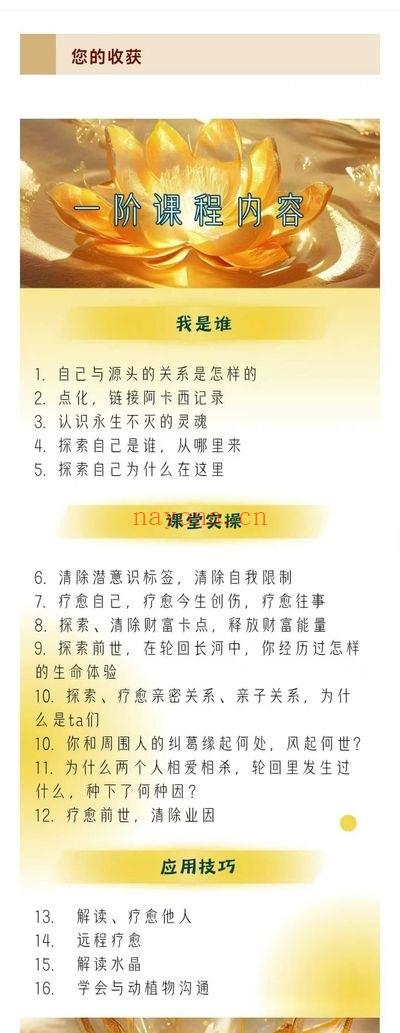
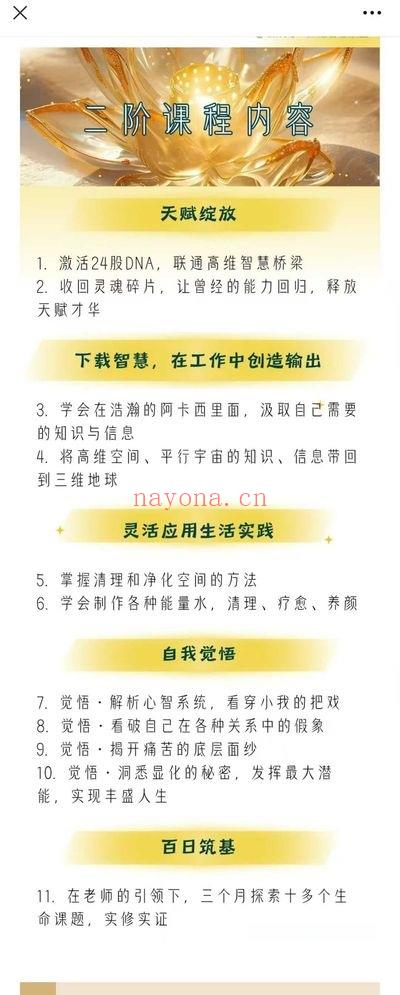
- Akashic Records as a spiritual framework
- Reading practice in the source description
- Limits of unverifiable claims
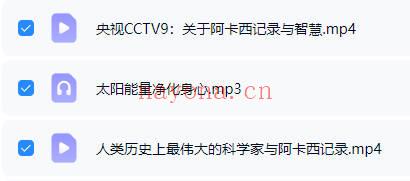
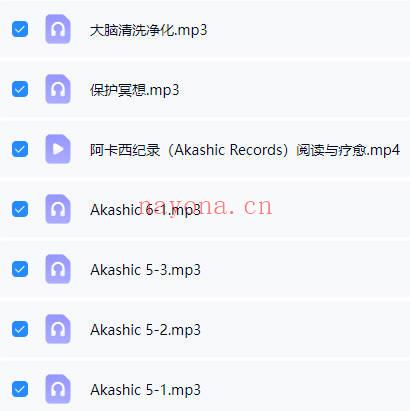
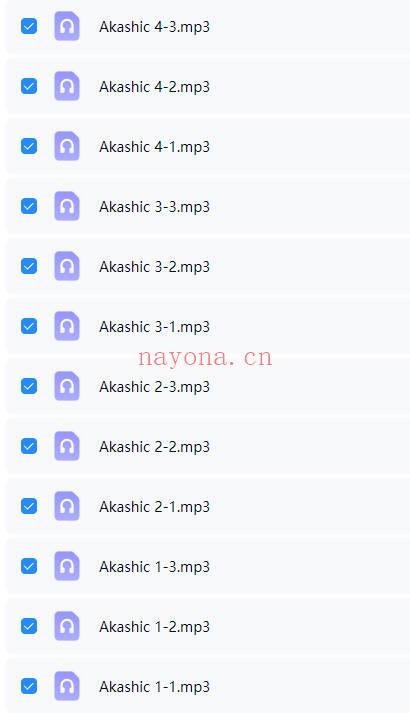
Original Course Images



Who This Resource Is For
This resource is for readers or learners who can use Chinese-language materials and want a named resource on Akashic Records. Compare the stated scope and previews before ordering; a fixed level of prior experience is not assumed unless the source directory says so.
Learning Format and Digital Delivery
22 Chinese-language lessons Virtual and downloadable; there is no physical shipment. Price: USD 9.00. A file link is not yet attached to this product. Please contact Karma Kismet before ordering to confirm delivery arrangements; immediate automated access is not promised.
Frequently Asked Questions
Is the full material in English?
No English edition, recording or subtitle track is confirmed. The source material is Chinese-language.
Is a personal consultation included?
No individual consultation is listed with this resource.
Does this resource guarantee an outcome?
No. It is for educational and cultural study, not a guaranteed result or substitute for professional advice.
Editorial Note
Karma Kismet translated and organized the course facts and original previews for English readers. Lesson counts and formats follow the available source listing; unspecified contents, certificates and instructor credentials are not asserted.
Related Courses
- Guo Heren Taishang Kunlun Contemplation: Four Videos
- Awakening Through Contemplation: 305 Video Collection
- Yingxin Seven Chakras: 22 Lessons and Audio Practices
- Seven Chakras in Depth: Ten Video Lessons
- Violet Flame Reiki: Six-Part Video Course
- Wuzi Studio Western Reiki: 15 Videos
- Energy Reflection Cards: 23 Video Lessons
- Li Yan Inner-Energy Reflection: Five Videos
- Casey Akashic Reading Course 2025: 45 Videos
- Li Linhao Breathing and Relaxation Practice: Nine Videos
- Zhan Tangning 21-Day Breathing Meditation: 30 Videos
Browse Akashic Records and read digital delivery information.
Approaching Guo Xuhui’s Akashic Reading Resource
This twenty two lesson listing concerns Akashic Records reading in a contemporary spiritual framework. Its source introduction describes ideas about life narratives, recurring personal patterns, inspiration, and interpretations of past lives. These descriptions establish the subject being promoted, but they do not verify access to hidden information or events. The most useful starting point is to ask what kind of interpretation the resource presents, how it expresses uncertainty, and what a learner can responsibly take from it as personal or cultural study.
The available source does not provide a dependable numbered directory for all twenty two lessons. Consequently, this discussion is a companion for evaluating the subject, not a reconstructed syllabus. It would be misleading to assign methods to individual lesson numbers or promise a sequence of practical assessments. The stated count gives you a way to check the supplied collection when access is arranged. It does not tell you the length of each recording, the depth of discussion, or whether live participation accompanied the original teaching.
Separating a spiritual model from a factual record
The phrase Akashic Records can suggest something comparable to an archive, but the source describes a spiritual belief system rather than an ordinary documentary archive. In historical research, a record can be inspected for provenance, authorship, date, and consistency with other documents. A perceived image during an introspective exercise does not acquire those features merely because someone calls it a record. Keeping that distinction visible makes it possible to study the language respectfully without confusing a metaphor or conviction with independently verifiable evidence.
When the material discusses a life script, examine it as a way people organize experience into a story. Ask which events the story includes, which it leaves out, and whether other explanations remain possible. A story may feel coherent because it connects emotionally important experiences. Coherence alone does not establish that it describes a predetermined plan. A learner can find a metaphor useful while retaining the ability to revise it when present circumstances, new information, or personal priorities change.
References to karma, soul fragments, or previous lives require similar care. In your notes, introduce these with phrases such as the source proposes or the speaker interprets. This wording preserves the difference between reporting a belief and adopting it as fact. It matters especially when an interpretation concerns an event that cannot be checked. Avoid turning an imaginative account into an accusation about another person or an explanation that places responsibility for suffering on the person experiencing it.
Questions that support careful listening
For each recording, ask what evidence the speaker offers for a conclusion. Is it based on a story, an analogy, a personal experience, a participant’s agreement, or an argument? Write that down before deciding whether the conclusion is persuasive. Agreement from a listener can indicate resonance, but it does not independently establish the origin of an impression. Similarly, a vivid example may illustrate a teaching effectively without proving that its explanation applies to other people.
Another question concerns ambiguity. A statement about needing freedom or wishing to be understood may apply to many situations. If a reading uses a broad statement, note its wording rather than making it more specific afterward. Then ask what information was known before the interpretation and what was added later. This habit helps you understand how a conversation develops meaning. It also makes your notes more faithful to the recording rather than to your memory of its emotional effect.
A third question is whether the teaching permits disagreement. Notice how uncertainty, silence, and a participant’s refusal are handled if those situations appear. Does the interpretation remain optional, or does disagreement become further evidence for the original claim? You do not need to resolve the entire spiritual framework to recognize the importance of this distinction. A reflective conversation is more respectful when the person involved can say an interpretation does not fit and can end the discussion without pressure.
A personal reflection exercise outside the promised syllabus
The following approach is an optional way to organize your study, not a claim about an included lesson. Choose an ordinary recurring situation, such as postponing a difficult conversation. Describe one recent occurrence using observable details: what happened, what you said, and what remained unresolved. In a separate paragraph, describe the meaning you gave it. Finally, list at least two alternative explanations. Keeping observation and interpretation apart allows reflection to remain flexible rather than becoming a verdict about your identity.
If the course offers a spiritual interpretation of a similar pattern, compare it with your written account. Ask whether it suggests a modest action you can evaluate, such as clarifying a request or allowing more time before replying. An action can be useful without confirming every belief used to introduce it. Judge it through its actual consequences and the consent of anyone affected. Avoid using a reading to justify irreversible decisions or ignore information that contradicts a preferred narrative.
Keep private reflections private unless you choose to share them. A notebook about family, relationships, or identity can contain information that belongs partly to other people. You can summarize a question without recording identifying details. If studying with a friend, agree that neither person’s reflections will be circulated or used later as proof of a character judgment. These are practical boundaries for independent study, not assertions that the original resource includes a particular ethics module.
What completion can demonstrate
Finishing twenty two lessons can show that you have worked through a collection. It may help you describe its terminology, recognize its interpretive style, and formulate better questions about its claims. It does not demonstrate an ability to diagnose, provide psychotherapy, verify past lives, or predict future events. The source’s use of a practitioner or healing label should not be treated as evidence of a recognized qualification. Assess any separate credential claim through the organization that actually issues it.
For an English speaking reader, language is another consideration. The product overview supplies an English orientation to Chinese source material; it does not confirm a translated edition. Build a small bilingual glossary if you can work with the recordings, and avoid relying on a single translated word for a complex spiritual concept. Before ordering, clarify the file format and delivery arrangements already noted on the product page. This helps you decide whether the collection fits your language ability and interest.
A strong study result is a clear account of what the resource says, what remains uncertain, and which ideas you personally choose to explore. Approach Guo Xuhui’s listed course with curiosity while keeping those categories separate. The twenty two lesson format can then serve as material for attentive reflection, without treating its length or spiritual vocabulary as a guarantee of personal change. If your final notes contain both a fair summary and thoughtful unanswered questions, they can remain useful long after the recordings have been completed.